

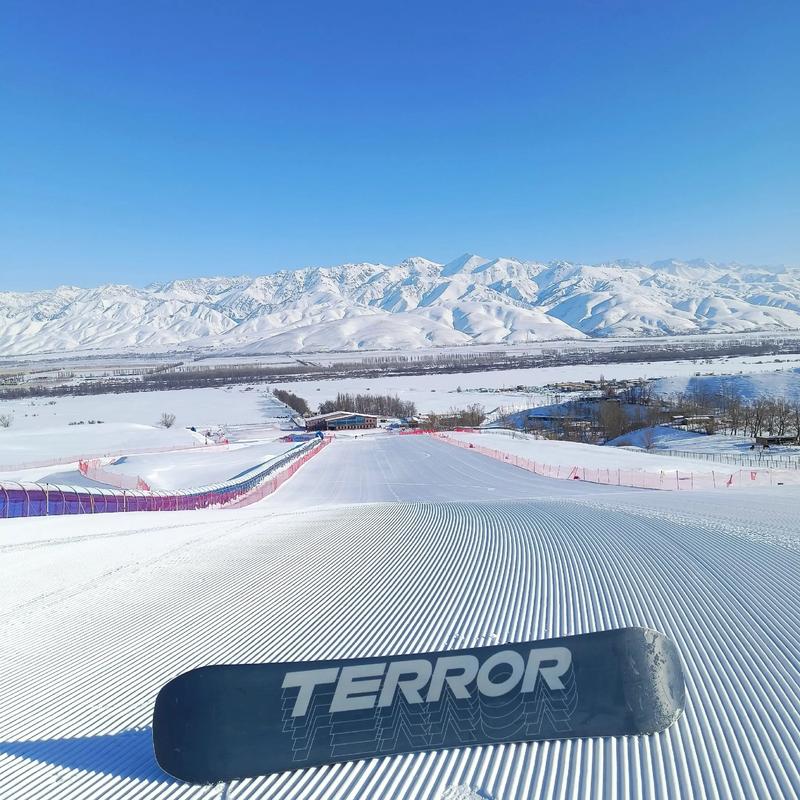
Most visitors who put Xinjiang on a winter itinerary think first of Altay’s powder or Urumqi’s resort hills, and then drive straight past the prefecture that quietly holds one of the region’s most unusual winter combos. Bortala Mongol Autonomous Prefecture (博尔塔拉蒙古自治州) — anchored by Bole city, with Wenquan county, Jinghe and the border port of Alashankou — packs a FIS-certified cross-country ski track, the frozen blue heart of Sayram Lake, village ice-and-snow festivals and year-round hot-spring wellness into one compact loop. For a traveller who wants skiing plus something genuinely different, Bortala is the quiet surprise of a Xinjiang ski trip.
Why Bortala Is Xinjiang’s Quiet Winter Surprise
Bortala sits in the northwest corner of Xinjiang, where the Tian Shan foothills meet the Junggar Basin and the wind off the steppe never quite stops. That geography gives it two things most ski regions lack: a national-level cross-country venue and, an hour south, one of the highest alpine lakes in the world turned into a blue-ice sculpture garden. The prefecture has leaned into both, bundling “ice-and-snow plus culture plus wellness” into a coordinated winter season that runs from late November through April. Our Xinjiang ski resorts guide ranks the big downhill hills; Bortala is different — flatter, more varied, and better suited to a mixed-ability group that wants more than just lift laps.
The other advantage is density. Unlike a remote destination resort that eats a full day of driving each way, Bortala’s winter assets are scattered across towns you can reach in an hour or two of each other, so you can ski, sightsee and soak in the same relaxed day. That makes it an easy add-on to a wider Xinjiang winter circuit or a gentle stand-alone break.
Wenquan Cross-Country Ski Resort: The Only FIS-Certified Track in Xinjiang
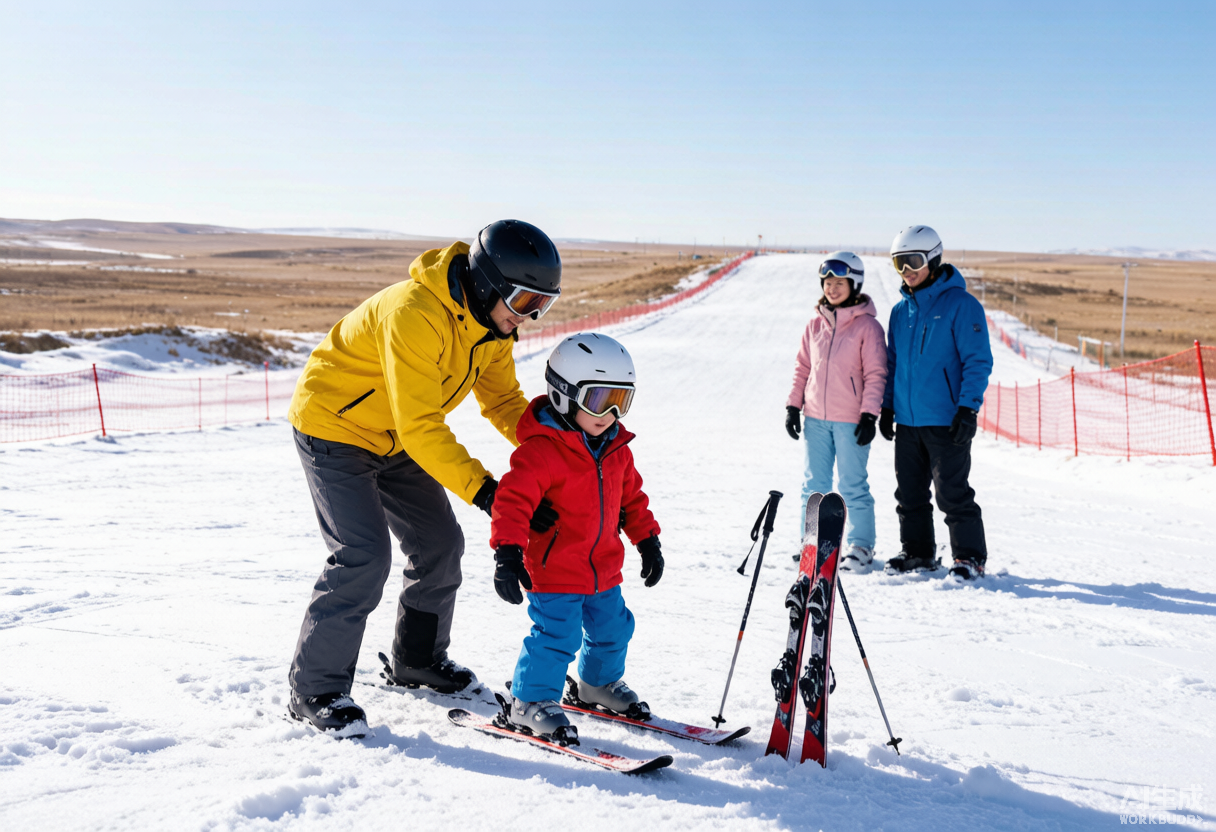
The headline asset is the Wenquan Cross-Country Ski Resort (温泉越野滑雪场), in Zhalemute township’s Acidui team outside Wenquan county. Built in 2021, it is the only professional cross-country ski venue in Xinjiang certified by the International Ski Federation (FIS). Its master plan covers 5,400 mu, with cross-country tracks laid out across multiple graded segments totalling around 11 kilometres — the kind of rolling, technical loop that serious Nordic skiers travel for, but friendly enough that a first-timer can skate a flat section without terror. The field also runs a “snowboard park” and a children’s snow-play zone, with snow-making machines, magic carpets, snowmobiles, an ice rink and even a snow football pitch, so it works for training, casual fun and family days alike.
It is not a novelty hill, either. The resort has hosted FIS points races and national disabled-winter-sports events, and brings in coaching teams from China’s northeast each season. Daily visitor volume runs around 200, and cumulative visits have passed 50,000 since opening — small by Altay standards, but a real, operating venue. If you have never tried Nordic skiing, our Xinjiang ski first-timer guide explains the gear and mindset before you clip in.
Sayram Lake Blue Ice & the Wen-Sai Ski Link
An hour south of Wenquan, Sayram Lake (赛里木湖) freezes into a sheet of wind-carved blue ice that has become one of Xinjiang’s signature winter images. The lake sits at about 2,000 metres and is ringed by snow mountains, and the prefecture runs a “blue-ice” winter programme of ice art and frozen-rose viewing along the lakeshore. Importantly for skiers, Sayram Lake also has its own ski field, and for the 2025–2026 season the two resorts — Sayram Lake and Wenquan Cross-Country — launched a joint pass: show a Sayram ticket within five days at Wenquan for half-price, or a Wenquan season pass for free beginner-track access at Sayram, with discounted lodging at the lakeside camps thrown in. Our Sayram Lake winter blue-ice guide covers the lake side in detail; pair the two and you get downhill thrills plus a blue-ice morning in one trip.
Bole City: Village Ice-Snow Festivals and Speed Skating
The prefecture capital, Bole (博乐), runs a winter of its own. From December through February the city lays on village ice-snow cultural series — folk performances, a New Year gala, ice-lantern fairs, horse racing and intangible-heritage shows across its townships. It also hosts a snow football invitational and, at the Qinghe skating rink, youth and masters speed-skating competitions. None of this is a destination resort, but it is exactly the kind of community winter that makes a prefecture feel alive, and it is free or cheap to join. For travellers deciding where to base, our where to ski in Xinjiang overview maps the regions so you can slot Bole into a route.
Alashankou and Jinghe: Border Towns on Ice
The border port of Alashankou (阿拉山口) — famous for wind and China–Europe freight trains — turns its “Figure-8 Lake” into a winter sports ground with long-distance runs, fun ice-and-snow games, a border-town ice-and-snow new-year market and youth football. Jinghe (精河) counters with a year-end snow horse-racing festival, a winter health run and youth ice-sports promotion events. These are small, local and wonderful if you want to see how ordinary Xinjiang towns spend winter rather than just ski them.
Wenquan County: Skiing Meets Hot-Spring Wellness
Wenquan (温泉, literally “warm spring”) earns its name. After a morning on the cross-country loops, the county’s mineral hot springs deliver the “ice and fire” wellness experience that has become its signature — hotels like Shengyuanshan report weekend and holiday rooms booked solid through the inverse winter peak. Ski by day, soak by night, and you understand why Bortala markets itself as a four-season wellness destination, not just a snow stop. The 2025–2026 season also rolled out student discounts across the fields, so budget travellers and study groups get a break.
Planning a Bortala Winter Trip
Bortala works best as a two- or three-day winter add-on. Fly or take the train to Bole, ski Wenquan’s Nordic tracks on day one, pair Sayram Lake blue ice with a lakeside ski on day two, and leave a loose day for Bole’s festivals or a hot-spring afternoon. December to February gives the most reliable ice and snow; our best time to ski Xinjiang breakdown compares the windows across the region. Pack for real cold and wind — Alashankou in particular lives up to its reputation — and our clothing layers guide spells out what to bring versus rent on site.
Bortala will never top a list of biggest vertical drops, and that is the point. It trades巨型 resorts for a winter you can actually move through — ski, festival, lake, soak — without ever sitting in a two-hour transfer. For a traveller who has already done Altay, it is the freshest half-week in Xinjiang.
Frequently Asked Questions
Does Bortala have a real ski resort?
Yes. Wenquan Cross-Country Ski Resort, built in 2021, is the only FIS-certified cross-country ski venue in Xinjiang, with around 11 km of graded tracks, a snowboard park, children’s snow play and an ice rink.
What is there to do besides skiing in Bortala?
Sayram Lake blue-ice viewing, Bole’s village ice-snow festivals and speed skating, Alashankou’s ice games and new-year market, Jinghe’s snow horse racing, and Wenquan’s mineral hot-spring wellness.
Can I combine Sayram Lake and Wenquan on one ticket?
For the 2025–2026 season the two resorts launched a joint pass: a Sayram ticket within five days gets half-price at Wenquan, and a Wenquan season pass gives free beginner-track access at Sayram, with discounted lakeside lodging.
When is the Bortala winter season?
Downhill and cross-country fields open from late November, with festivals and Sayram blue-ice programming running December through April; the most complete experience is December to February.
Is Bortala good for families?
Very. The cross-country resort has a children’s snow-play zone, the festivals are free and community-run, and the hot-spring wellness angle suits mixed-age groups. Student discounts apply across the 2025–2026 season.
How cold does Bortala get in winter?
It is genuinely cold and windy, especially around Alashankou, so pack layered windproof clothing. Sayram Lake at 2,000 m is colder still, and the wind off the steppe is persistent.