
Tucked into northern Xinjiang between Urumqi and the border, Shihezi (石河子) is better known as a model army-reclamation (bingtuan) city than as a ski destination — but that undersells it. The Eighth Division Shihezi has quietly built five ski resorts and two ice rinks, and more than 100,000 locals now take part in winter sports each year. For a foreign skier who wants genuine, affordable, community-scale skiing wrapped in living reclamation history, Shihezi is one of the most unexpectedly rewarding stops on a Xinjiang ski trip. This guide covers the main fields, what makes them distinct, and how to plan a visit.
Why Shihezi Punches Above Its Weight for Skiing
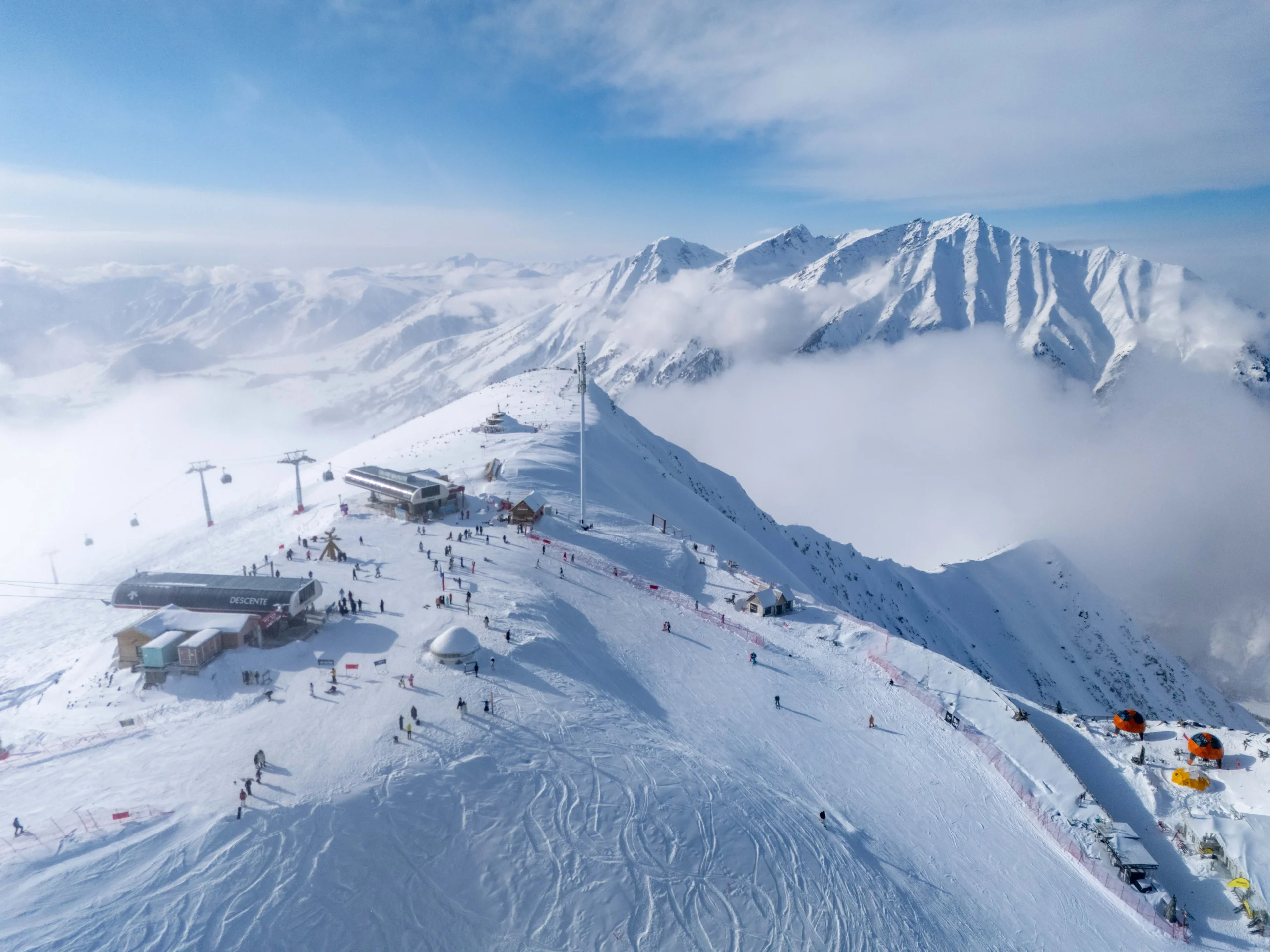
Shihezi was carved out of the Gobi by military settlers in the 1950s, and that collective, can-do culture shows in its winter scene: the city does not have one showcase mountain, it has a network of fields built for its own people and steadily opened to visitors. The result is skiing that is cheap, close to town, and unpretentious — exactly what a first-timer or a budget-minded traveller wants. Compared with the destination resorts in our Xinjiang ski resorts guide, Shihezi’s hills are smaller, but the price-to-fun ratio is hard to beat, and the army-reclamation backdrop gives every visit a story.
The other draw is proximity. Several fields sit within a short drive of the city centre, so you can ski a half-day and still be back for lunch — no alpine commute, no altitude drama. That makes Shihezi a natural break on a longer northern-Xinjiang drive.
Jiangjunshan Ski Resort: The Local Favourite
Jiangjunshan Ski Resort (将军山滑雪场), at the foot of Jiangjunshan in the Tenth Company of the 152nd Regiment, is the city’s flagship. It splits the mountain into clear beginner, intermediate, advanced and dedicated tubing runs, so a group of mixed ability can each find a line. Over the 2025–2026 New Year the resort invested around one million yuan upgrading its lifts — fifty new chairlift seats that carry up to twenty-five riders each way and two per chair, moving about fifty people uphill at once, far faster than the old drag lifts — and widened and separated its beginner, intermediate, advanced and teaching trails behind safety netting.
The numbers tell the story of a field that found its groove. Mid-mountain vertical on the intermediate-to-advanced runs runs about 70 to 100 metres, single-day capacity reaches six to seven hundred riders, and New Year days alone drew four to five hundred. It also added fresh snowboards and boots, and has become the home hill for a young, energetic crowd — “10后” kids and university students who treat it as a weekly ritual. If you are new to the sport, our Xinjiang ski first-timer guide walks through what to expect.
Junkken First Company Ski Resort: Skiing on Red History
The most distinctive field is the Junken First Company Ski Resort (军垦第一连滑雪场), inside the First Company red-education base of the 152nd Regiment, only about twelve kilometres from the city centre on the north slope of the southern hills. It covers some 3,000 mu with 800 metres of combined beginner, intermediate and advanced runs — a 300-metre beginner trail at roughly 12 degrees, a 500-metre intermediate-to-advanced trail — and rents Italian Nordica gear. Two magic carpets and high and low tow-lifts shuttle riders, supported by a Prinoth groomer and Demaclenko snow-makers, and the annual capacity tops 35,000 visitors. Beyond skiing it offers snow paintball, snowmobiling on two Italian-built Ski-Doos, snow karts and snow discs, and the whole thing sits inside a working red-history site, so a ski day doubles as a walk through the story of how the city was built.
For the 2025–2026 season it opened 8 December and runs to 8 March, daily 10:30 to 18:00, and has long served as the opening venue for the army-reclamation culture ice-snow tourism festival. Parents especially like it: our skiing with kids in Xinjiang guide notes that fenced, mixed-ability fields like this are ideal for a child’s first slides.
Huaguoshan Park & Shenxianwan: The Expanding Map
Two more fields round out the five. Huaguoshan Park Ski Resort (花果山公园滑雪场) opened on a trial basis with two beginner, one intermediate and three advanced trails plus a terrain park of rails and small kickers; it was drawing nearly a hundred visitors a day and two to four hundred on holidays, with a formal opening planned for the next season. Shenxianwan Ski Resort (神仙湾滑雪场) became reachable by a dedicated city bus line from mid-January — four yuan, running to the end of February — a small but telling sign of how seriously the city takes getting ordinary residents onto the snow. With five resorts and two ice rinks now operating, Shihezi’s “cold resource” has genuinely become a “hot economy.”
Army-Reclamation Culture and the Winter Festival
The thread tying it together is the winter culture and tourism festival — the twelfth “National Public Ice-Snow Season” city series — with Jiangjunshan and Junken First Company as dual main venues. It bundles a “bing-di-rong-he” (military-civilian integration) winter fitness games and a youth ski camp running late January into early February for roughly a thousand schoolchildren across both fields. Expect free or low-cost coaching, food stalls, and a community atmosphere you will not find at a corporate resort. If you need kit, our Xinjiang ski gear rental guide explains what the local fields typically provide versus what to bring.
Planning a Shihezi Ski Trip
Shihezi suits a one- or two-day winter stop. Fly or take the train in, ski Jiangjunshan on day one and Junken First Company on day two, and leave time for the red-history site itself. December to February is the reliable window; our best time to ski Xinjiang piece compares the months across the region, and Shihezi’s modest elevation means it stays friendly for newcomers even in deep winter. Costs are low — multiple visitors cite “cheap and close” as the reason they ski weekly — so budget is rarely the constraint; our clothing layers guide covers what to pack for Gobi winter, which is cold but far less brutal than the high Altay passes.
Shihezi will not give you a 1,400-metre vertical or a 100-trail maze. What it gives is real, lived-in skiing: a city that learned to love winter, fields built by and for its people, and a reclamation story you can stand inside. For a traveller who wants Xinjiang skiing without the spectacle, it is the most honest hill in the north.
Frequently Asked Questions
How many ski resorts does Shihezi have?
The Eighth Division Shihezi has built five ski resorts and two ice rinks, with more than 100,000 residents now taking part in winter sports each year.
Which Shihezi ski resort is best for beginners?
Jiangjunshan Ski Resort is the local favourite, with separated beginner, intermediate and advanced trails and a recently upgraded chairlift; Junken First Company also suits first-timers thanks to its fenced, mixed-ability layout twelve kilometres from the city.
Is there a ski field with history and culture?
Yes. The Junken First Company Ski Resort sits inside a working army-reclamation red-education base, so a ski day doubles as a walk through the story of how Shihezi was built in the 1950s.
When is the Shihezi ski season?
Fields open from early December; Junken First Company ran 8 December to 8 March for 2025–2026, daily 10:30–18:00, with festivals continuing into February.
How do I get to the ski fields from the city?
Jiangjunshan and Junken First Company are a short drive from the centre, and Shenxianwan became reachable by a dedicated city bus line (four yuan) from mid-January through end of February.
Is Shihezi skiing expensive?
No. Visitors repeatedly describe it as “cheap and close,” with low day-pass prices and free or low-cost coaching through the winter festival and youth camps, making it one of the best-value stops in northern Xinjiang.