

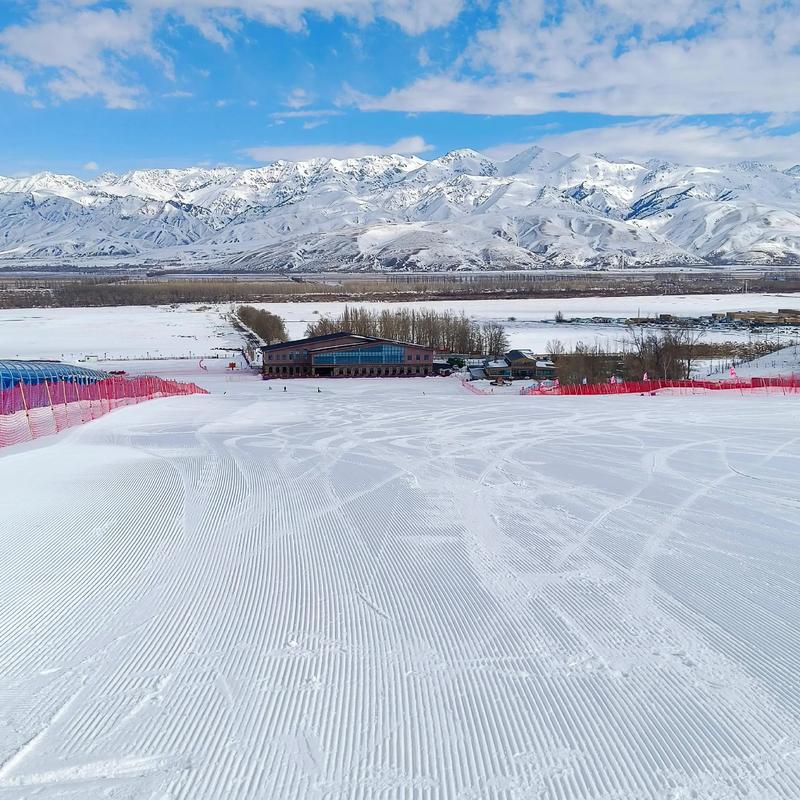
Burqin County (布尔津县), in northern Xinjiang’s Altay region, is the gateway most foreign travellers pass through on the way to Kanas Lake and the fairy-tale village of Hemu. What many visitors do not realise is that the same county now holds the largest ski resort in Asia. Jikepulin International Ski Resort (吉克普林国际滑雪度假区), up in the Hemu-Kanas Mongolian township, spans more than 5,000 hectares with 103 trails and a vertical drop of 1,466 metres — figures that have earned it the nickname “China’s powder factory.” This guide explains what Jikepulin actually offers, how it differs from the village experience, and how to build a Burqin winter stop into a Xinjiang ski trip.
Why Burqin Is More Than a Transit Town
Burqin sits where the Burqin River meets the Irtysh, a small timber-and-stone town that has long served as the base camp for Kanas and Hemu. The winter draw used to be scenery alone — frozen lakes, birch forests and the famous Hemu sunrise. That changed when Jikepulin opened in 2021 and kept expanding. Today the county pairs world-class powder with the kind of village and lake scenery that made it famous, so a Burqin stop can be both a sightseeing day and a serious ski day.
For context on the wider region, our Xinjiang ski resorts guide ranks the big fields, and Jikepulin sits at the very top of that list on scale alone. If you want the village atmosphere specifically, see our Hemu village skiing piece — this article focuses on the resort itself.
Jikepulin by the Numbers
The statistics are what set Jikepulin apart. The resort’s master plan covers more than 5,000 hectares, making it the largest international ski resort in Asia by capacity. It has built 103 trails totalling 108 kilometres, including the Koktokay trail (可可托海道) at 11.2 kilometres — the longest machine-groomed run in China — and a cable car whose one-way length reaches 4.93 kilometres. The main peak, Axmaili (阿西麦里峰), tops out at 2,848 metres with a maximum vertical drop of 1,466 metres, widely described as the greatest in the country. Nine cable cars and five magic carpets move riders, and the field carries national “5S” ski-resort certification plus a place on China’s top-10 ski-resort lists.
For the 2025–2026 season the resort pushed further: a new 50,000-square-metre beginner zone nicknamed “Love Avenue” (爱情大道) with three magic carpets, two FIS-certified race courses, a 160,000-square-metre visitor centre and 4,500 parking spaces, plus 40 new cable-car cabins that lifted hourly capacity by around 2,000 people. A free-ski or sightseeing day is offered to domestic visitors from outside Xinjiang within five days of arrival on a flight, and local Altay residents ski free.
Terrain for Every Level
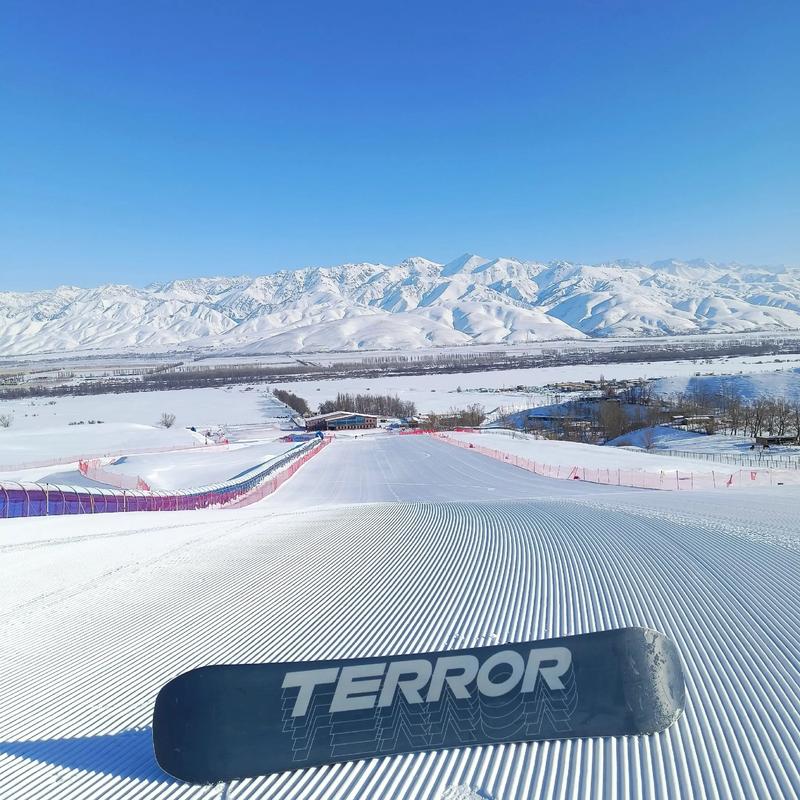
Jikepulin is unusual in serving both ends of the skill spectrum without compromise. Beginners get the wide, flat magic-carpet zone and the new “Love Avenue” beginner area to find their feet. Strong skiers and riders get the Jikepulin trail or the Qinggele trail (青格里道), where pitches hit 35 degrees and the vertical is more than a kilometre — genuine expert terrain. The powder itself is the headline: light, dry and non-sticky, the kind that floats rather than clumps, which is why the resort markets itself as China’s powder manufacturer.
Snowmobiling is part of the scene too. Our Xinjiang snowmobile tours guide covers how the machines and terrain differ across the region, and Jikepulin’s backcountry-access culture is among the most developed.
Beyond the Lifts: Events and Après
Jikepulin has become a competition venue, not just a resort. The Freeride World Tour (FWT) qualifier landed here in December, bringing international big-mountain riders to its off-piste faces. Off the snow, the East and West service halls hold food courts, gear shops, equipment mailing and a hot-spring spa (良子·阿加A+汤泉) for soaking sore muscles while snow falls outside. Lodging ranges from the Hilton Hemu and the Holiday Inn Resort Kanas-Hemu — both with ski-in, ski-out access next to the East hall — to the “Hemu 300” cabins, so you can step from your room onto the snow.
That combination of events, spa and slope-side hotels is what moves Jikepulin from “remote field” to “destination resort,” a different scale of operation from the small family hills found elsewhere in the region.
Getting to Burqin and Jikepulin
Burqin is reached by road from Altay City (about two hours) or by flights into Altay, then a transfer up to Hemu and the resort. The final approach into the Hemu-Kanas township is mountain driving, so winter tyres and a calm schedule matter. Once in the valley, shuttle buses and the resort’s own transport handle the rest, and the ski-in, ski-out hotels remove the daily commute entirely.
Because Burqin is also the Kanas gateway, many visitors combine a Jikepulin ski day with lake and village sightseeing — but note that Kanas Lake winter access and the Hemu village experience are distinct add-ons, not part of the lift ticket. Our Kanas Lake winter guide explains that side of the trip.
Planning Your Burqin Ski Stop
Treat Burqin as a minimum two-night stay if you want real time on Jikepulin’s terrain — one day barely scratches the 103 trails. Late November through March is the core season, with the deepest, driest powder typically from December to February; our best time to ski Xinjiang piece compares the windows. Book slope-side lodging early in peak weeks, pack for serious cold (the valley regularly sits well below freezing), and budget for the flight-in free-ski offer if you are arriving from outside Xinjiang. For kit, our clothing layers guide covers what to bring versus rent on site.
Burqin is the rare place where a world-scale resort and a storybook winter village share one valley. Ski Jikepulin’s powder by day, watch the Hemu sunrise at dawn, and you have one of the most complete ski experiences Xinjiang offers.
Frequently Asked Questions
How big is Jikepulin Ski Resort?
It is the largest international ski resort in Asia by capacity, with a master plan over 5,000 hectares, 103 trails totalling 108 km, a top elevation of 2,848 m and a maximum vertical drop of 1,466 m.
Is Jikepulin good for beginners?
Yes. The 2025–2026 season added a 50,000-square-metre beginner zone with three magic carpets, and the wide, flat areas let first-timers build confidence before tackling the longer trails.
What is the longest run at Jikepulin?
The Koktokay trail (可可托海道) runs 11.2 km and is the longest machine-groomed ski run in China, with a cable-car section of 4.93 km.
How do I get to Burqin and the resort?
Fly or drive to Altay City, then transfer about two hours to Burqin and up into the Hemu-Kanas township. Winter tyres and a flexible schedule help; slope-side hotels remove the daily commute.
Does Jikepulin host competitions?
Yes. The Freeride World Tour qualifier has been held here, using the resort’s off-piste faces, and two FIS-certified race courses were added for the 2025–2026 season.
Can I ski Jikepulin for free?
Domestic visitors arriving from outside Xinjiang can claim a free ski or sightseeing day within five days of their flight, and Altay residents ski free under the resort’s standing local policy.