

Most road trippers treat Jinghe as a fuel stop between Bortala and Sayram Lake. Stay a day instead. This oasis county in western Bortala builds its winter around hands-on fun: an ice park for families, goji-flavoured local food and horse games on open snow. It is a low-cost, no-lift alternative for families and mixed-ability groups who want a few hours of play rather than a full resort day. For the wider corridor, start with the Bortala winter travel guide.
Why Jinghe Works as a Winter Stop
Jinghe’s winter appeal is its authenticity and convenience. It sits right on the G30 corridor, roughly an hour west of Bortala’s capital and a short hop from the Sayram Lake turnoff, which means you can fold it into a lake-and-snow loop without backtracking. The county is nationally famous as “Goji Country” (杞乡) for its plump, sweet goji berries, and the winter season leans into that identity with art, food, and a relaxed oasis-town atmosphere. Winters here are cold and dry — perfect for keeping snow and ice in good shape — yet the programming is built around participation rather than spectating, so you are meant to run, pull, ride, and eat rather than watch from a fence.
Bayin Amen Ice-Snow Park — The Family Core
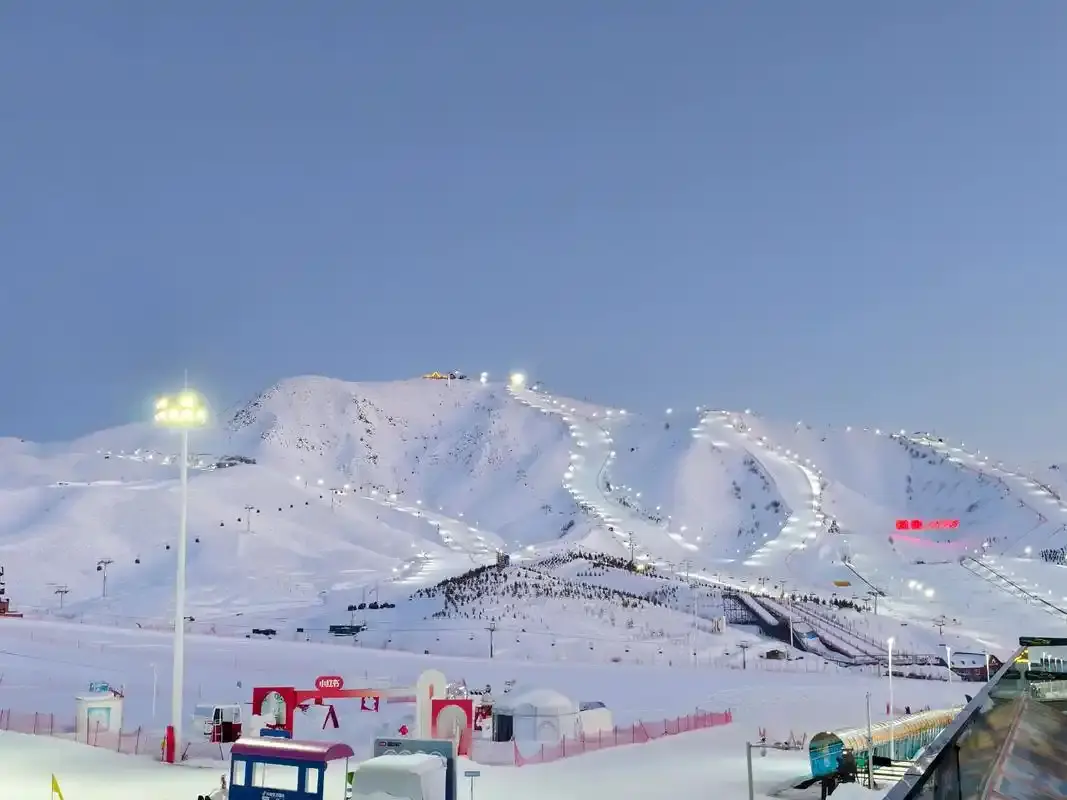
The centerpiece of the 2025-2026 season is the Bayin Amen Ice-Snow Park (巴音阿门冰雪乐园), which opened in late December after a fast construction push. The park fuses skiing, ice skating, and snow-cycling into one all-ages entertainment space, and once live it hosts the “Hot Snow Goji Country — Fantasy Ice-Snow Carnival” (热雪杞乡——奇幻冰雪嘉年华). Think gentle beginner slopes, a cleared skating surface, and snow-bike tracks that let kids and cautious first-timers play safely without the scale or price of a mountain resort. For families basing along the Bortala corridor, it is the gentlest possible introduction to snow — a place where the youngest members of the group can try a board or skates while parents relax at the edge with a warm cup of tea.
The 4th Snow Horse Racing Festival
Jinghe’s most distinctive winter event is its 4th Snow Horse Racing Festival (第四届雪地赛马会). Beyond the obvious draws of horse racing and 刁羊 (a traditional goat-grabbing contest on horseback), the festival innovates with “ice-and-fire” (冰火两重天) scene experiences: snow-hotpot feasts, local specialty markets, and a festive crowd that turns the frozen steppe into a party. Horse culture runs deep across Xinjiang’s northwest, and seeing it staged on snow — riders leaning into the cold, steam rising off the horses — is a photographic and cultural moment you will not find at a ski resort. Time your visit to a festival weekend if you can; the energy is several notches above a quiet weekday.
An Honest Note: No Downhill Ski Resort (Yet)
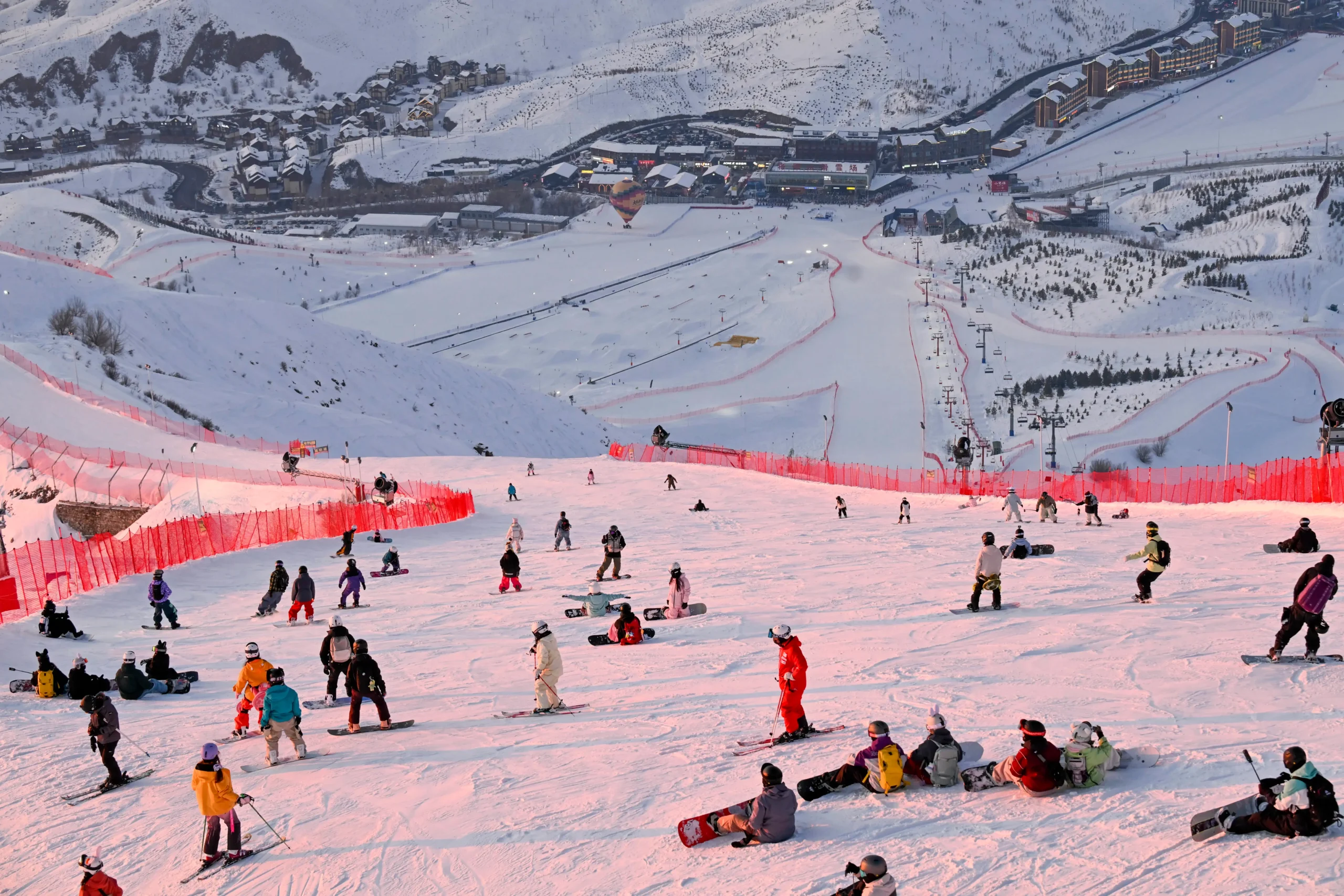
To set expectations clearly: Jinghe currently offers snow play, an ice park, and equestrian festivals — not alpine downhill skiing with cable cars. If your goal is to actually ride a lift, you will want to pair a Jinghe visit with a real resort. The nearest substantial slopes lie in neighboring prefectures: our Bortala winter travel guide covers the region’s ice-and-snow hubs, while the bigger hills are detailed in our best Xinjiang ski resorts roundup. Think of Jinghe as the cultural, foodie, family counterpoint to those mountains: come for the snow games and the horse festival, then head to the lifts when you want vertical drop.
Goji Country, Food & Culture
Culture is woven through the whole season. County events include a “Snow-Bathed Ink, Painting Goji Country” (雪润丹青·艺绘杞乡) peasant-painting workshop, an ice-and-snow storytelling session, and a winter football league for schoolchildren, all of which drew more than 10,000 participants in the opening stretch. New Year concerts lean on Silk Road motifs, the Spring Festival gala fuses guochao (national-trend) style with local color, and the Lantern Festival blends traditional 社火 processions with a snowy fashion party. Food is the easy headline: goji-infused dishes, warming noodle soups, and mutton hotpot appear at markets and stalls, and a January 2026 consumption-voucher campaign (“Warm Winter, Boiling Snow”) puts real discounts across dining, lodging, and attractions. For the broader picture, our Xinjiang skiing guide explains how winter tourism fits the region’s wider travel scene.
Planning Your Jinghe Winter Visit
Jinghe is simplest as a half-day or full-day excursion strung along the Sayram Lake route. Arrive mid-morning, catch the Bayin Amen park or a festival event, drift through the goji-themed markets for a late lunch, and roll on to Sayram Lake’s blue ice in the afternoon light. Dress in layers — the basin sun on snow is deceptively strong, and wind can bite — and bring a camera for the horse festival and the snowy oasis fields. If you are deciding when to come, our best time to ski in Xinjiang breakdown explains how southern Bortala and northern resort seasons differ, and our where to ski in Xinjiang guide helps you sequence Jinghe into a wider winter loop. The 2025-2026 program runs roughly November through March, so most of the cold season is fair game.
A Sample Jinghe Winter Day
If you are basing along the Bortala corridor, a Jinghe winter day is easy to shape. Leave Sayram Lake or Bortala city mid-morning and arrive in Jinghe as the Bayin Amen park or a festival event is warming up. Start with the open snow play — the park’s gentle slopes and skating surface are most active late morning — then drift to the goji-themed markets for a warming bowl of noodle soup and a cup of black tea. Spend an hour or two watching the horse festival if your dates line up, or simply wander the oasis fields where leafless poplars frame the snow. By early afternoon you can roll on to Sayram Lake’s blue ice for the famous late-day light, or loop back to Bortala for the night. The whole excursion asks little of your skiing ability and costs far less than a resort day, which is precisely why it works as a relaxed counterpoint to a more demanding mountain stop elsewhere in Xinjiang. Pack a spare pair of gloves if you plan to join the snow games, because the powder gets everywhere and cold, damp hands end the fun early.
Is Jinghe worth a winter detour if nobody in the group skis?
Yes, if you want a snow day without lift tickets or gear. Jinghe’s winter programme is built around participation: ice slides, snow games and horse events that children and non-skiers enjoy too. It suits families and mixed-ability groups driving the G30 corridor who prefer a few hours of play to a full resort day.
Budget a half day rather than a holiday. The ice park is the main anchor, and the surrounding town adds food and a slow oasis-town atmosphere. If blue ice is the priority, pair this stop with the Sayram Lake blue ice guide and make one loop of it.
What can families actually do at Bayin Amen Ice-Snow Park?
Expect ice slides, snow play areas and local activities rather than a ski hill. The park is designed for short visits, with children moving between attractions while adults stay nearby. Treat it as a local winter fair: informal and friendly, not a polished resort. Bring extra layers, since standing still in the cold differs from skiing.
Event line-ups change through the season, so check what is running on the day rather than relying on last winter’s schedule. Snacks and hot drinks are usually available nearby, but confirm opening hours and any ticket arrangements on the park notice board when you arrive.
Where does Jinghe fit in a Bortala and Sayram Lake route?
Jinghe sits on the G30 corridor, about an hour west of Bortala and a short drive from the Sayram Lake turnoff. That makes it an easy add-on to a lake-and-snow loop with no backtracking. Stop for a morning on the ice, eat in town, then continue to the lake or return to Bortala before dark.
The county is known nationally for goji berries, and winter programming leans into that identity with food and local culture. Reading the goji berry guide first helps you recognise what is being celebrated. Keep the day flexible: short daylight and icy roads matter more than a tight itinerary.
Frequently Asked Questions
Is there a ski resort in Jinghe County?
Not a cable-car alpine resort. Jinghe offers the Bayin Amen Ice-Snow Park (skiing, skating, snow-cycling), snow games, and equestrian festivals. For downhill skiing, pair it with resorts covered in our Bortala and wider Xinjiang guides.
When does the Jinghe winter season run?
The “Enjoy Ice & Snow, Ignite Jinghe” 2025-2026 season launched in late November 2025 and runs through March 2026, with 20-plus events across New Year, Spring Festival, and Lantern Festival.
What is the Snow Horse Racing Festival?
It is Jinghe’s 4th edition of a winter equestrian festival featuring horse racing and 刁羊, plus “ice-and-fire” experiences like snow hotpot and specialty markets. It is one of the county’s most distinctive photo and culture moments.
What is Jinghe famous for besides winter?
Jinghe is nationally known as “Goji Country” for its sweet goji berries, and it sits on the G30 corridor near Sayram Lake, making it a natural winter stop on a Bortala lake-and-snow road trip.
Is Jinghe good for families?
Yes. The Bayin Amen Ice-Snow Park is built as an all-ages space with gentle slopes, skating, and snow-bike tracks, and the county’s events are participation-focused, so kids can join rather than just watch.
Do I need ski equipment for a Jinghe winter visit?
No. Jinghe’s winter activities centre on an ice park, snow games and horse events, not downhill lifts. Wear insulated boots, warm layers and gloves you can move in, but leave the skis at home. If someone in the group wants real skiing, plan a separate resort day elsewhere in the Bortala or Altay area.
When is Jinghe’s winter programme open?
Recent seasons have run from late November into March, with more than twenty events spread across the winter. Exact dates and individual event times shift each year, so confirm the current programme on the county or park notice board before you drive. Short winter daylight means an early start is sensible even when the events themselves run late.