

A single folk song made Dabancheng (达坂城) famous around the world. “The stones on Dabancheng’s road are hard and flat, the watermelons big and sweet,” sings 王洛宾’s (Wang Luobin) “The Girl from Dabancheng” (达坂城的姑娘), and generations of travelers have hummed it without ever stopping. Winter is the best time to finally visit. About 40-90 km southeast of Urumqi, Dabancheng District (达坂城区) is a wind-scoured, culturally rich pocket of the Tian Shan where you can float in a salt lake, walk a Tang-dynasty fortress town dusted with snow, and watch Przewalski’s horses at a wildlife zoo — all without strapping on skis. If you want a no-lift winter day trip from Urumqi that is genuinely different from the resort circuit, Dabancheng delivers.
Why Dabancheng Is Different
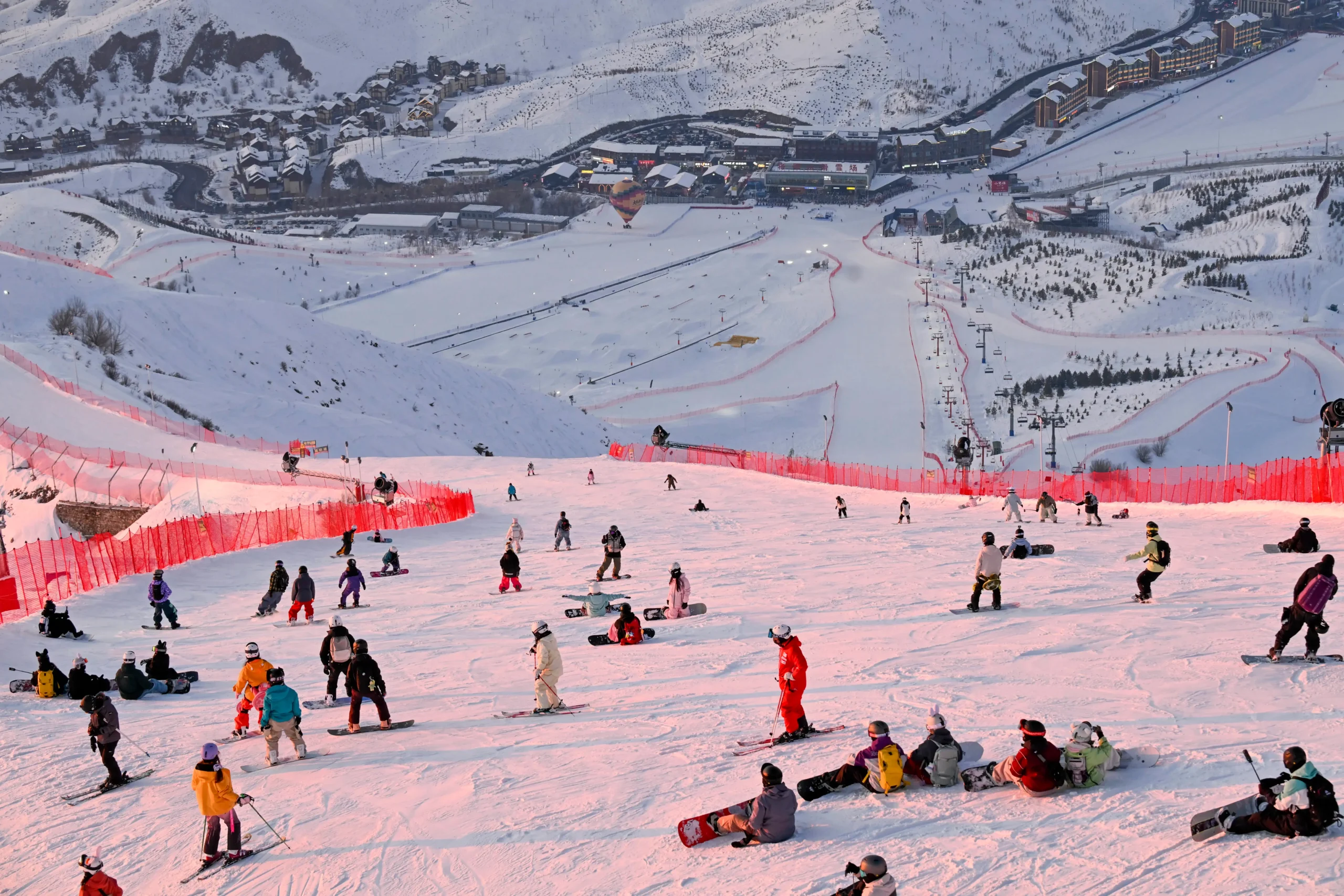
Dabancheng sits in one of Xinjiang’s windiest corridors, studded with rows of wind-turbine generators that turn the gusts into power. That same wind gives the district an open, bracing character and keeps the skies clear for photography. Crucially, Dabancheng is not a ski destination — it is a cultural, salt-lake, and wildlife winter destination. That is a feature, not a gap: it lets you build a relaxing, low-cost day that contrasts nicely with the busy slopes of neighboring Urumqi County, which you can read about in our Urumqi ski resorts guide. Come for the salt, the history, and the animals; leave the carving to another day.
Dabancheng Salt Lake — China’s “Dead Sea” on Snow
The headline attraction is the Dabancheng Salt Lake Scenic Area (达坂城盐湖景区), a national 3A site and national industrial-tourism demonstration point that has been operated for over a decade. Its brine is roughly seven times saltier than seawater, letting you float effortlessly — a “China’s Dead Sea” experience without leaving Xinjiang. The lake pairs pure-white salt fields and salt-sculpture gardens with a “sky mirror” (天空之镜) photography point, and in winter the surrounding Tian Shan turn snow-white, giving the salt flats an unusual cold-season frame. Visitors can ride a small sightseeing train through the salt fields, learn how salt is formed and harvested, and try black-mud and salt-bath wellness treatments. It is a quietly photogenic, family-friendly half-day, and a rare chance to combine a wellness float with a snowy mountain backdrop.
Baishuijian Ancient Town — A Tang Fortress in Snow
A few minutes away stands Baishuijian Ancient Town (白水涧古镇), a Tang-dynasty-style replica fortress complete with a moat, drawbridge, beacon tower, and weapon platform that recreate the might of a frontier military town of the Tang era. Step through the heavy gate and stroll along the river past workshops for Atlas silk (艾德莱斯绸) and handmade leather, or test your aim at the archery range. In winter the snow softens the ramparts and makes the whole compound feel like a forgotten frontier outpost — a different, more contemplative kind of winter scene than any slope. During the 2025-2026 winter the town offered free entry for students aged 6-18 and half-price for adults on select dates, so check current promotions before you go.
Tianshan Wildlife Zoo — Snow, Ponies & New-Year Festivals
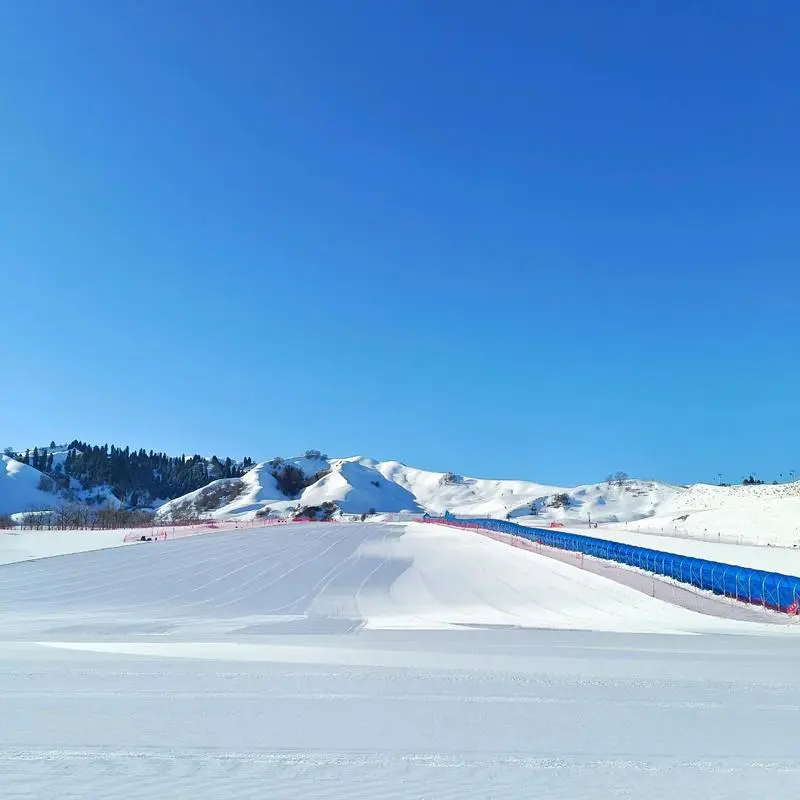
Also in Dabancheng, the Xinjiang Tianshan Wildlife Zoo (新疆天山野生动物园) is home to Przewalski’s horses (普氏野马), snow leopards, and argali sheep across eight display zones. Winter is when the zoo gets festive: its first “Ice Wonderland · Beast New-Year” (冰上奇园·兽贺迎新) event ran January 1-3, 2026, with horse-drawn sleds, snow-tubing, ice-hotpot, and bonfire gatherings, plus half-price admission; and the “Steeds Welcome Spring” (骐骥迎春·驰骋贺年) Spring Festival culture festival (February 15-23, 2026) offered adult tickets at half price and free loaner snow gear so visitors of all ages could skate and build snowmen among the animals. It is an easy, joyful winter outing for families already basing near Urumqi.
Wind, Ice & Outdoor Culture
Dabancheng’s wind is not just scenery — it powers a growing outdoor-sports identity. The district’s grassy alpine valleys host events from motorcycle off-road races during its snow-chrysanthemum festival to ice-climbing exchanges held on frozen waterfalls in the Tian Shan pasturelands, where climbers rope up on dozens-of-meters-high ice walls flanked by wind turbines and canyon views. Even if you only watch, the combination of roaring wind, humming turbines, and frozen cliffs is distinctly Dabancheng. For national context on where this fits, our China skiing guide outlines the country’s winter-tourism landscape beyond Xinjiang’s resorts.
Planning Your Dabancheng Winter Visit
Dabancheng works best as a self-drive day trip from Urumqi — the Salt Lake is about 45 km southeast of the city, and the ancient town and zoo are signed right off the highways. Dress warmly and bring a windproof layer; the district earns its breezy reputation, and winter gusts can be sharp. Give yourself a half day to float and photograph the salt lake, then an hour or two for the fortress town and, if traveling with kids, the wildlife zoo’s snow play. If you want real slopes instead, sequence this with our where to ski in Xinjiang guide, and check our best time to ski in Xinjiang piece to time a resort day around the same winter window. Families will also find useful tips in our family skiing in Xinjiang overview before they fly in.
A Sample Dabancheng Winter Day
Dabancheng is simple to structure as a self-drive loop from Urumqi. Leave the city mid-morning and reach the Salt Lake about 45 km southeast; spend the first stretch floating, walking the white salt fields, and photographing the “sky mirror” with the snowy Tian Shan behind it. Late morning, drive on to Baishuijian Ancient Town for a slow walk through the Tang fortress — moat, drawbridge, and archery range — pausing at the Atlas silk and leather workshops. If you are traveling with children, add the Tianshan Wildlife Zoo for its snow play and Przewalski’s horses, timing your visit to one of the winter festivals for the half-price admission and free loaner gear. By mid-afternoon, with the wind at your back, you can be back in Urumqi well before dark. The route is short, flat, and well signed, which makes it ideal for a relaxed day when you do not want the logistics of a mountain resort. Bring a windproof layer, a camera, and an appetite for the district’s famously sweet watermelons if you visit in the warmer shoulder seasons.
Frequently Asked Questions
Is Dabancheng a ski destination?
No. Dabancheng is a cultural, salt-lake, and wildlife winter destination — salt floating, a Tang fortress town, and a wildlife zoo with snow festivals. For downhill skiing, use our Urumqi resorts guide and pair the two into one trip.
What makes the Salt Lake special in winter?
Its brine is about seven times saltier than seawater, so you float effortlessly, and the surrounding Tian Shan turn snow-white, framing the white salt fields and “sky mirror” with a rare cold-season look.
Is Baishuijian Ancient Town worth visiting?
Yes, especially in snow. The Tang-style fortress — moat, drawbridge, beacon tower, archery range, and silk-and-leather workshops — makes a quiet, photogenic winter walk quite different from a resort day.
What winter events happen at the wildlife zoo?
The 2026 New-Year “Ice Wonderland” event (Jan 1-3) and the Spring Festival “Steeds Welcome Spring” festival (Feb 15-23) offered half-price admission, horse-drawn sleds, snow-tubing, ice-hotpot, and free loaner snow gear.
How do I get to Dabancheng from Urumqi?
Self-drive is simplest: the Salt Lake is roughly 45 km southeast of Urumqi, with the ancient town and wildlife zoo signed off the highways. Allow a relaxed half-to-full day for the loop.