

There is a specific kind of quiet that only exists inside a snow-loaded forest. The wind drops, the light softens, and the noise of the resort disappears about twenty metres in. Glade skiing — linking turns through spaced trees rather than on an open piste — is one of the most rewarding things you can do on a good snow day, and the forested slopes of northern Xinjiang are unusually well suited to it. This guide covers what tree skiing actually involves, why the region’s snowpack and forest structure lend themselves to it, the skills to build before you drop into your first glade, and the safety rules that genuinely matter. If you are still planning the trip itself, start with our broader Xinjiang skiing guide and treat this as the chapter you read once you are already comfortable on ungroomed terrain.
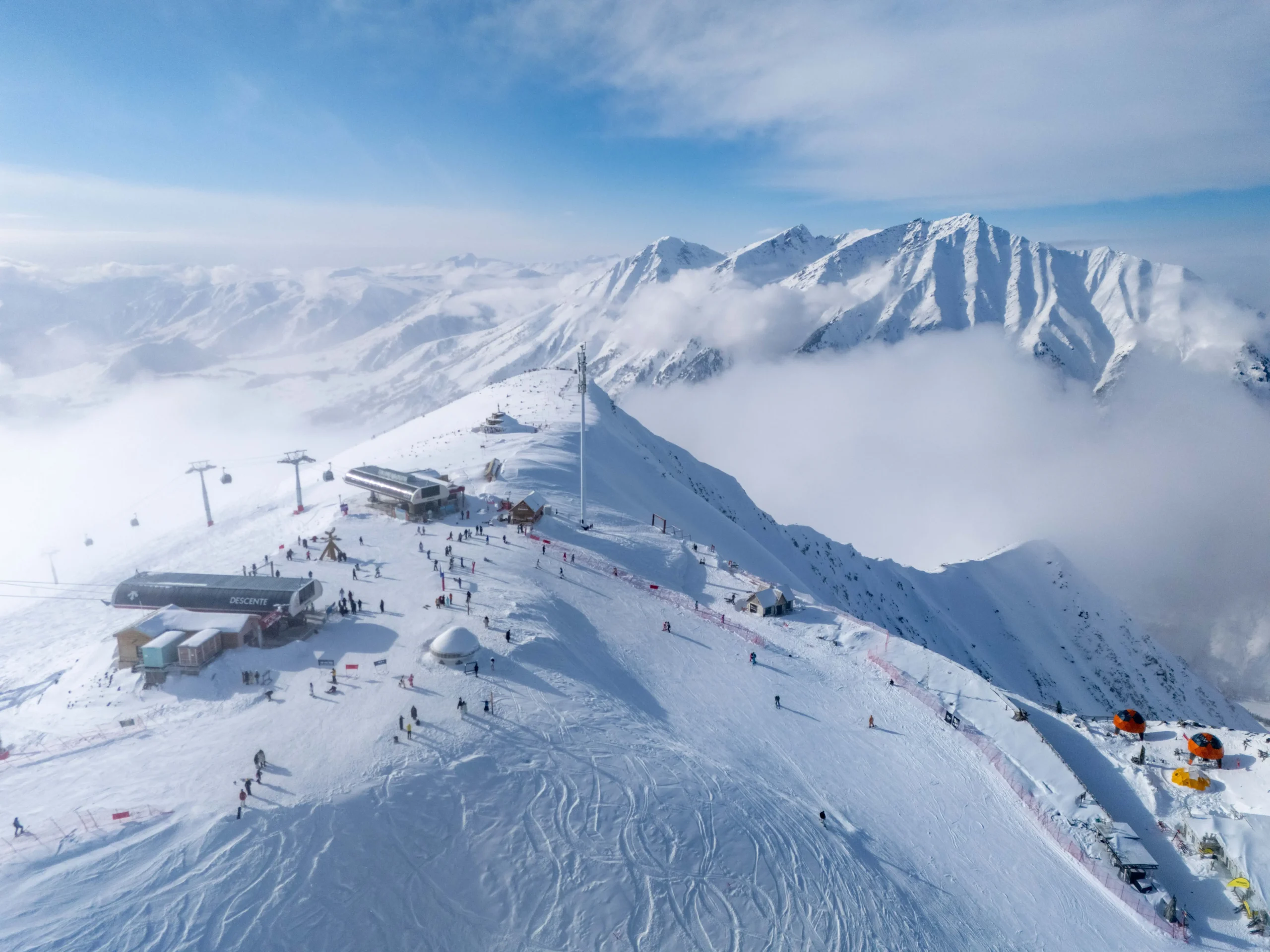
What glade skiing actually means
A glade is a section of forest where the trees are spaced widely enough to ski between. Some glades are natural, formed by mature stands where the canopy has thinned the understorey. Others are managed, thinned deliberately by resort staff to create rideable lines. Either way, the experience is different from open-slope skiing in three respects: the snow stays softer for longer because it is sheltered from wind and direct sun, the terrain arrives faster because you cannot see far ahead, and the consequences of a mistake are higher because the obstacles are solid and fixed.
Tree skiing is not the same as backcountry touring, though the two overlap. Plenty of glade skiing happens inside resort boundaries, accessed from a normal lift, with patrol coverage and marked exits. That in-bounds version is the right place to learn.
Why Xinjiang’s forests suit tree skiing
Cold, dry snow that stays light
The Altai region and the Tianshan foothills receive a continental snowpack: cold, comparatively dry, and slow to consolidate. Inside a forest, sheltered from both wind scouring and midday sun, that snow can stay soft for days after a storm while the open pistes have already been skied off or wind-affected. This is the single biggest practical reason experienced visitors head for the trees, and it is closely related to the general snow quality described in our Xinjiang powder skiing guide.
Forest structure and spacing
Much of the treed terrain in northern Xinjiang consists of spruce and larch stands. Spacing varies enormously: some sectors offer genuinely open, park-like glades, while others are dense enough that you should simply stay out. The practical approach is to look at the forest edge from the lift on the way up and judge whether you can see through it. If you cannot see daylight three or four tree-lengths in, it is not a glade — it is just woods.
Where to look
Concentrate on the margins of established runs, the shoulders between two pistes, and lower-mountain sectors below the treeline. Higher up you may be above the trees entirely. Resorts vary in how much gladed terrain they signpost, so ask at the ticket office or a rental shop which sectors are open for tree skiing this season; our overview of advanced terrain in Xinjiang outlines which areas hold the most interesting steeper and treed options.
Skills you need before your first tree run
Trees punish hesitation more than they punish lack of strength. Before entering a glade you should be able to do all of the following on ungroomed snow, comfortably and repeatedly:
- Make short-radius turns on demand, not just long arcs, so you can fit a turn into a two-metre gap.
- Ski soft, variable snow without relying on edge grip from a groomed surface.
- Stop reliably in a short distance, including a hockey stop on a moderate pitch.
- Ride switchbacks and traverse across a slope with control, which is how you exit a glade you have misjudged.
- Get up unassisted after falling in deep snow — which is far harder than it sounds and worth practising deliberately on an open slope.
If any of those is shaky, spend another day or two on off-piste open terrain first. Nothing about the forest gets easier by starting sooner.
How to read a line through the trees
The single most important habit in glade skiing is looking where you want to go rather than at the obstacle you want to avoid. Beginners stare at trunks and steer straight into them; experienced tree skiers scan the gaps and let their feet follow their eyes. Work on a rhythm of looking two or three gaps ahead — roughly two seconds of travel — the same way you would drive a winding road.
Beyond eye discipline, a few structural habits help:
- Enter at a controlled speed. Slower than you think, especially for the first fifty metres while your eyes adjust to the flat light under the canopy.
- Follow the natural fall line of the gaps rather than forcing a straight descent. Glades reward flowing sideways.
- Keep your hands forward and quiet. Wide, dramatic pole plants catch branches.
- Pick a visible exit before you enter — a piste edge, a cat track, a creek line — so you always know which direction leads out.
Safety: the non-negotiables
Never ski trees alone
This is the rule that matters most. In a forest you can be twenty metres from a groomed run and completely invisible to it. Ski with at least one partner, agree on a regrouping point before you drop in, and keep visual or verbal contact through the descent. Leapfrogging — one skier goes, stops in sight, then calls the next — is the standard method and costs almost no time.
Tree wells and deep snow immersion
A tree well is the void of loose, unconsolidated snow that forms around a trunk where branches have shielded the ground. Fall into one head-first and self-rescue can be genuinely impossible, because the snow collapses inward. Prevention is the whole strategy: stay well away from trunks, do not ski within arm’s reach of a mature spruce, and maintain partner contact so that someone can reach you within minutes. If you do end up inverted, protect an air space in front of your face with your hands and try to rock rather than thrash.
Gear that earns its place
- Helmet, always. Low branches are the routine hazard, not the dramatic one.
- Goggles with a low-light lens. Under a canopy on an overcast day, a dark lens is actively dangerous.
- A whistle on your jacket zip — cheap, weightless, and audible where shouting is not.
- A small pack with water, a spare layer and a basic first-aid kit — blister plasters, tape and a compression bandage cover most realistic incidents.
- Ski brakes or leashes. Losing a ski in deep forest snow can end the day.
Know where the boundary is
In-bounds glades are patrolled; terrain beyond the rope is not. Crossing a boundary changes the risk category entirely, brings avalanche terrain into play, and demands transceiver, shovel and probe plus the training to use them. The distinction is covered properly in our guide to backcountry safety in Xinjiang, and it is not a line to cross casually on a first visit.
Technique adjustments that make trees easier
Most skiers do not need a new technique so much as a slightly compressed version of the one they have. Shorten your turn radius by rolling the skis onto edge earlier and finishing the turn sooner. Stay centred rather than leaning back; in soft snow the temptation to sit back kills your ability to steer quickly. Keep a slightly wider stance for stability in variable snow, absorb terrain with your legs rather than your whole body, and breathe — tension in the shoulders is what turns a controlled descent into a series of reactions.
Snowboarders face a specific issue: flat sections and tight gaps can leave you stalled in deep snow with no easy way to restart. Choose glades with a consistent pitch, and avoid low-angle forest until you are confident.
A sensible progression plan
- Spend a day on off-piste open slopes making short-radius turns until they feel automatic.
- Ski the first few metres of a glade at the edge of a piste, then exit immediately. Repeat several times.
- Link fifteen to twenty turns in widely spaced trees with a partner leapfrogging.
- Progress to longer sustained descents in the same sector before trying new ones.
- Only then consider tighter spacing or steeper pitches, and only in good light.
Timing matters as much as skill: the best forest snow follows a storm cycle, and mid-winter delivers colder, lighter snow than the spring months. Our notes on the best time to ski in Xinjiang will help you align the trip with the period when the glades are at their best. Getting around the mountain efficiently also helps, and knowing the lift network — covered in our guide to chairlifts and gondolas at Xinjiang resorts — means more laps on the sectors that hold soft snow.
Etiquette in the forest
Glades are a shared and finite resource. Do not poach a line that someone is already descending; wait for them to clear. Avoid stopping in a blind spot below a roll. Fill in a deep hole if you dig one out after a fall, as it is a hazard for the next skier. And respect closures absolutely — a rope across a forest entrance usually means either thin cover with buried obstacles or active avalanche work above.
Frequently Asked Questions
Do I need a guide for tree skiing in Xinjiang?
Not for in-bounds glades if you already ski ungroomed snow confidently and have a partner. A local guide becomes genuinely valuable if you want to find the best-spaced sectors quickly, if you are visiting for only a few days, or if you are considering anything beyond the resort boundary.
What skis work best in the trees?
Something with reasonable float and a fairly short turning radius. A mid-width all-mountain ski in a slightly shorter length than your open-slope preference is the most versatile choice for glades. Very long, very stiff powder skis are harder to pivot in tight gaps.
Is tree skiing more dangerous than off-piste on open slopes?
It carries a different risk profile rather than a uniformly higher one. Trees anchor the snowpack and often reduce avalanche risk, but they introduce impact hazards and tree wells, and they make it far easier to lose sight of a partner. Managed properly, in-bounds glade skiing is a reasonable step for a confident intermediate.
Can beginners try glade skiing?
Genuine beginners, no. You need reliable short turns and confident stopping in soft snow first, which typically means a couple of seasons of regular skiing or a very intensive week of lessons plus off-piste mileage. Build the base on open terrain — it is faster in the end.
What should I do if I lose sight of my partner in the trees?
Stop immediately and call out or whistle rather than continuing to the bottom. Agree in advance that whoever is ahead waits at the pre-set regrouping point. If there is no response after a short search, go for patrol rather than searching alone and unequipped.