

If you can link short turns on a black run without thinking about it, Xinjiang is the place your skiing finally gets interesting. This is a region with genuine vertical, long seasons and mountains big enough to hide terrain most visitors never see. But “advanced” is not a single skill: it is a stack of habits, judgement and specific techniques that you build one layer at a time. This guide shows where the serious terrain lives, what each type demands, and how to progress without biting off more than the mountain can safely give.
Before you push into anything steeper or more exposed, make sure your fundamentals are genuinely solid. Our notes on intermediate progression in Xinjiang lay out the drills that separate a confident blue-run skier from someone ready for black and beyond.
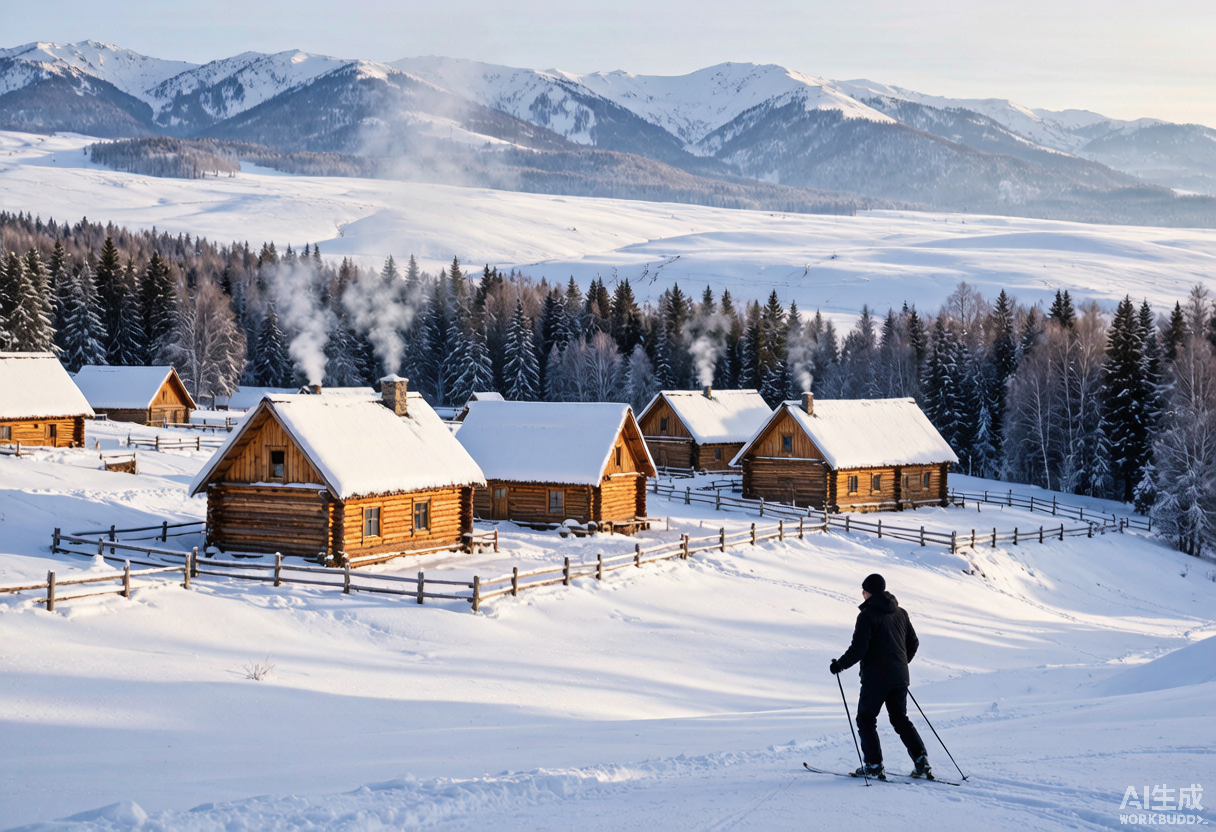
What “Advanced” Actually Means Here
In Xinjiang the jump from intermediate to advanced is mostly about three things: managing speed on pitches you cannot see the bottom of, reading variable snow at speed, and making conservative decisions when the consequence of a mistake grows. The terrain rewards skiers who can stay relaxed under their feet and adapt, rather than those who simply attack harder.
The terrain gradient
- Single-black groomers: the entry point. Steeper, often icier in the morning, and longer than resort blues.
- Mogul fields: un-groomed bumps that test rhythm and absorption more than strength.
- Off-piste and sidecountry: ungroomed snow off the marked boundary, where snow quality and hazards vary wildly.
- Big-mountain lines: long, committing descents with exposure, often reached after a hike or a lift-plus-skin.
Finding Steep and Serious Terrain
Not every resort here is built for experts, but several have real teeth. The steepest in-bounds pitches tend to sit under lifts rather than beside them, on north faces that hold snow but also hold ice. Look for terrain marked with a double-black or a local “expert only” sign, and ask ski patrol where the sustained steeps actually are rather than trusting the trail map colour alone.
For ungroomed snow just beyond the ropes, our overview of off-piste terrain at Xinjiang resorts explains the access points, the usual hazards and the etiquette of skiing just outside the boundary without triggering a rescue.
Moguls: The Best Free Coaching You Will Get
Bumps are the fastest way to improve balance and timing, and Xinjiang’s dry snow makes them more forgiving than the heavy, sticky moguls of wetter climates. The skill is absorption: knees and ankles flexing to keep your upper body quiet while the skis ride up and over each bump. Resist the urge to sit back; backseat skiing in bumps ends in a yard sale.
Several resorts maintain dedicated bump runs, and you can see where they concentrate in our guide to mogul fields in Xinjiang. Start on the edge of a field where the bumps are smaller, then work toward the centre as your rhythm builds.
Parks, Pipes and Air
If your idea of progression involves leaving the ground, Xinjiang’s park scene is quietly strong. The larger destination resorts build progressive features: small kicker lines for learning, medium jumps for style, and a few larger hits for those who have earned them. Rail and box gardens are common, and the cold, dense snow means softer, more predictable landings than you might expect.
Many mountains run structured coaching through the season, which is worth a look even for strong skiers who have never been coached on air. Our write-up of freestyle camps at Xinjiang resorts covers what to expect, and our terrain park guide explains how features are graded so you can pick the right line.
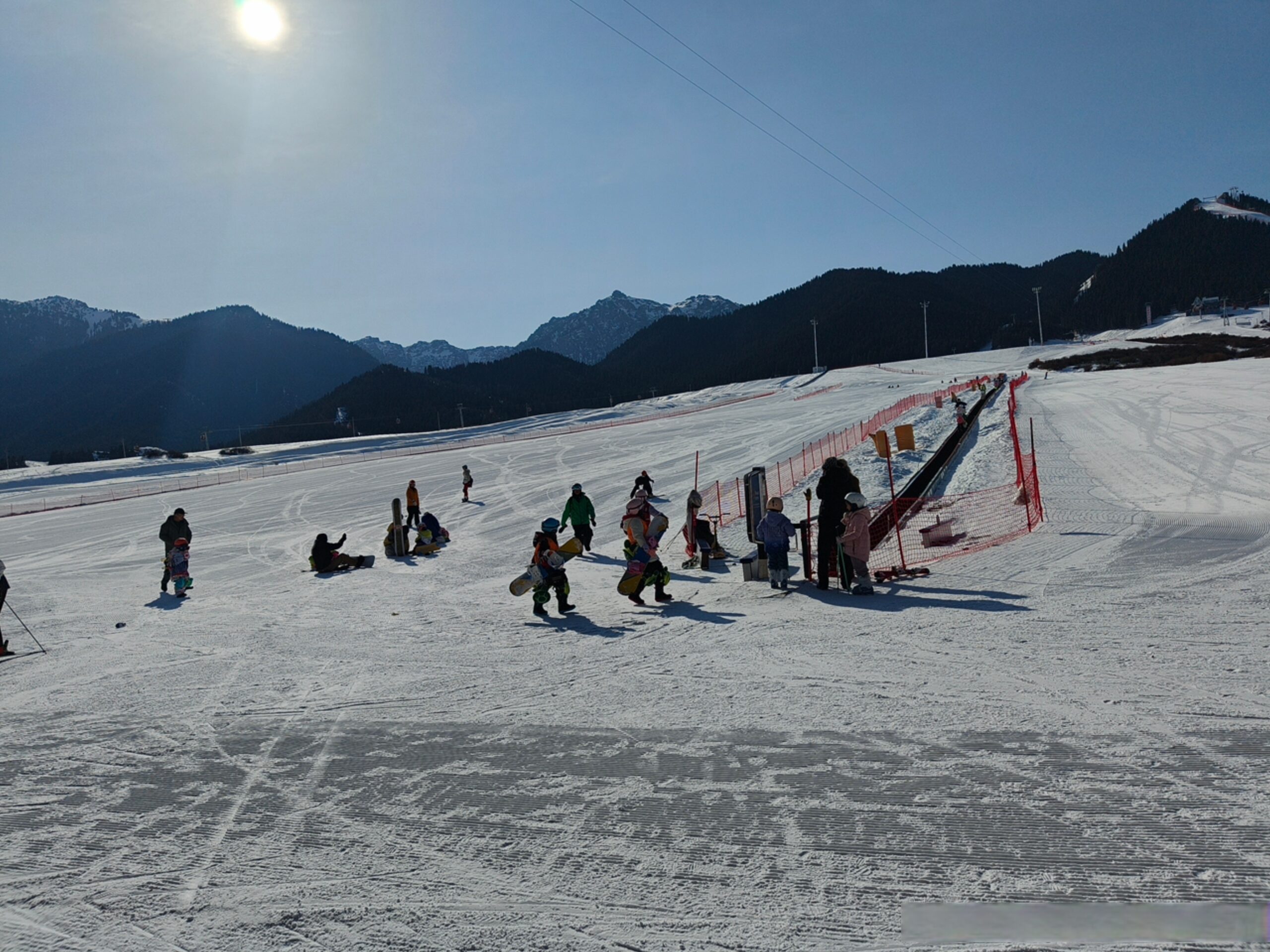
Off-Piste and the Step Into Commitment
The moment you leave groomed snow, the rules change. Snow can be bottomless, breakable, wind-packed or crusty within a single turn. Reading it is a skill in itself, and learning to judge surface, aspect and wind effect is essential homework before your first untracked run.
For anything beyond a short sidecountry lap, treat off-piste as backcountry-lite: tell someone your plan, carry the basics, and know the local avalanche picture. Our off-piste guide walks through the gear, the partners and the decision-making that keep expert days fun rather than fatal.
Reading the Mountain Before You Drop In
Expert terrain punishes skiers who commit before they look. The habit that separates confident advanced skiers from reckless ones is a quick, repeatable scout: ride the lift that overlooks your line, note where the sun has softened snow and where wind has scoured it, and identify the exits before you start down. Most serious incidents here are not about skill but about skiing into a no-fall zone blind.
Spend the first run of the day on familiar terrain to read the day’s snow and temperature, then step up once you know what the mountain is doing. Watch where patrol closes boundaries and respect it; those closures usually mark terrain too thin, too rocky or too avalanche-prone to be safe. Ski with a partner on anything committing, agree on a meet point at the bottom, and keep a whistle and a small shovel in your pack even for sidecountry. None of this slows a good day; it just makes sure there is a next one.
Building the Skill Stack Safely
- Master the edge. Reliable short turns on ice are the foundation; without them, steeps become survival skiing.
- Learn bumps before powder. Bumps teach balance that transfers directly to soft snow at speed.
- Take one park session. Even one coaching day improves your air awareness and your falls.
- Earn your off-piste. Build from sidecountry to backcountry, never the reverse.
- Ski with better skiers. The single biggest accelerator is watching how experts manage terrain and speed.
- Respect altitude and fatigue. Thin air at high resorts degrades judgement late in the day; quit while you are still sharp.
Equipment That Matches the Ambition
Advanced skiing punishes the wrong tool. A slalom ski that is perfect on hardpack becomes a handful in crud; a powder plank that floats in fresh snow is tiresome on a groomed steep. Many strong visitors bring two pairs, or choose a versatile all-mountain ski around 90 to 100 mm underfoot. Sharp, well-tuned edges matter more the harder you ski, so plan a mid-trip tune. Boots that fit precisely stop the ankle fatigue that causes late-day mistakes.
Frequently Asked Questions
Which Xinjiang resorts are best for advanced skiers?
The larger destination resorts with real vertical and double-black terrain suit experts best, especially those with off-piste access and maintained mogul or park features. City day hills are fun but limited once you are comfortable on steeps.
Do I need a guide to ski off-piste in Xinjiang?
For short sidecountry laps with good snow knowledge, many experienced skiers go unguided. For anything remote, multi-aspect or after fresh snowfall, a local guide is strongly recommended for safety and for finding the best lines.
Are Xinjiang moguls harder or easier than elsewhere?
Generally easier to ski because the snow is dry and the bumps hold a consistent shape. The challenge is more about rhythm than brute strength, which makes them excellent training.
What skis should an advanced skier bring?
An all-mountain ski around 90 to 100 mm underfoot handles most Xinjiang conditions, with sharp edges and a mid-trip tune. Bring a second powder-specific pair only if you will ski deep snow multiple days.
How do I know I am ready to step up?
If you can ski every black run at your home hill relaxed and tired but in control, you are ready to start. Build through bumps and sidecountry before committing to big-mountain lines, and never let ego outrun your ability to stop.
Is the altitude a problem for strong skiers?
It affects everyone eventually, mainly by eroding judgement and reaction time late in the day. Hydrate, pace yourself, and plan a day of easy acclimatisation before tackling the highest, most committing terrain.