

Most international skiers picture Xinjiang in the depths of January: minus twenty temperatures, chest-deep powder in the Altay valleys, and frost-covered lift towers. Far fewer realize that the region’s ski season stretches well into March, and at higher-altitude resorts sometimes into early April. Late-season skiing in Xinjiang is a different experience from the midwinter deep freeze, and for many visitors it is actually the smarter trip: longer daylight hours, milder temperatures, discounted lift tickets, and slopes that empty out after the Chinese New Year rush. This guide explains when Xinjiang resorts typically close, what conditions to expect in March, and how to plan a late-season trip that still delivers memorable skiing.
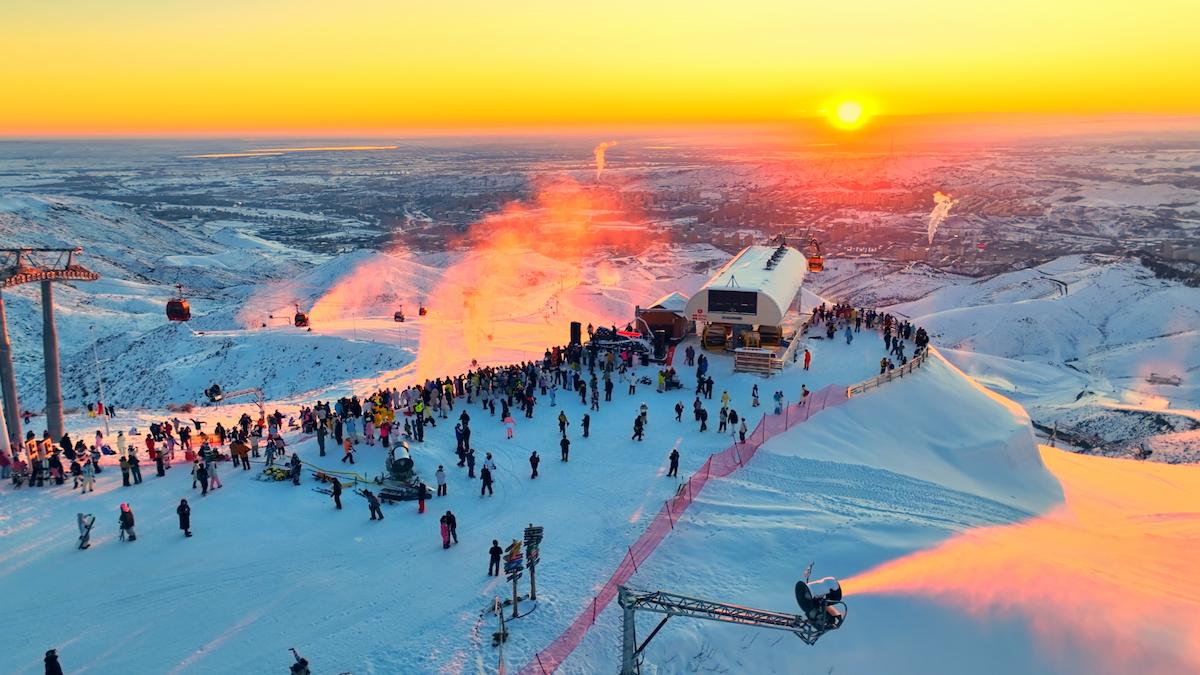
When Do Xinjiang Ski Resorts Close?
Closing dates vary by altitude, latitude, and resort investment in snowmaking. As a general rule, the big destination resorts hold on the longest, while small city hills near Urumqi wind down first. Understanding the pattern helps you pick the right base for a March trip. For a full month-by-month picture of the winter, see our overview of the Xinjiang ski season.
- Silk Road Ski Resort (Urumqi): usually operates until late March, occasionally the first week of April on upper runs. Its elevation range above 2,000 meters and strong snowmaking system keep the main pistes skiable long after the city below has thawed.
- General’s Hill (Jiangjun Shan, Altay City): typically closes in late March. North-facing runs hold cold, dry snow surprisingly well, and night skiing often continues until the final weeks.
- Koktokay International Ski Resort: the altitude leader, with terrain approaching 3,000 meters. Upper mountain skiing frequently lasts into early April, making it the safest bet for a very late trip.
- Hemu and smaller Kanas-area ski zones: these rely on natural snow and shorter lift infrastructure, and generally wrap up by mid-March as valley temperatures climb.
- Small local hills around Urumqi: many close by early March once school holidays end and the snowpack softens.
Exact dates shift year to year with snowfall and temperatures, so confirm with the resort or your hotel a week or two before traveling. A quick phone call or a check of the resort’s official WeChat account is the most reliable source.
What March Skiing in Xinjiang Actually Feels Like
Temperatures and daylight
March transforms the skiing day. In January, many visitors ski in short bursts between warming breaks; by mid-March, daytime temperatures at the resorts typically sit between minus eight and plus five degrees Celsius. You can ski full mornings without hand warmers, and lunch on an outdoor terrace becomes genuinely pleasant. Daylight stretches past 8 p.m. thanks to Xinjiang’s western position in China’s single time zone, so afternoon laps feel unhurried. Track how conditions evolve with our month-by-month weather guide before you commit to dates.
Snow quality: the corn cycle
Late-season snow follows a daily rhythm skiers call the corn cycle. Overnight, the surface freezes hard; by mid-morning, the sun softens the top layer into smooth, forgiving corn snow; by mid-afternoon, lower slopes can turn heavy and wet. The tactical response is simple: start on groomed east-facing runs an hour after opening, follow the sun around the mountain, and finish the day on high, north-facing terrain that stays cooler. Xinjiang’s famously dry continental climate works in your favor here — even in March, humidity stays low and the snow rarely becomes the sticky glue found in maritime climates.
Crowds and prices
After the Spring Festival holiday wave recedes in late February, Xinjiang resorts become remarkably quiet on weekdays. Lift queues largely disappear, ski school instructors have open schedules, and many resorts cut lift ticket prices by 20 to 40 percent for the final month. Hotels near the slopes follow suit. If your priority is maximum skiing per yuan rather than the deepest powder, March is arguably the best value window of the entire winter — a point we expand on in the guide to the best time to ski Xinjiang.
Choosing the Right Resort for a Late-Season Trip
Altitude and aspect decide everything in March. Prioritize resorts with high base elevations and plenty of north-facing terrain. Koktokay is the standout choice for early April, while Silk Road offers the most reliable infrastructure and easiest access from Urumqi’s international airport. General’s Hill remains excellent through late March and pairs well with a cultural visit to Altay City. Compare the full lineup in our guide to Xinjiang ski resorts and match the closing calendar to your travel dates.
Late-season packing adjustments
- Sunscreen and lip balm: March sun at altitude, doubled by reflection off snow, burns fast. SPF 50 is not optional.
- Lighter layers: swap the expedition down jacket for a shell plus midlayer system you can vent on warm afternoons.
- Sunglasses and a low-light lens: bring both — bluebird mornings and flat-light storm remnants can occur in the same week.
- All-mountain skis over powder skis: unless a storm is forecast, a 90-100 mm waist handles corn and groomers better than a fat powder ski.
- Waterproof gloves: wet spring snow soaks non-waterproof leather quickly.
Can You Still Find Powder in March?
Yes — late-winter storms are less frequent but far from rare, especially in the Altay ranges. When a March storm does arrive, the combination of fresh snow and quiet slopes can produce some of the best days of the season, with untracked lines lasting until afternoon rather than 10 a.m. If chasing fresh snowfall is your goal, learn the tactics in our companion piece on storm skiing at Xinjiang resorts, and build a flexible itinerary that lets you move toward whichever resort catches the system. Bear in mind that fresh March snow warms and settles quickly; the magic window is usually the storm day and the morning after.
Late-Season Logistics and Booking Tips
- Book refundable rooms: if a warm spell accelerates closing dates, you want the flexibility to shift resorts.
- Confirm lift operations mid-week: some resorts reduce open terrain or shorten hours in the final two weeks.
- Rental fleets shrink: shops service and store equipment as closing approaches, so reserve gear ahead or bring your own boots.
- Airport transfers still run: Urumqi and Altay airports operate normally; road conditions in March are generally easier than midwinter, with less black ice.
- Combine skiing with early spring sightseeing: by late March, lower-elevation attractions around Urumqi begin to reopen, letting you pair morning skiing with afternoon culture.
Frequently Asked Questions
When exactly do Xinjiang ski resorts close?
Most major resorts close between mid-March and early April. Koktokay and the upper runs at Silk Road last longest, often into the first week of April, while smaller natural-snow hills near Hemu and Urumqi finish by mid-March. Always confirm with the resort shortly before your trip, as dates move with each season’s snowfall.
Is March skiing in Xinjiang good for beginners?
March is arguably the best month for beginners. Milder temperatures make long lessons comfortable, soft mid-morning snow is forgiving of falls, slopes are uncrowded, and lesson prices often drop. The only caution is icy early-morning surfaces — beginners should start an hour after lifts open.
Are lift tickets cheaper in late season?
Yes. Most Xinjiang resorts discount lift passes by 20 to 40 percent from late February onward, and hotel rates near the slopes fall similarly. Package deals combining lodging, passes, and rentals are common in March.
Can I still ski powder in Xinjiang in March?
Occasionally. March storms still deliver fresh snow, particularly in the Altay region, and quiet slopes mean fresh lines last far longer than in peak season. However, powder chances are lower than in December through February, so treat any March powder day as a bonus rather than the plan.
What should I wear for late-season skiing in Xinjiang?
Use a layering system: a waterproof shell, a light insulating midlayer, and a base layer, adding or removing pieces as the day warms. Strong sunscreen, UV-rated goggles or sunglasses, and waterproof gloves are essential in the intense spring sun and wetter afternoon snow.