
Xinjiang does not just have some of the driest powder in Asia — it also throws the most atmospheric winter parties in China. From the Altay Ski Festival’s torchlight descents and fur-ski races to Koktokay’s powder weeks and the ice-and-snow carnivals around Urumqi, the 2026 calendar is packed with events that turn a ski trip into a cultural immersion. This guide walks through the major Xinjiang ski festivals and events in 2026, when they happen, what to expect at each, and how to plan a trip around them. For background on the region’s resorts and logistics, start with our full Xinjiang Skiing Guide.
Why Time Your Trip Around a Festival?
Festivals concentrate the best of Xinjiang winter into a few days: races, night skiing parties, Kazakh and Tuvan cultural performances, food streets serving lamb skewers and milk tea in the snow, and discounted lift products. They also coincide with the region’s most reliable snow. The trade-off is bigger crowds and higher hotel prices in small towns like Altay and Burqin, so book accommodation four to six weeks ahead for the marquee dates. If you prefer quiet slopes, plan around the events instead — either way, knowing the calendar helps. Our guide to the best time to ski in Xinjiang explains how festival dates line up with snow conditions.
The 2026 Festival Calendar at a Glance
- Early January 2026: Altay “Human Ski Origins” Ski Festival — the region’s flagship celebration
- Mid January 2026: Ancient fur-ski race, Hemu Village, Kanas area
- Late January 2026: Koktokay Powder Week and freeride gatherings
- Mid-to-late February 2026 (Chinese New Year period): Spring Festival snow carnivals at Silk Road and Tianchi, with fireworks and night skiing
- Early March 2026: Urumqi ice-and-snow closing carnivals and spring skiing deals
Exact dates are confirmed by local tourism bureaus each autumn and announced on resort WeChat accounts, so treat the windows above as planning targets and verify before booking flights.
Altay Ski Festival: The Flagship Event
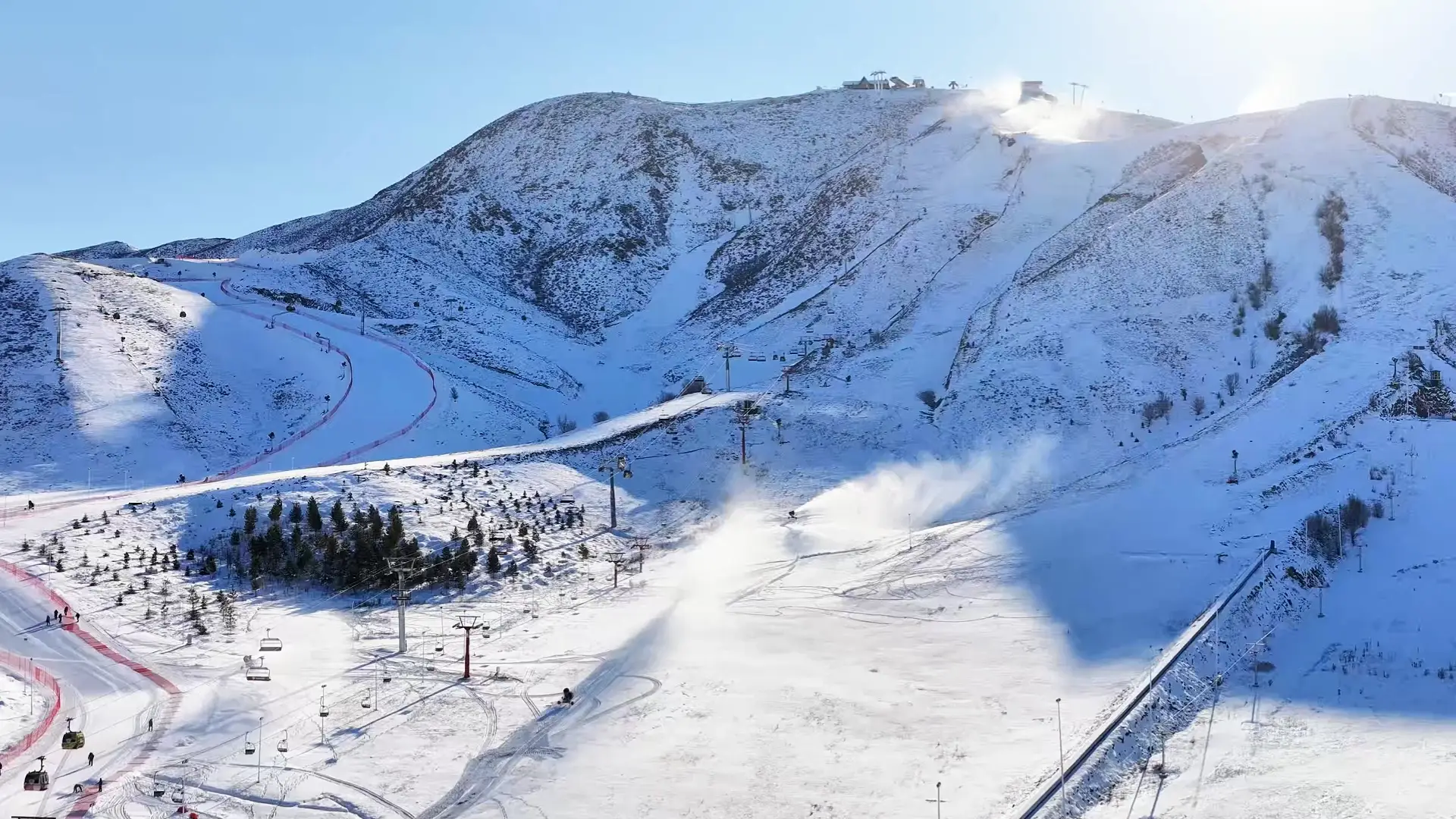
Altay prefecture markets itself as the “birthplace of human skiing,” based on cave paintings near Dundebulake believed to depict skiers as far back as 10,000 years ago. The annual ski festival, usually launched in early January, leans hard into that heritage. Expect an opening ceremony at Jiangjunshan resort with Kazakh music and dance, torchlight descents after dark, amateur race categories open to visitors, and demonstrations of traditional horsehide skis. The city fills with food stalls and the mood is genuinely festive rather than corporate. Jiangjunshan’s location on the edge of Altay City means you can walk from downtown hotels to the lifts — read more in our roundup of Xinjiang Ski Resorts. For deeper background on the event itself, see our dedicated guide to the Xinjiang ski festival in Altay.
The Ancient Fur-Ski Race at Hemu
Perhaps the most photogenic winter event in all of China: local Tuvan and Kazakh riders race down open slopes above Hemu Village on handmade wooden skis wrapped in horsehide, using a single wooden pole for balance and braking. The race is typically held in mid January as part of the Kanas winter tourism program. Around the main event you will find horse-drawn sleigh rides, ice fishing, bonfire parties, and homestay feasts. Hemu in January is brutally cold — often below −25°C at dawn — but the birch forests under deep snow are unforgettable. Access is via Burqin county with transfer vehicles running daily in winter.
Koktokay Powder Week and Freeride Events
Koktokay (Cocoa Tuohai) has positioned itself as China’s serious-skier mountain, and its late-January events reflect that: freeride competitions on the resort’s steep upper faces, avalanche-awareness clinics, gear-brand demo days, and group powder camps that fill the famous 1,500-meter-vertical descents. If your 2026 trip is about skiing first and festivities second, this is the event window to choose. Book on-mountain accommodation early — beds near the gondola are limited.
Chinese New Year Snow Carnivals (February 2026)
Chinese New Year falls on 17 February 2026, and the surrounding two weeks are the busiest of the season. Silk Road Resort outside Urumqi and Tianchi ski area near Fukang stage nightly entertainment: lantern displays, fireworks over the slopes, dumpling-making events, and extended night-skiing hours. Slopes are crowded at midday but surprisingly quiet in the early morning and during dinner hours. Lift ticket prices peak, hotels charge holiday rates, and transport sells out — reserve everything well in advance. Families in particular love this period; the atmosphere compensates for the queues.
Spring Events and Closing Parties (March 2026)
As temperatures climb in March, Urumqi-area resorts host closing carnivals with slush cups, costume ski days, and steep discounts on passes. Snow stays skiable at altitude well into late March in good years, and the warmer weather makes this an underrated window for beginners and families. Photographers also get clearer, warmer light than in the deep-winter months.
Getting to the Festivals
Urumqi Diwopu International Airport is the region’s hub, with connections from Beijing, Shanghai, Guangzhou, Chengdu, and several Central Asian cities. For the Altay and Hemu events, take a one-hour onward flight to Altay Snow Capital Airport or the comfortable overnight train from Urumqi. Winter roads are professionally cleared, but hire drivers rather than self-driving in January — black ice and short daylight make rural driving risky for visitors. Resort shuttles and festival park-and-ride services run on event days, and hotels in Altay City can arrange shared transfers to Jiangjunshan, Hemu, and Koktokay at reasonable per-seat rates.
Practical Tips for Festival Trips
- Confirm dates before booking flights. Chinese winter events are frequently announced only 4–8 weeks ahead. Follow resort WeChat accounts or ask your hotel to check.
- Book Altay and Burqin hotels early. Small towns, limited beds, big festival demand.
- Dress for standing around. Festival spectating is colder than skiing — bring a down parka, insulated boots, and chemical warmers for hands and phone.
- Carry cash-free payments. Nearly every food stall uses WeChat Pay or Alipay; set these up with an international card before arrival.
- Mix festival days with quiet days. Ski the event resort during the celebration, then transfer to a quieter hill to enjoy empty pistes.
Festival-goers heading beyond Xinjiang can also compare dates with events elsewhere in the country using our China snow festivals guide.
Frequently Asked Questions
When is the Altay Ski Festival in 2026?
The festival traditionally opens in early January. Exact 2026 dates are confirmed by the Altay tourism bureau in late autumn 2025 and published on official WeChat channels; plan for the first two weeks of January and verify before booking.
Can foreigners join the races and events?
Yes. Amateur race categories at the Altay festival and fun events like slush cups are open to visitors, usually with same-day registration and a small fee. The fur-ski race at Hemu is for local riders, but spectating is free and highly encouraged.
Which festival is best for families?
The Chinese New Year carnivals at Silk Road and Tianchi in February 2026. They offer fireworks, night skiing, kids’ snow parks, and easy access from Urumqi hotels — the most infrastructure-rich option for traveling with children.
How cold does it get during festival season?
Very. January events in Altay and Hemu regularly see daytime highs around −15°C and nights below −25°C. February in Urumqi is milder, typically −5°C to −15°C. Dress in serious expedition-grade layers for outdoor evening events.
Do lift ticket prices rise during festivals?
Yes, especially over Chinese New Year, when peak-holiday pricing applies. Festival periods in January often include promotional passes instead, since the events are designed to attract visitors during non-holiday weeks.