

Most skiers picture Xinjiang as a deep-winter destination: January powder in Altay, minus twenty mornings, short blue days. That picture is accurate, but it is only half the season. From late February through early April, the region quietly shifts into one of the most enjoyable spring skiing phases anywhere in China. The crowds thin out, daytime temperatures climb to comfortable levels, the light stretches well past seven in the evening, and the snow surface cycles into classic corn. If you have flexible dates and prefer relaxed cruising over face-shot powder, spring may honestly be the smartest time for your trip. This guide explains how the spring season works in Xinjiang, which resorts hold snow the longest, how to time your runs for perfect corn, and what to pack when conditions swing between winter and summer in a single day. For a broader overview of the region before you commit to dates, start with our complete Xinjiang skiing guide.

Why Spring Skiing in Xinjiang Works So Well
Xinjiang’s ski areas sit at genuinely high latitude and, in many cases, meaningful altitude. The Altay resorts lie near 47 degrees north, roughly the same latitude as the Alps’ northern edge, while the Tianshan resorts around Urumqi combine mid-latitude position with base elevations often above 1,800 meters. That combination delays the spring melt far longer than skiers expect. While resorts in northeast China are closing in mid-March, several Xinjiang mountains routinely spin lifts into early or even mid-April.
The second advantage is the dry continental climate. Spring storms still arrive, but between systems the air stays cold overnight and clear during the day. That freeze-thaw rhythm is exactly what produces corn snow: the surface melts slightly each afternoon, refreezes into a solid crust overnight, then softens again the next morning into smooth, forgiving granules that ski like velvet. Coastal or humid climates rarely deliver such a reliable cycle.
What Corn Snow Actually Feels Like
If you have never skied true corn, imagine groomed packed powder with more glide and zero chatter. Edges bite predictably, speed control is effortless, and even steep pitches feel friendly. Intermediate skiers often ski their best turns of the year on spring corn, because the surface rewards smooth, patient movements rather than aggressive edging. The window is short each day, which is part of the fun: you learn to read the mountain by aspect and hour, chasing the softening line as the sun swings around.
The Spring Timeline: Late February to Mid-April
Here is how the season typically unfolds across the region. Exact dates move with each year’s snowpack, so treat this as a planning framework rather than a guarantee, and check resort announcements before booking. Our post on the best time to ski in Xinjiang covers the full-season calendar in more depth.
- Late February: Still winter at altitude. Powder days remain possible, but south-facing slopes begin their first melt-freeze cycles. Days lengthen noticeably.
- Early to mid-March: The classic corn window opens. Mornings are firm, mid-days are glorious, afternoons turn sticky on sunny aspects. Base areas can reach 5 to 10 degrees Celsius.
- Late March: Lower-elevation resorts wind down. High Tianshan terrain and shaded Altay slopes still ski very well. Expect spring festival events, pond skims, and discounted passes at several areas.
- Early to mid-April: Only the highest and best-shaded terrain remains in condition. Lift schedules shrink, but the skiing on the right aspect at the right hour can be superb, and you may share the mountain with only a handful of locals.
Daily Timing Is Everything
Spring skiing is a morning sport. A typical productive day looks like this: ride the first lift while the snow is still firm and fast, ski east-facing slopes from mid-morning as they soften first, move to south and west aspects around midday, and quit by early or mid-afternoon when the surface turns to deep slush. On cold, clear nights the refreeze is strong and the next morning starts icy, so consider a slightly later start after very cold nights. Cloudy nights mean weak refreezes and earlier softening. Watching the overnight temperature becomes as important as watching for storms.
Where to Ski in Spring
Not every Xinjiang resort is a good spring bet. Elevation, aspect, and snowmaking depth decide who stays open. For a full map of options across the region, see our roundup of Xinjiang ski resorts. In broad strokes:
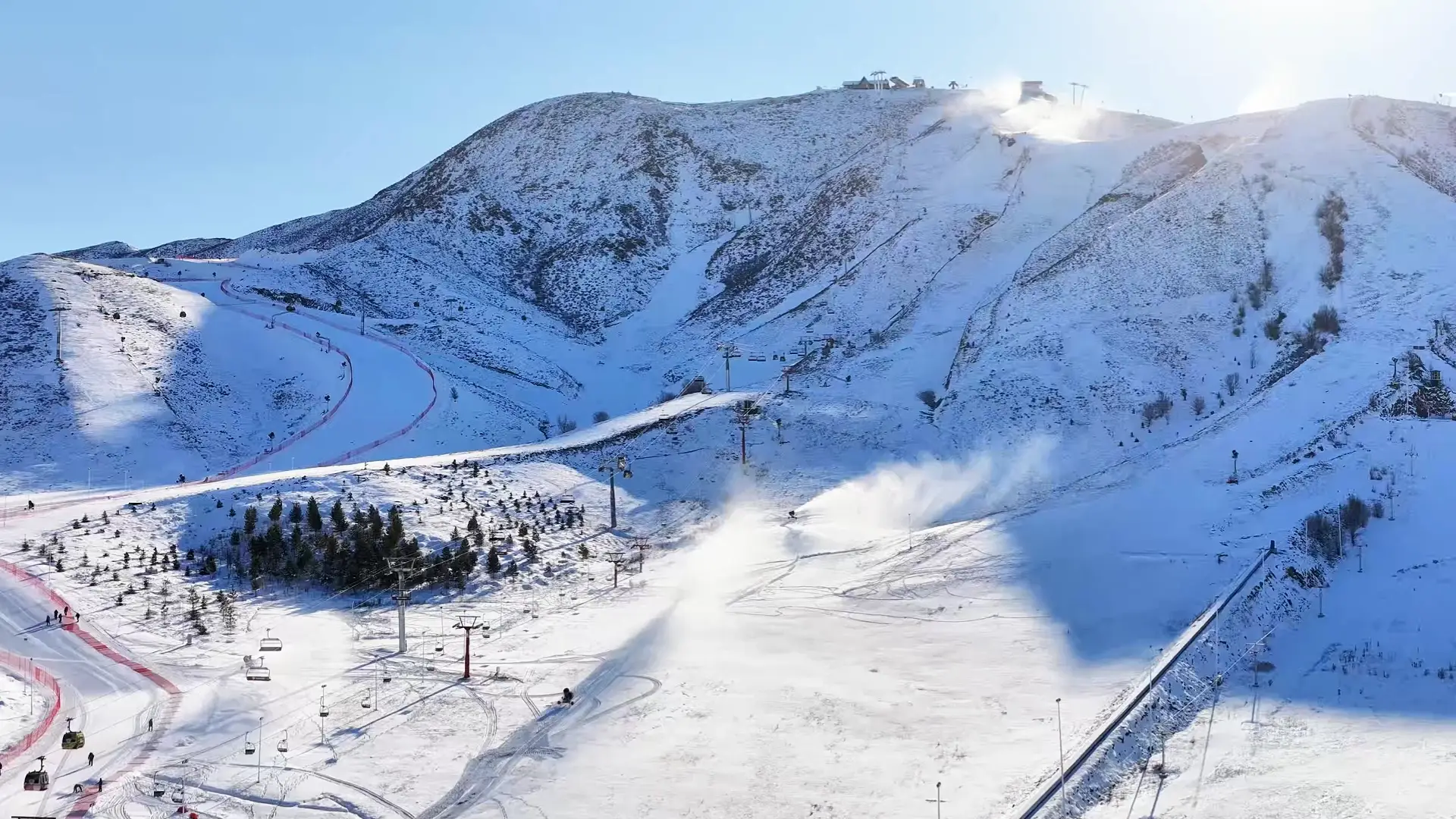
- High Tianshan resorts near Urumqi. Base elevations near or above 2,000 meters keep the snowpack cold longer than latitude alone would suggest. North-facing bowls hold chalky winter snow well into March, while sunny faces corn up beautifully. These areas usually post the latest closing dates in the region.
- Altay area resorts. The far-north latitude compensates for more modest base elevations. Big vertical drops mean you can often lap winter-quality snow up high in the morning and finish on soft corn near the base. Late March here brings a special golden light that photographers love.
- Smaller city ski hills. Local hills near lower-elevation cities generally close by mid-March once their snowmaking base thins. They are fine for a quick session in early spring but should not anchor a late-season trip.
What to Pack for Spring Conditions
Spring in Xinjiang can serve up a minus-fifteen morning and a plus-ten afternoon within the same day, so layering discipline matters more than in mid-winter. Recommended kit:
- Shell jacket and pants rather than heavily insulated pieces, with light and mid-weight base layers to swap as the day warms.
- Sunscreen and SPF lip balm. The spring sun at altitude, doubled by reflection off the snow, burns fast. Reapply at lunch.
- Two pairs of goggles or a goggle plus sunglasses. A low-light lens for morning shade and a dark lens for blazing afternoons.
- All-mountain skis with a fresh coat of warm-weather wax. Universal or warm-temperature wax keeps you gliding when the snow turns wet; sticky bases ruin spring afternoons.
- A small pack for shed layers, water, and snacks, since you will be peeling clothing by 11 a.m.
Altitude still deserves respect in spring, especially at the higher Tianshan areas where top stations exceed 3,000 meters. Hydration and a sensible first day help; our full set of altitude tips for Xinjiang skiing applies just as much in March as in January.
Spring Events, Deals, and Atmosphere
March is festival season on Xinjiang’s slopes. Resorts host season-closing parties, costume days, amateur races, and the occasional pond-skim contest where locals attempt to skim across a meltwater pool in fancy dress. Lift tickets and lodging often drop twenty to forty percent from peak-season rates, and instructors who were fully booked in January suddenly have open calendars, making spring an excellent value window for lessons. Evenings feel different too: with sunset after 8 p.m. late in the season, you can ski a full morning, nap, and still enjoy long golden-hour walks or an evening night-skiing session at resorts that keep floodlights running into spring.
Safety Notes for Late Season
Spring brings its own hazard profile. Wet-snow slides become possible on steep sunny slopes during warm afternoons, which is another reason to finish early. Thin cover exposes rocks and bushes near ridgelines and run edges, so keep speed in reserve on unfamiliar terrain. Meltwater can undercut snow bridges near creeks at the base areas. None of this should scare you off; it simply means spring rewards skiers who watch the clock and the thermometer as carefully as they watch the snow report.
Frequently Asked Questions
When do Xinjiang ski resorts usually close for the season?
Lower hills close by mid-March, most major resorts run into late March, and the highest Tianshan areas often operate into early or mid-April depending on the year’s snowpack. Always confirm dates directly with the resort before booking a late trip.
Is spring skiing in Xinjiang good for beginners?
Yes. Mid-morning corn snow is soft, predictable, and far more forgiving than mid-winter hardpack. Warmer weather also makes long lesson days more comfortable, and instructors are easier to book than in peak season.
What time of day is the snow best in spring?
Roughly from one hour after lifts open until early afternoon. Start on east-facing runs, follow the sun to south and west aspects, and plan to finish before the surface turns to heavy slush.
Do I need different wax or gear for spring conditions?
A warm-temperature or universal wax makes a huge difference in wet snow. Otherwise your normal all-mountain setup works fine; just dress in shed-able layers and bring strong sun protection.
Are prices lower in spring?
Generally yes. Many resorts discount lift passes and lodging by twenty to forty percent after the Chinese New Year peak, and March weekdays can feel like a private mountain.