

Korla is not the first name that comes up when foreign visitors plan a Xinjiang ski trip, and that is precisely why it is worth knowing about. The capital of Bayingolin Mongol Autonomous Prefecture sits on the northern rim of the Tarim Basin, halfway between the Tianshan passes and the desert, and it now runs two working ski fields plus a city-centre ice scene along its rivers. For travellers heading south from Urumqi, or breaking a long drive across the basin, Korla turns a transit stop into a proper winter day. This guide covers both resorts, the city’s ice activities, and how the prefecture’s wider snow plans are reshaping the region.
Why Korla Belongs on the Map
Korla — known locally as Pear City (梨城) — is southern Xinjiang’s largest transport hub, with an airport, a rail junction and expressways fanning out toward Urumqi, Yuli and the Tianshan. Its winter is dry, bright and cold, and the city has invested heavily in making that season usable. Prefecture authorities issued a dedicated action plan for high-quality ice-and-snow development covering 2026 to 2028, naming Korla and the four northern counties as the focus zones for the snow economy. Alongside it came ten themed winter routes, from one-day ice-and-snow itineraries to three-day circuits combining Bosten Lake, Bayanbulak and the Loulan heritage sites.
What that means in practice for a visitor is choice: you can ski in the morning, watch wild swans at midday, and eat in a night market at dusk. Compared with the big Altay and Urumqi fields described in our Xinjiang ski resorts guide, Korla’s hills are small — but the surrounding package is unusually varied.
Longzhishan Dongui Ski Resort
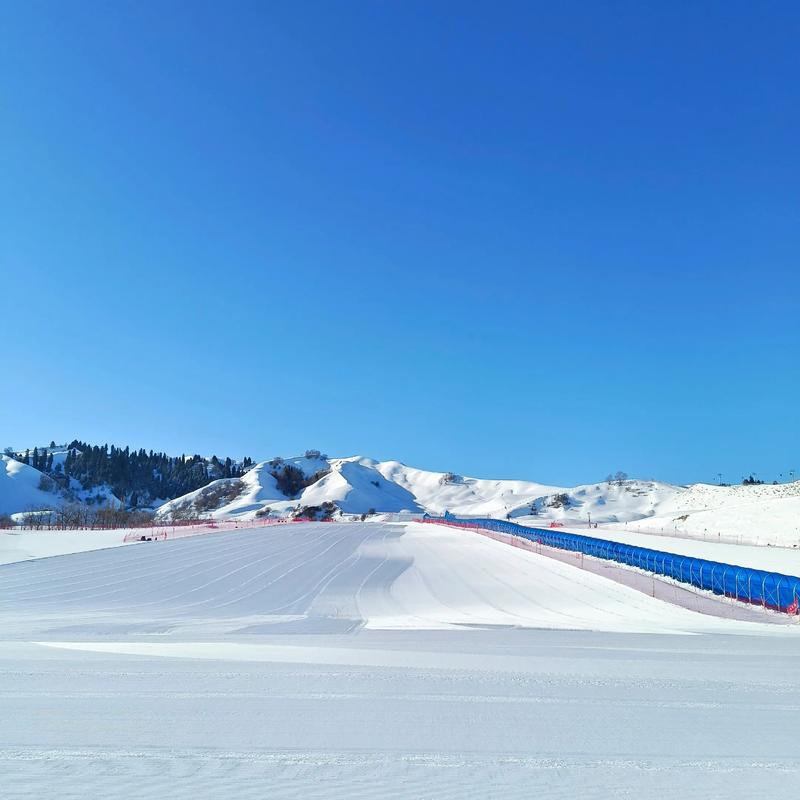
The city’s flagship field is Longzhishan Dongui Ski Resort (龙之山东归滑雪场), set beside the Dongui Tower on Longshan, south of National Highway 314 and east of Highway 218. It opened for the season on 13 December and sells early-bird passes that routinely go before opening day.
- Hours: day session 11:30–18:30; night session 19:00–22:30.
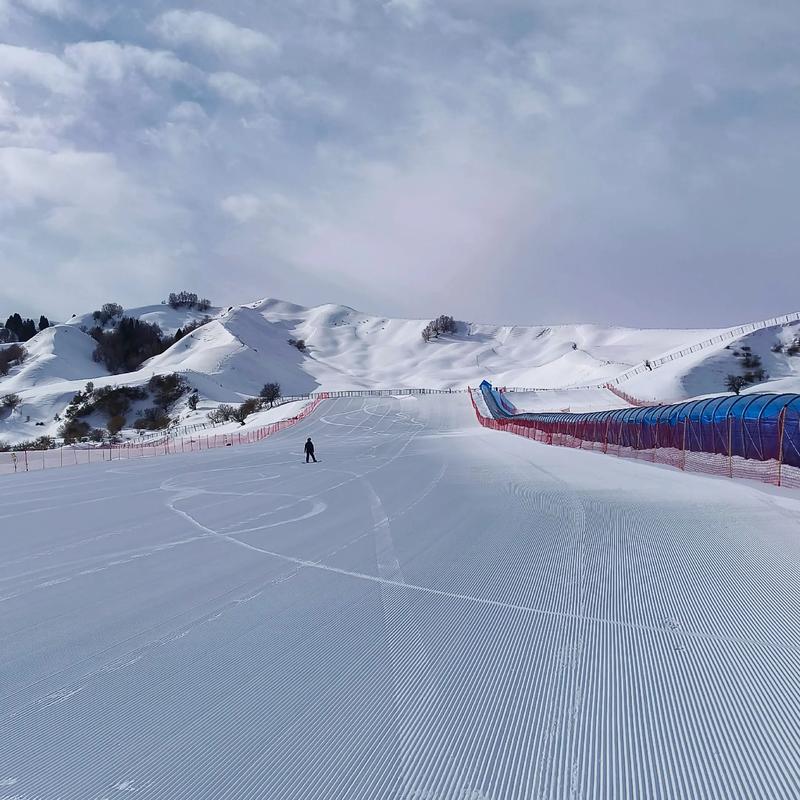
- Trails: one intermediate run, one beginner run, a dedicated tubing lane, a children’s snow-play zone and an ice park.
- Opening sequence: a 500-metre beginner trail opens first, with the intermediate run typically coming online around New Year.
- Facilities: a service centre with rental skis, boards, helmets and suits, snack outlets and a restaurant of roughly 200 square metres.
- Parking: about 200 spaces; self-driving is the practical way in.
The night session is the standout feature. Floodlit laps from 19:00 to 22:30 mean you can spend the day sightseeing and still get turns in, which suits travellers on a tight southern Xinjiang schedule. The ice park attached to the field runs a long list of family activities: ice bikes, sledges, children’s ice cars, tandem ice bicycles, dog sledding, ice bumper cars and electric ice carts.
Huishuiwan Hongguang Ski Resort
The second field, Huishuiwan Hongguang Ski Resort (回水湾红光滑雪场), lies out at Tashidian Town near the old Hongguang factory area and opened the same day as Longzhishan. It is the more upgrade-focused of the two, and its 2025–2026 improvements are substantial:
- Five new conveyor lifts (magic carpets) added to raise uphill capacity significantly.
- A new 800-metre intermediate-to-advanced trail, scheduled to open around the end of the opening month.
- Safety build-out: a snow rescue motorcycle, a newly built emergency rescue station, and recruited and trained professional patrol staff.
- Activities: single and twin-tip skiing, snowboarding, tubing, snowmobiles, cross-country motorbikes and horse riding.
- Hours: daily 10:00–20:00, with hot snacks available on site.
Between the two fields, Huishuiwan is the better bet if you actually want pitch and length, while Longzhishan wins on night skiing and city proximity. If snowmobiles are the draw rather than the trails, our Xinjiang snowmobile tours guide explains how the machines and terrain differ across the region.
Ice and Swans in the City
Korla’s rivers do a lot of the winter work. The Swan River scenic area (天鹅河景区) runs right through the city and freezes into an open-access playground: ice skating, sledges, snow tubes, electric snow motorbikes and ice bicycles, spread across the Pear Fragrance Lake wharf, Jinglong Meihu and Hongyan Square. It is free to enter, ringed by food streets and hotels, and it is the easiest introduction to snow for anyone travelling with children.
The genuine highlight, though, is the swans. Every winter wild swans settle on the Dujuan River after their migration, and locals bring dried naan to feed them. Midday is the recommended viewing window, when the light is best and the birds are most active. Very few ski destinations anywhere let you photograph wild swans a short drive from the slopes, and it is the detail most visitors remember. For a broader sense of how Xinjiang’s fields compare on scenery and scale, see where to ski in Xinjiang.
Beyond Korla: What the Prefecture Is Building
Bayingolin’s snow ambitions extend well past the city. Hejing County is revising its ice-and-snow tourism plan and has issued a 2025 winter tourism implementation scheme, with ski areas planned inside the Bayanbulak and Gongnaisi scenic areas as the Urumqi–Yuli and Nalati–Baluntai expressways come online. The county is also courting investment for a higher-standard resort able to serve both recreational and competitive skiers, and has staged a winter Naadam festival combining horse racing, intangible heritage performances and snow sports. A dedicated ice-and-snow landscape at Swan Bay is being developed with the nearby regiment town.
Supporting all of it is real spending. The prefecture runs a Tianshan Bus tourist line linking Yanqi, Bohu, Korla and Hejing to give winter visitors public transport options, and offers incentives to travel agencies — per-passenger rewards for charter flights and a substantial subsidy for branded tourist trains. Sixty-three key tourism projects are in progress across the prefecture, including desert tourism infrastructure at Bosten Lake’s southern shore. Note that several Bayanbulak and Gongnaisi facilities remain at the planning or construction stage, so verify status before building an itinerary around them.
Practical Planning
Korla is easiest as a one- or two-night stop. Fly or take the train in, base yourself near the Swan River for restaurants and hotels, and use a rental car or taxi for the resorts — Longzhishan is a short hop from the city, Huishuiwan a little further out at Tashidian. December to February gives the most reliable snow; our best time to ski Xinjiang breakdown compares months across the region. If you are driving the basin, the winter road notes in our Xinjiang ski road trip guide are worth reading first, since Tianshan passes can close on short notice.
Set expectations correctly and Korla delivers well. These are modest, family-scale fields, not destination resorts — but paired with swans, ice parks, Bosten Lake and southern Xinjiang food, a Korla winter day is far more than a filler between flights.
Frequently Asked Questions
How many ski resorts does Korla have?
Two: Longzhishan Dongui Ski Resort near the Dongui Tower, and Huishuiwan Hongguang Ski Resort at Tashidian Town. Both opened for the season on 13 December.
Can you ski at night in Korla?
Yes. Longzhishan Dongui runs a night session from 19:00 to 22:30, alongside a day session from 11:30 to 18:30. Huishuiwan Hongguang operates 10:00–20:00.
Are Korla’s slopes suitable for advanced skiers?
Only partly. Both fields are beginner and intermediate focused, though Huishuiwan added an 800-metre intermediate-to-advanced trail for the 2025–2026 season. Strong skiers should treat Korla as a bonus rather than a destination.
Where can I see swans near Korla?
On the Dujuan River in the city, where wild swans overwinter. Midday is the recommended viewing time, and the adjacent Swan River scenic area also offers ice skating, sledges and ice bicycles.
Is there public transport for winter sightseeing?
The prefecture runs a Tianshan Bus tourist line connecting Yanqi, Bohu, Korla and Hejing. For the ski fields themselves, self-driving or taxis remain the practical choice.