

Most foreign skiers who plan a Xinjiang trip fixate on Altay and Urumqi, but the southern flank of the Tianshan has been quietly building a serious snow scene of its own. Aksu Prefecture — sitting where the Tianshan meets the Tarim Basin — now runs a chain of winter fields spread across its counties, from a city-centre snow park in Aksu City to glacier-backed slopes at the foot of Tomur, the highest peak in the Tianshan. For travellers driving the southern Silk Road, or breaking up a long Tarim circuit, Aksu turns a transit stop into a genuine ski day. This guide covers the main resorts, what each is best at, and how to weave them into a wider Xinjiang winter.
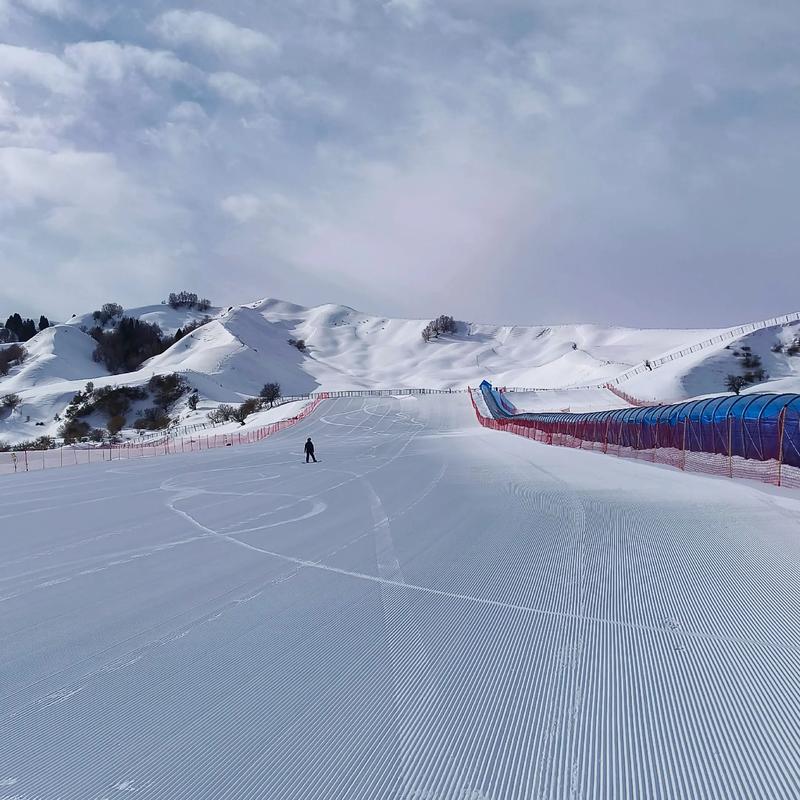
Why Aksu Belongs on a Xinjiang Ski Map
Aksu is the gateway to the southern Tianshan and to Tomur (托木尔峰), the 7,443-metre roof of the range and a UNESCO World Heritage component. Its winter is dry, bright and cold, and the prefecture has leaned into that with a coordinated push: free or discounted entry at several fields, upgraded trails, and “ice-and-snow plus culture” events running from December through April. Compared with the destination resorts in our Xinjiang ski resorts guide, Aksu’s hills are smaller and more local — but they are unusually varied, and several sit next to real scenery or heritage.
The practical upside is distribution. Instead of one big mountain, Aksu gives you a string of county fields you can sample on different days, each with its own character. If you are already in the region for the desert and Silk Road sites, these are easy wins. Our Xinjiang ski road trip guide explains how to plan the drives between them.
Aksu City: Xihu Ski Resort & the Urban Snow Ring
The easiest introduction is in the city itself. Aksu City’s Xihu Ski Resort (西湖滑雪场) fully opened for the season in mid-December after a trail upgrade and the addition of more than a thousand new ski sets, plus a new terrain park, tubing and snowmobile zones. It pairs with the city’s Yingbin Ice-Snow World and the nearby wetland park ice乐园 to form a “city winter fairy-tale” leisure loop, so residents and visitors can ski without leaving town. Safety was a headline upgrade: rescue equipment, warning signs at every trailhead and protective netting along the runs.
For a first timer, this is the lowest-pressure place to start. Our Xinjiang ski first-timer guide walks through what to expect on day one, and the city fields are exactly where that advice pays off.
Wushi: Quanyu Xingkong Ski Resort
About seven kilometres from Wushi (乌什) County town, Quanyu Xingkong Ski Resort (泉域星空滑雪场) is one of the prefecture’s strongest fields. It covers more than one million square metres and combines rainbow slides with beginner, intermediate and advanced trails plus a play-snow zone. For the 2025–2026 season it added two new advanced trails on top of its existing seven, along with fifteen snow karts and snowmobiles, an upgraded service hall with a VIP lounge and a food area, and a “zero-yuan entry” plus group-buy-half-price policy that keeps barriers low.
Wushi also runs the prefecture’s widest cultural overlay. Its winter series — “Silk Road Winter Charm” — bundles skiing with folk games, intangible-heritage performances, a TCM wellness zone and local food, and runs from late December through April across New Year, Spring Festival and Lantern Festival. If you want skiing wrapped in Uyghur and Kirghiz culture rather than just laps, this is the field.
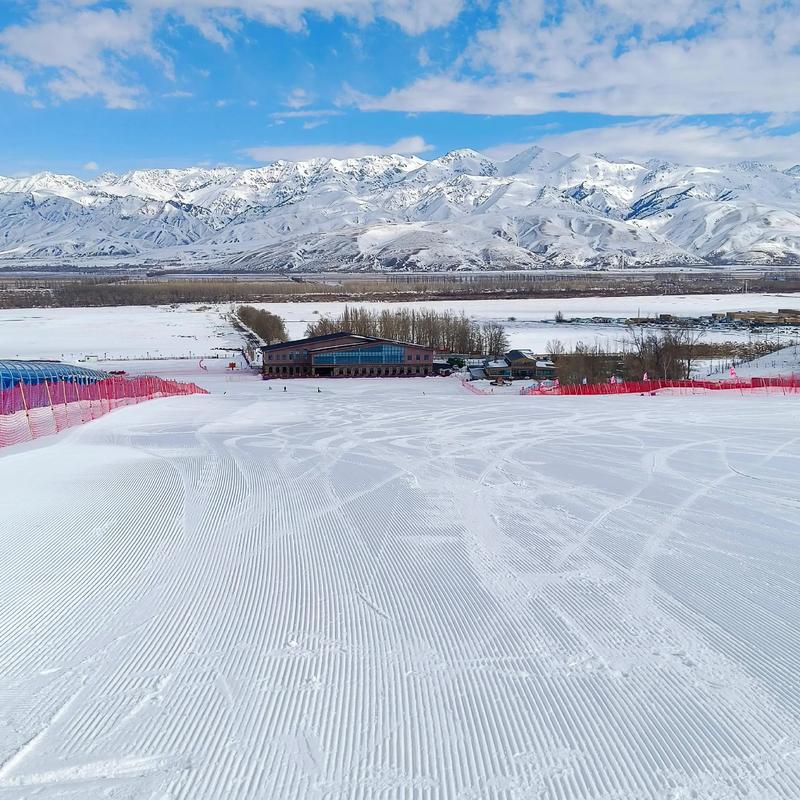
Wensu: Tianshan Tuofeng Ski Resort at the Foot of Tomur
The most scenic field is Tianshan Tuofeng Ski Resort (天山托峰滑雪场), inside the Tachun village area of the Tianshan Tomur scenic zone in Wensu (温宿) County. Its beginner, intermediate and advanced runs wind between snow mountains, and it adds a children’s snow-play zone and snowmobiles, with a roomy rest area. What makes it special is the setting: the same massif that carries the Tomur glacier and the Tianshan Grand Canyon, so a ski day can be paired with glacier viewpoints and red-culture sites on a one- or two-day loop. The county sells precisely that “ice-and-fire” combination of fast skiing and glacier exploration.
Altitude here is real, and the air is thin compared with the city fields. Reading our Xinjiang ski altitude acclimatization notes before you go is worth it if you feel the height.
Baicheng, Kuqa, Awat & Shaya: The County Spread
The rest of the prefecture fills in the picture. Baicheng (拜城) runs a winter snow world plus the Tiereke hot-spring ski field (铁热克温泉滑雪场) out at Tiereke town — skiing followed by a soak, which is a combination few Xinjiang fields offer. Kuqa (库车) City’s Wuzhou Ski Resort (五洲滑雪场) has three professional trails and 500 ski sets serving up to 500 riders, and the old-town Kucha ski field (库车老城滑雪场) is being built next to the historic Restan district with Qiuci (龟兹) cultural theming — a “day snow, night folklore” concept. Awat (阿瓦提) County’s Daolang town ski field (刀郎小镇滑雪场) and Shaya (沙雅) County’s wetland-themed ice park round out a genuinely prefecture-wide map.
Kuqa in particular is worth a stop for non-skiers: its winter programming ties the slopes to the Kucha王府, the Qiuci Wei-Jin fresco museum and the Subashi Buddhist ruins. Our China skiing guide places the prefecture in the national picture, and Aksu reads as the southern-Tianshan counterweight to the big Altay fields.
Planning an Aksu Ski Trip
Aksu works best as a two- or three-stop winter add-on rather than a destination on its own. Fly or take the train into Aksu City, ski Xihu the first afternoon to calibrate, then make a day of Wushi’s culture-plus-snow, and a separate day of the Tomur scenery at Tianshan Tuofeng. December to February gives the most reliable snow; our best time to ski Xinjiang breakdown compares the months across the region. Budget-wise, Aksu is cheap: many fields run free or half-price entry, and the rest is easy to model once you are on the ground.
Set expectations correctly and Aksu delivers. These are local, family-scale fields — not the 100-trail monsters up north — but for variety, culture and value they are hard to beat, and they open up a whole southern-Tianshan winter that most itineraries miss entirely.
Frequently Asked Questions
How many ski resorts does Aksu have?
Aksu Prefecture runs a county-by-county network: Xihu in the city, Quanyu Xingkong in Wushi, Tianshan Tuofeng in Wensu, a winter snow world and the Tiereke hot-spring field in Baicheng, Wuzhou and the old-town Kucha field in Kuqa, plus Daolang town in Awat and a wetland ice park in Shaya.
Which Aksu ski resort is best for beginners?
Aksu City’s Xihu Ski Resort is the gentlest and most convenient, with a new terrain park and full coaching support. Wushi’s Quanyu Xingkong also suits newcomers thanks to its dedicated beginner trails and free-entry policy.
Is there skiing near the Tianshan glaciers?
Yes. Tianshan Tuofeng Ski Resort sits inside the Tianshan Tomur scenic zone in Wensu County, with runs framed by snow mountains and easy pairing to the Tomur glacier and the Tianshan Grand Canyon.
When is the Aksu ski season?
Fields generally open in mid-December. Wushi’s winter cultural series runs from late December through April, so the most complete experience spans December to February.
Can you ski and soak in hot springs the same day?
Baicheng’s Tiereke hot-spring ski field is built exactly for that — skiing followed by a soak at the Tiereke hot springs, a combination few other Xinjiang resorts offer.