

When people talk about skiing in Aksu, the conversation usually jumps straight to the big Tianshan resorts. But tucked into the northern part of the prefecture, Baicheng County (拜城县) has built one of southern Xinjiang’s most satisfying winter combos: slide on snow in the morning, soak in a mineral hot spring by afternoon, and step inside a thousand-year-old Buddhist cave complex whenever you like. This Baicheng winter travel guide covers exactly how to weave those three experiences into a relaxed, culture-rich ski break that feels nothing like a standard resort holiday, and why it has quietly become a favourite rest-day stop for road-trippers crossing the south. 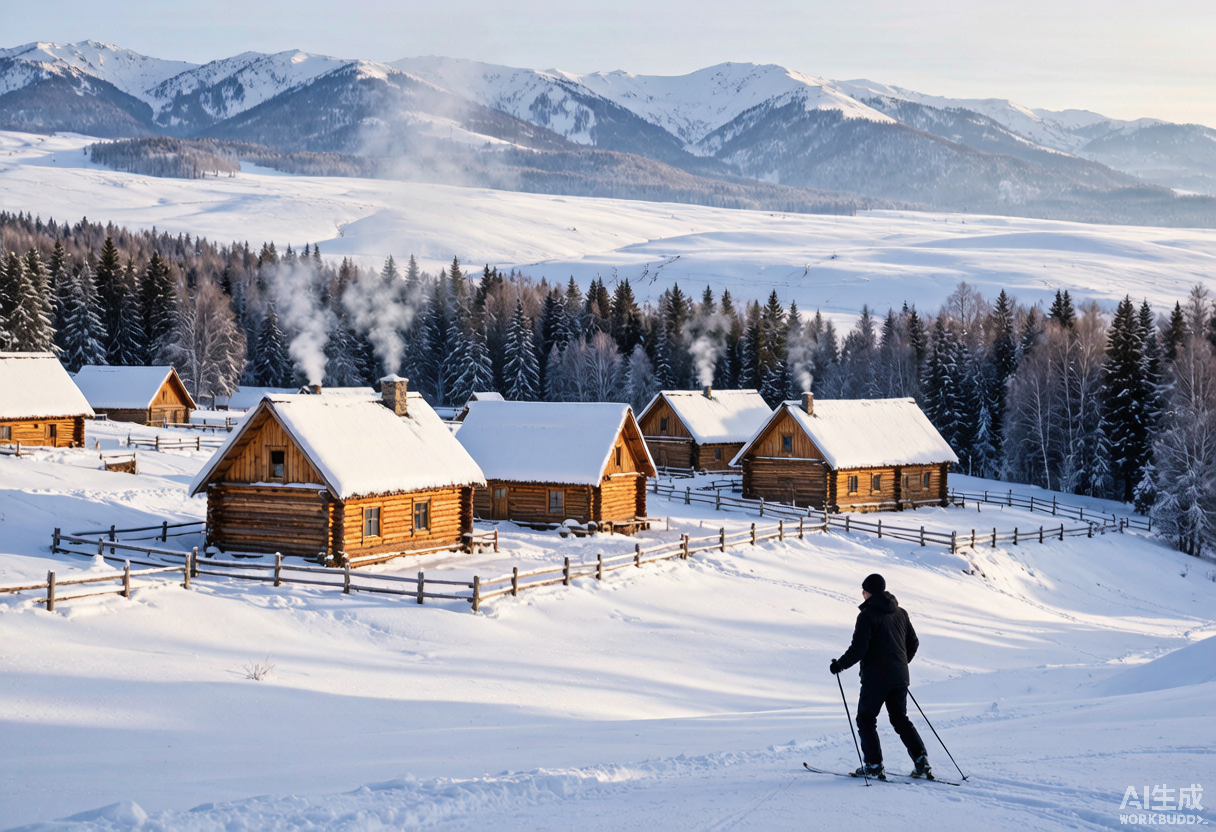
Skiing at Tiereke Hot Spring Ski Resort
The anchor of Baicheng’s ski scene is the Tiereke Hot Spring Ski Resort (铁热克温泉滑雪场) in Tiereke Town. It launched its seventh winter season on 10 January 2026 under the banner “Ride the Horse, Sail the Wind, Enjoy Baicheng,” and the surrounding Tiereke eco-cultural town has been recognised as an autonomous-region wellness tourism base. The resort leans into the “ski plus hot spring” formula: after a few runs you can step straight into the nearby Tiereke springs, whose outlet holds a steady 66.6°C and is rich in lithium, boron and other minerals — locals proudly call it the “number one hot spring of southern Xinjiang.” For travellers arriving from colder northern resorts, the chance to swap boots for a warm pool within minutes is a genuine luxury, and the wellness branding means the whole town is oriented toward slow recovery rather than adrenaline.
Baicheng Ice-Snow World and Riverside Parks
Inside the county town, Baicheng Ice-Snow World ski field upgraded its runs and added night skiing for the 2025-2026 season, with a tidy equipment hall offering one-stop rental and guidance. The Kahe Park ice-and-snow world adds tubing and family play. Together they mean you do not need to leave town to get a full day of winter sport, which is ideal for travellers with children or a tight schedule. Evening sessions under lights have proved especially popular with local families, and the combination of a lit slope and a warm food court makes for an easy, low-stress outing that even non-skiers in the group can enjoy from the sidelines. 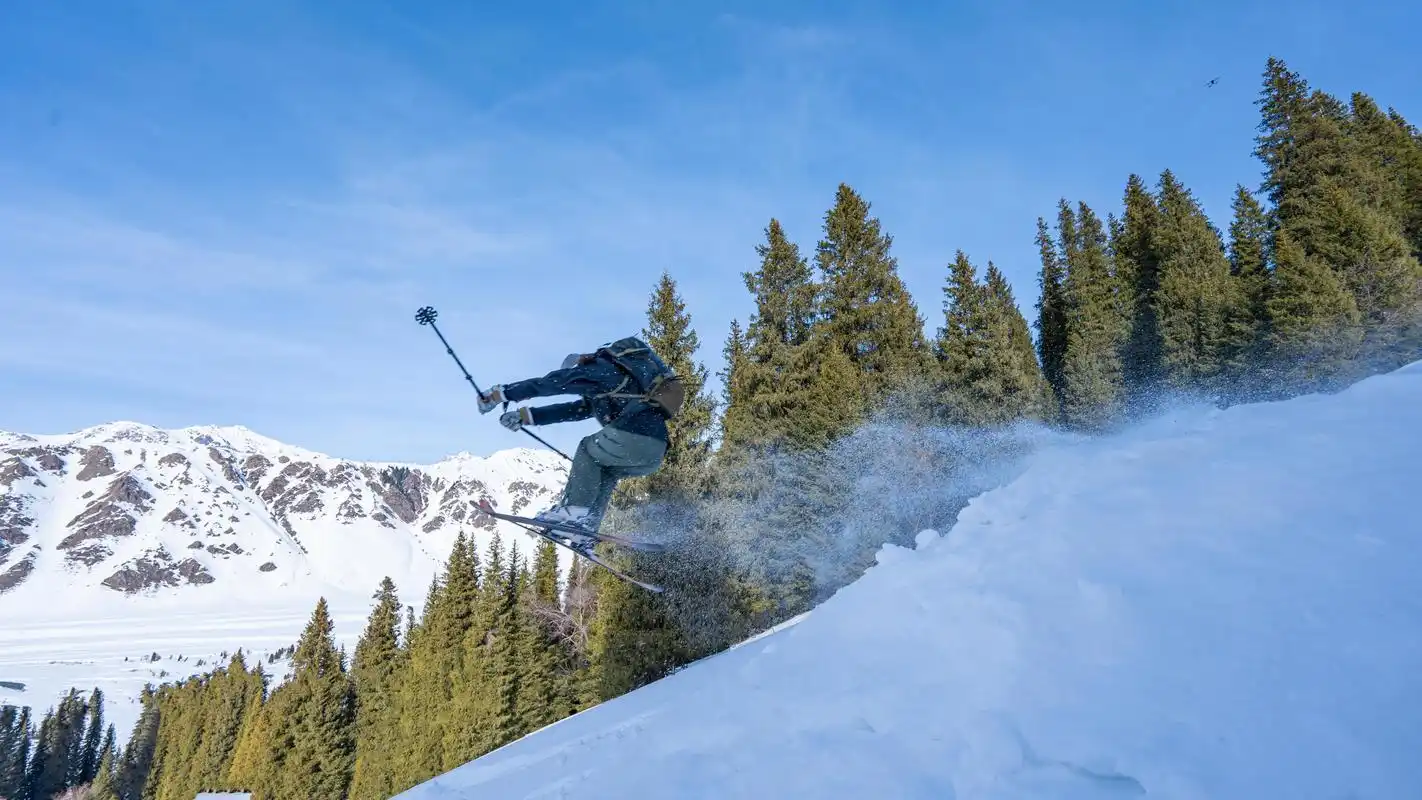
The Kizil Caves and Red Stone Forest
Baicheng’s deeper draw is cultural. The Kizil Caves (克孜尔石窟), set into a cliff above the Muzat River in Kizil Township, are among the oldest and most important Buddhist cave paintings in China and the heart of ancient Qiuci (Kucha) culture. A short drive away, the Kizil Red Stone Forest (克孜尔红石林) was awarded national 4A status in 2026. Pairing a morning on the slopes with an afternoon among the caves makes Baicheng feel less like a ski trip and more like a winter cultural pilgrimage, and the contrast between the bright cold of the mountain and the hushed, candle-lit stillness of the caves is something visitors remember long after they leave. Guides on site explain the Indic-influenced murals and the stories they depict, which helps first-time visitors read the paintings.
Wellness, Festivals and Local Flavour
The 2026 Baicheng winter season was explicitly built around “snow plus folk custom plus red heritage,” with snowfield tug-of-war, ski races, snow bumper balls and a local food zone of roasted buns, skewers and lamb soup. During the Spring Festival the county welcomed 142,500 visitors (up 12.31% year on year) and tourism revenue of 72.29 million yuan (up 14.23%), a clear sign the formula works. As a year-round perk, visitors surnamed Ma — or born in the Year of the Snake or Horse — received free entry to all county scenic spots in 2026, with companions at half price, a policy that quietly rewards repeat and family travel. The Tiereke eco-cultural town’s wellness designation means spa and therapy packages are easy to book, rounding out a day that begins on skis and ends in warm mineral water. Street snacks like roasted sweet potatoes and spiced-tea stalls keep energy up between activities, and the county night markets during the festival period are a lively, family-friendly way to end the day before an early night at the springs.
Getting to Baicheng and Where to Stay
Baicheng is reached by road from Aksu (about two to three hours) or by rail, and the county town has a growing stock of mid-range hotels plus the awarded Yunfeng and Difeng properties for those wanting a step up. The Tiereke eco-cultural town offers wellness-focused lodging right beside the springs, ideal if the hot-soak is the main event. Give yourself at least one full day: a morning ski session, a long lunch, an afternoon at the caves, and an evening return to the springs. Winter days are short, so start early and check the resort’s night-skiing schedule if you want to extend the fun after dark. Booking the hot-spring entry in advance during festival weekends saves a long queue at the door.
Planning Your Baicheng Winter Trip
Baicheng sits roughly two to three hours from Aksu city and links naturally with the wider southern Xinjiang ski circuit. The best window runs December through February, and the hot-spring combo makes it a smart rest-day stop if you are road-tripping between Hotan’s desert ski fields and Kizilsu. Base yourself in the county town for easy access to both the in-town snow field and the Tiereke springs, and leave at least half a day for the Kizil Caves, which deserve a slow, unrushed visit to be appreciated. Two nights in Baicheng lets you ski one day, soak the next, and still have time for the caves and the red stone forest.
Frequently Asked Questions
What is Baicheng best known for in winter?
The “ski plus hot spring plus caves” combination — Tiereke Hot Spring Ski Resort, the mineral springs of Tiereke, and the ancient Kizil Caves — makes it a distinctive southern Xinjiang winter destination.
Is the Tiereke hot spring really special?
Yes. The spring’s outlet stays at about 66.6°C and is rich in lithium and boron minerals, earning it the local title of “number one hot spring of southern Xinjiang,” and the adjacent town is a recognised wellness base.
Are there ski runs for beginners in Baicheng?
Both the Tiereke resort and the in-town Ice-Snow World cater to beginners and families, with gentle slopes and tubing areas alongside the more active runs.
How do I combine Baicheng with other Xinjiang ski regions?
Baicheng links easily with Aksu, Kizilsu and Kashgar on a southern loop, and its hot springs make a perfect recovery stop between bigger resorts.
When is the Baicheng ski season?
The 2026 season opened in early January around the New Year and ran through the Spring Festival, with reliable snow from December into late February.
Is Baicheng worth visiting if I do not ski?
Definitely. The Kizil Caves, Red Stone Forest, hot springs and New Year folk festivals offer plenty for non-skiers, so it works as a cultural winter break too.