

Most travellers meet Hemu in autumn photographs: golden birches, wooden cabins, mist on the river. Then the road closes, the crowds go home, and the village becomes something else entirely. Snow piles above the fence posts, chimney smoke hangs in windless valleys, and a Tuvan settlement deep in the Altai Mountains turns into the most photogenic winter base in Xinjiang. It is also, conveniently, seven kilometres from one of the region’s biggest powder resorts.
This guide covers what winter in Hemu actually involves: how to get there when the mountain roads are icy, what the village costs in high season, how to combine cabin life with lift-served skiing, and which cultural experiences are genuinely worth your time rather than staged for the camera.
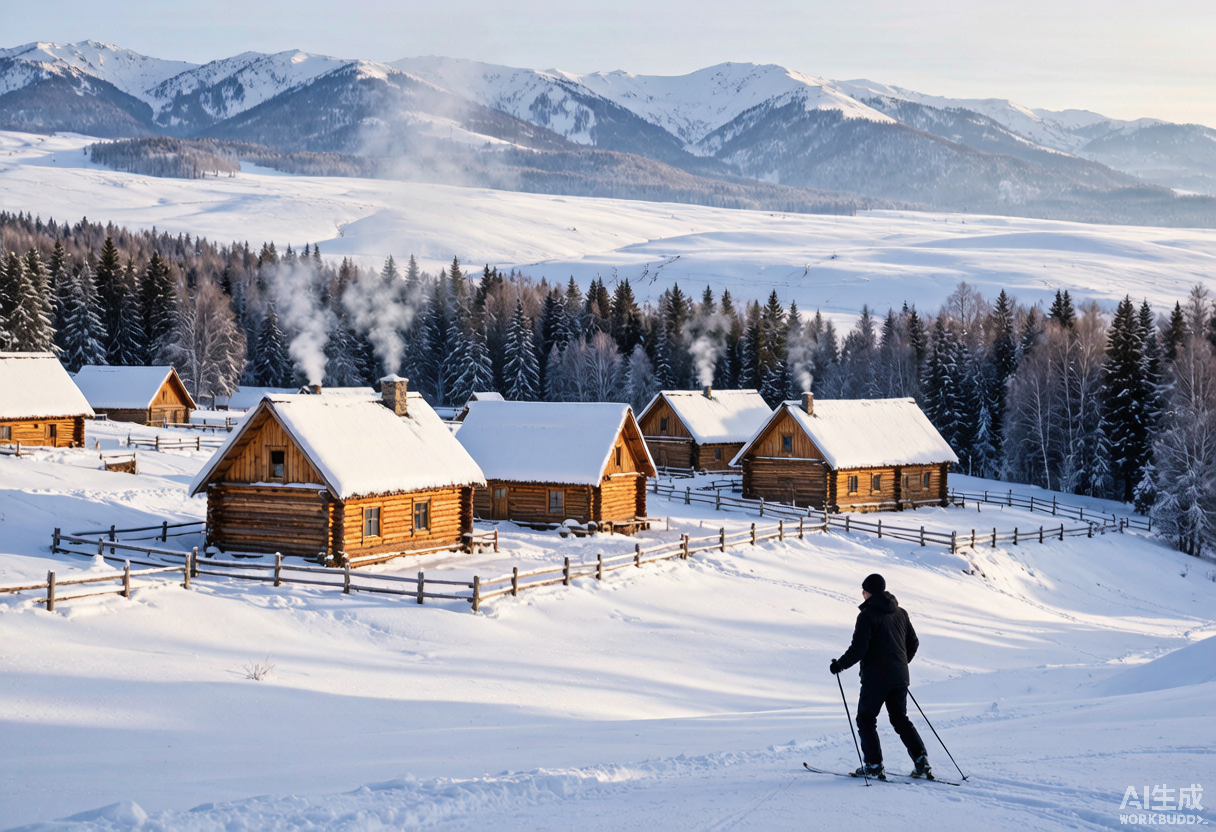
Where Hemu Is, and Why Winter Changes It
Hemu Village sits in Hemu Kanas Mongolian Ethnic Township, Burqin County, in the Altay Prefecture of northern Xinjiang. It belongs to the wider Kanas scenic area, roughly seven kilometres from the ticket gate that regulates access to the village core. The community is largely Tuvan and Kazakh, and its hand-notched log houses are the reason the place is routinely described as China’s prettiest snow village.
Winter here is not decorative. Snow depth in and around the village regularly exceeds a metre, and the cold, dry continental climate that gives the Altai its reputation for light snow also produces long spells below minus twenty. That same weather system explains why the region is central to the story of Altay as the birthplace of skiing, and why sliding on snow was a working necessity here long before it became recreation.
Getting to Hemu in Winter
Fly into Altay Airport or Kanas Airport; winter flight frequency increases through the season because the ski market has grown. From either airport you transfer by road, and this is where planning matters more than in summer.
- Do not self-drive unless you are genuinely experienced on ice. Mountain sections are narrow, drifting, and unforgiving. If you insist, you need a 4WD on proper winter tyres.
- Shared 4WD transfers are the standard solution. Small-group vehicles from Altay city to the Hemu area have been sold in the region of a few hundred yuan per person one way, with private charters costing several times that. Prices shift year to year, so confirm at booking.
- Internal shuttle buses can be suspended when road conditions deteriorate, which is precisely why local drivers who run the route daily are worth paying for.
- Allow slack in your schedule. A closed pass or a snowstorm can cost you half a day, and connecting flights out of Altay do not wait.
If you are still deciding between the Kanas basin and other parts of the region, the comparison in our Kanas Lake winter skiing guide is a useful starting point, because the two destinations share transport infrastructure but offer quite different days.
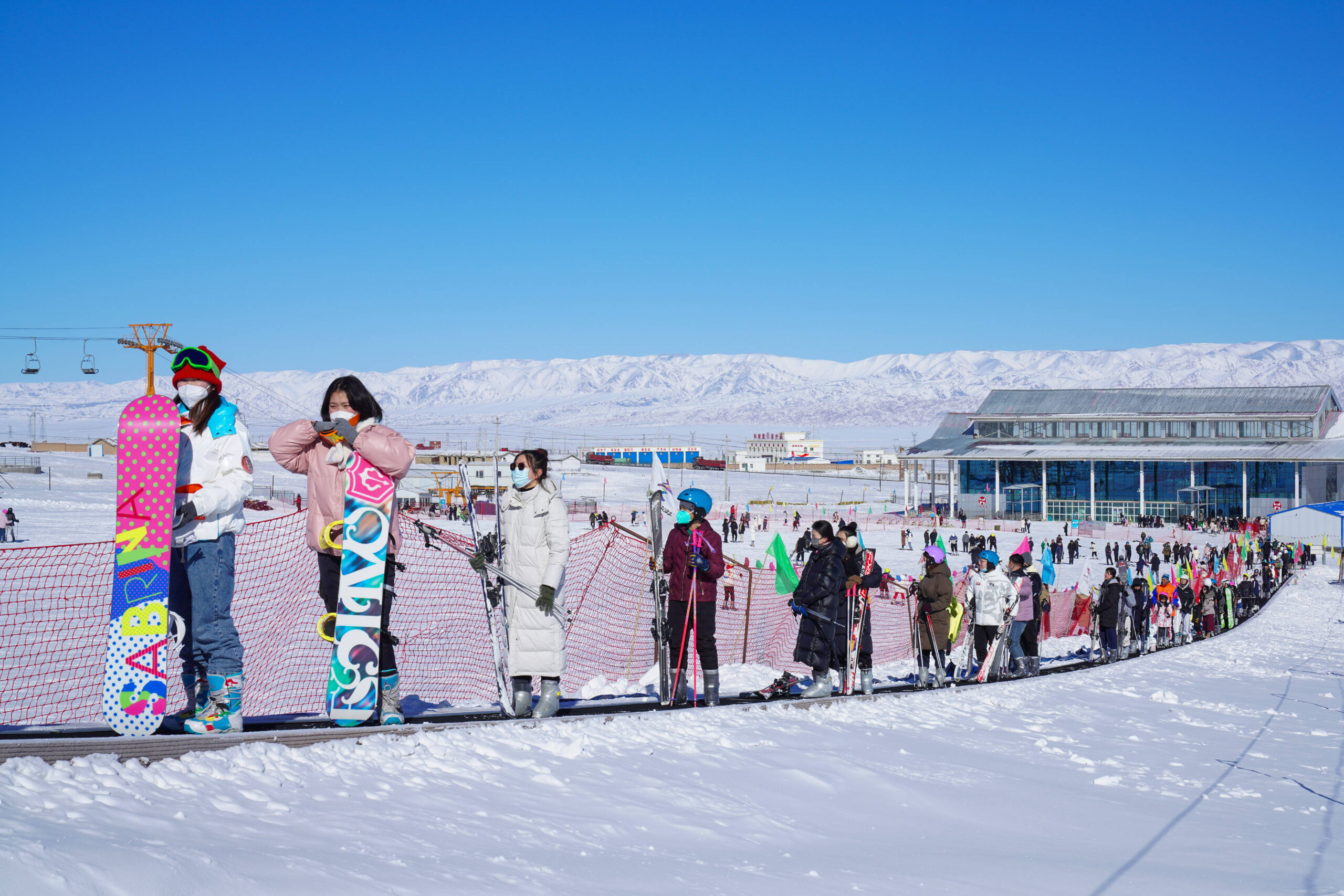
Skiing from a Village Base
The reason skiers now stay in Hemu rather than day-tripping from Altay city is the Jikepulin International Ski Resort, about seven kilometres away, with shuttle buses running between the resort and the village. Guesthouse owners report a clear shift: a growing share of their winter guests are snowboarders and skiers rather than photographers.
Scale is the resort’s selling point. It employs well over eight hundred staff — many recruited from surrounding villages to work as patrollers, electricians, lift technicians, instructors and cleaners — and the skiable area is broad enough that experienced visitors describe simply relaxing into long, uncrowded descents. The snow is the dry, low-density powder the Altai is known for, which is why the region features so heavily in our Xinjiang powder snow guide.
Practical notes for skiers basing themselves in the village:
- Rental and repair services operate at the resort, so you do not need to haul skis into a wooden cabin.
- Shuttle timetables are built around the lift day; confirm the last run back with your guesthouse the night before.
- Village accommodation is warm but rustic — check whether your room has a boiler-fed radiator or only an electric heater before you commit to a week.
What to Do in the Village Itself
Hemu rewards early risers. The classic viewpoint sits across the river from the village, and the best light is the first light, when sunrise turns the ridgelines gold while smoke still pools between the cabins.
Horse sleighs and the viewpoint
Getting to the platform in deep winter usually means a horse-drawn sleigh from the Hemu Bridge area, a ride of around half an hour. This is not an informal arrangement: the village runs a horse-team cooperative established in September 2019, which has enrolled more than three hundred households and upwards of six hundred horses to provide riding and sleigh services. Drivers work multiple runs a day through the season, and in peak months a single household can earn well over ten thousand yuan a month from it. Paying for a sleigh here is direct village income, not a middleman’s margin.
The Century-Old House
In the heart of the village, a restored log building known as the Century-Old House functions as both a free cultural display and a working restaurant. The walls carry old photographs; the shelves hold saddles, sleds, bows, mare’s-milk jugs and — most relevant to anyone reading a ski site — traditional fur-covered skis. Renovated in 2018 with township support, it has become the village’s default cultural stop. If the fur skis interest you, our piece on Altay fur skiing heritage explains how the technique works and why it still functions on these slopes.
Slow pleasures
- Hunting “snow mushrooms” — the rounded caps of snow that build on fence posts, tables and stumps along the riverbank.
- Walking the birch stands at the village edge, which become quiet white corridors after a fresh fall.
- Sitting still. Hemu’s appeal in winter is partly that there is not much to do, and the guesthouse stove is part of the experience.
Photographers should note that light is short, contrast is brutal and batteries die fast in the cold. Carry spares against your body, expect condensation when you bring a lens indoors, and accept that the good frames all happen in the twenty minutes either side of sunrise.
Where to Stay, and What It Costs
Accommodation is almost entirely Tuvan-style log cabins converted into guesthouses. At the upper end, one riverside property was included in China’s first batch of grade-A tourist homestays and runs seven cabins, with rooms ranging from doubles to family suites sleeping seven. Mid-range options include converted two-storey log houses with around nine rooms and capacity for roughly twenty guests. Typical winter rates have sat in the range of a few hundred to around eight hundred yuan a night.
Book far earlier than you think you need to. Rooms during the New Year holiday have sold out completely, with Spring Festival reservations opening while the January guests are still checking in. Winter is high season in Hemu now, not shoulder season.
The “Primal New Year” and Tuvan Culture
Around Spring Festival, Hemu stages a programme the township markets as a “primal New Year”: bonfires, horse racing, kokpar (goat-grabbing on horseback), the courtship chase game known as girl-chase, and sleigh rides, alongside traditional archery, stone-lifting and bone-smashing contests. Visitor-friendly additions include snow tug-of-war and snow beanbag games. It is one of the more genuinely participatory winter events in the region — see our overview of Xinjiang winter festivals for how it fits the wider calendar.
What to Pack for Minus Thirty
- Down jacket rated for deep cold, plus a windproof shell layer, fleece mid-layer and thermal base layers.
- Insulated waterproof trousers and high waterproof snow boots with thick wool socks.
- Two pairs of gloves — one thin touchscreen pair for photography, one heavy pair — plus a hat that covers the ears, a scarf and adhesive heat packs.
- Sunglasses or goggles against snow glare, high-factor sunscreen and heavy moisturiser; the air is desperately dry.
- Cash and a power bank. Signal is patchy in the valleys and cold drains phones quickly.
A Workable Four-Day Plan
- Day 1: Fly to Altay, transfer to Hemu, settle into a cabin, watch the sun leave the ridges.
- Day 2: Pre-dawn sleigh to the viewpoint for sunrise mist, then a full afternoon on the slopes at Jikepulin.
- Day 3: Second ski day, or a snowmobile traverse through the forest if you want variety — the options are covered in our Xinjiang snowmobile tours guide.
- Day 4: Century-Old House, birch forest walk, then the road back to Altay with buffer time built in.
Practical Cautions
Winter travel in the Kanas area is rewarding but genuinely demanding. Conditions can be uncomfortable, plumbing is basic in some cabins, and services close early. Confirm heating, hot water and bathroom arrangements before booking; carry medication you actually need; and treat every published road or shuttle timetable as provisional until a local driver confirms it that morning.
Frequently Asked Questions
Is Hemu worth visiting in winter if I do not ski?
Yes. The village, the sunrise viewpoint, the sleigh rides and the Tuvan cultural sites stand on their own, and winter has fewer visitors than the autumn peak. Skiing simply gives you a productive way to fill the middle of the day.
Can I stay in Hemu and ski every day?
You can. Jikepulin is about seven kilometres away and shuttle buses run between the resort and the village, which is exactly why more skiers now use Hemu as a base rather than a day trip.
How cold does it get?
Plan for temperatures around minus twenty and colder, with the coldest hours around dawn — which is unfortunately when the best photographs happen. Full deep-winter clothing is not optional.
Should I rent a car?
Not unless you have real ice-driving experience and a properly equipped 4WD. Shared small-group transfers with local drivers are the safer and more common choice, and they keep running when general shuttle services pause.
How far in advance should I book accommodation?
Weeks, not days, for any holiday period. Cabins have limited rooms, and popular guesthouses fill for New Year and Spring Festival well before the season starts.