

Xinjiang has become reasonably well known for lift-served skiing, but the more interesting story sits above and beyond the lift lines. The Altay range in the far north holds one of the deepest, driest and longest-lasting snowpacks in Asia, and the Tianshan rises straight out of the desert to serious alpine altitude within sight of a provincial capital. For anyone who owns skins and knows how to use them, that combination is rare. This guide covers what ski touring here actually involves — the terrain, the gear, the snowpack, the permits and the honest limitations.
What Ski Touring Means Here
Ski touring in Xinjiang is closer to expedition skiing than to a European hut circuit. There is no dense network of marked skin tracks, no chain of staffed refuges, and no daily public avalanche bulletin of the kind you rely on in the Alps or the Rockies. What exists instead is a lot of unfrequented terrain, a small community of local skiers and guides who know it well, and an infrastructure of villages, homestays and forestry roads that makes access possible without technical mountaineering.
That has consequences for how you plan. You will be making your own decisions about snow stability with limited historical data. You will often be the only party in a valley. Rescue, if you need it, is hours away rather than minutes. If this is your first trip to the region, read our broader Xinjiang Skiing Guide first to understand the geography before committing to an uphill-focused itinerary.
Where the Terrain Is
The Altay range and the far north
This is the headline destination. The mountains along the northern border deliver cold, dry, continental snow from late November until well into April, and the tree skiing in the birch and larch zones is superb in flat light. Valleys around the Kanas and Hemu area, and the broader Koktokay region to the east, offer long moderate-angle approaches with genuinely open bowls above the treeline.
Altitudes are modest by Asian standards — base villages sit around 1,000 to 1,500 metres, with summits commonly in the 2,000 to 3,000 metre band. That keeps altitude illness out of the picture and makes long days sustainable, but it also means cold rather than height is your main adversary. Mornings at −25°C are unremarkable here. The same snowpack that makes the region worth visiting is described from a downhill perspective in our piece on backcountry powder skiing in Xinjiang.
The Tianshan near Urumqi
The Tianshan is steeper, higher and more accessible. You can be at a trailhead within two hours of the city, which makes it the practical choice for acclimatisation days, a short trip, or a weather-flexible plan. Terrain above the developed resort zones runs to 3,000 metres and beyond, with alpine faces that hold real consequence.
The trade-off is wind. Ridge-top scouring is common, and the snowpack is more variable than in the Altay, with more wind slab and more sun effect on southerly aspects. It rewards skiers who are comfortable reading terrain rather than following a set route.
Resort uphill access
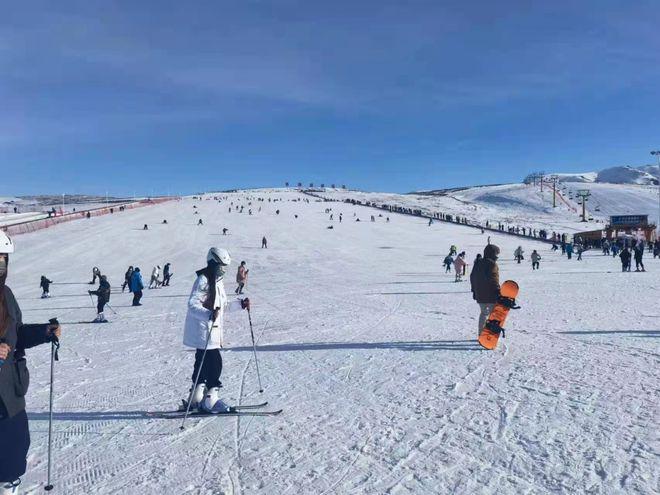
Several developed areas tolerate or formally permit uphill travel outside operating hours, and skinning a groomed run is an efficient way to test bindings, dial in layers and shake down a new setup before committing to a remote valley. Policies differ by operator and change year to year, so ask at the ticket office rather than assuming. Our overview of lift-served resorts is a useful shortlist of where to base yourself for this.
The Gear Setup
Bring everything. Touring-specific equipment is thinly stocked in the region and effectively impossible to hire at short notice.
- Skis in the 100–112mm waist range. Cold, low-density snow rewards float. Anything narrower will feel like hard work in the Altay tree runs.
- Tech bindings and boots with a walk mode. Frame bindings work but the weight penalty compounds over a week of 1,000-metre days.
- Two pairs of skins, or one pair plus spare tail clips and glue. Extreme cold degrades glue performance and skin failure ends a day quickly.
- Transceiver, probe and shovel — per person, non-negotiable. See our notes on avalanche safety gear for what to prioritise.
- A genuinely cold-rated system. An insulated belay jacket, vapour-barrier or heavyweight socks, goggles plus spare lens, and a face covering that works while you are breathing hard uphill.
- Insulated flask rather than a bladder. Hose systems freeze solid within an hour at these temperatures.
- Navigation with offline maps and spare batteries. Phone batteries die fast in the cold; keep one device warm against your body as a backup.
Snowpack and Avalanche Reality
The continental snowpack in northern Xinjiang behaves the way cold, shallow-to-moderate depth snowpacks behave everywhere: it builds persistent weak layers. Early-season faceting near the ground is common, and those layers can stay reactive for months rather than settling out in days. Storm slab problems arrive with the frequent northern systems, and wind slab is widespread wherever terrain is exposed.
Crucially, there is no public forecast product to lean on. You are the forecaster. That means digging pits, tracking weather history before you arrive, choosing conservative terrain early in the trip, and building your own picture over several days. Groups accustomed to reading a daily bulletin and adjusting accordingly should plan for a significantly larger safety margin. Timing matters too: mid-winter cold preserves instabilities far longer than a maritime snowpack would, and our guide to the best time to ski in Xinjiang explains how the season progresses.
Guides, Permits and Logistics
Hiring a local guide is the single highest-value decision for a first trip, and not only for safety. Some valleys in the far north sit inside border zones where a permit is required, access roads are closed or unploughed for parts of the winter, and village homestay arrangements are informal rather than bookable online. A licensed operator handles all of that and knows which drainages hold snow in a lean year.
Practical logistics worth planning for:
- Fly into Urumqi, then connect to a regional airport in the north or take the long-distance road transfer. Winter weather delays both, so build in a spare day.
- Confirm permit requirements for your specific target area well before departure, not on arrival.
- Carry your passport at all times; it is checked routinely on regional transport.
- Assume patchy mobile coverage in the valleys and carry a satellite messenger if your plan is remote.
- Budget for a driver as well as a guide. Self-driving unploughed mountain roads in deep winter is not a sensible economy.
Fitness, Cold and Pacing
Altitude is a minor factor here, which fools people into underestimating the days. The real load is temperature and trail breaking. Skinning through knee-deep unconsolidated snow at −20°C burns energy at a rate that surprises skiers who are used to firm European skin tracks. Rotate the lead, eat before you feel hungry, and keep food where it will not freeze into a brick.
Layer management becomes a discipline rather than an afterthought. Overdressing on the climb means damp base layers, and damp base layers at these temperatures are genuinely dangerous on a windy ridge. Start slightly cold, stop briefly to add insulation before every descent, and keep spare gloves somewhere accessible. If your background is in Nordic rather than alpine touring, our notes on cross-country skiing in China cover the flatter valley routes that make good rest days.
A Sensible Three-Day Block
- Day one: a short valley tour with under 700 metres of climbing. Shake down gear, dig a pit, calibrate your sense of the snowpack, adjust to the cold.
- Day two: a treeline objective with sheltered descent options, around 1,000 metres of ascent. Keep slope angles moderate while you are still learning the local snow.
- Day three: if stability and weather allow, an open bowl or a summit line. If they do not, ski the trees again — in this region that is rarely a compromise.
Frequently Asked Questions
Do I need a guide to ski tour in Xinjiang?
Not everywhere legally, but practically yes for a first visit. There is no public avalanche forecast, some areas need border permits, and access logistics are hard to arrange remotely. Experienced parties with strong snow skills and good local intelligence do tour independently, usually after a guided trip first.
When is the touring season?
Late November to early April in the Altay, with the deepest and coldest conditions from late December through February. March offers warmer temperatures, longer daylight and better light for photography, at the cost of more sun effect on southerly aspects.
How cold does it actually get?
Overnight lows of −25°C to −30°C are normal in the far north in mid-winter, with colder readings in valley inversions. Daytime touring temperatures often sit between −15°C and −25°C. Gear rated for mild conditions will not cope.
Can I hire touring skis and skins locally?
Assume not. Resort hire fleets are alpine equipment. A few specialist guiding operations keep a small stock for clients, but sizes are limited and availability cannot be relied on. Bring your own setup.
Is the altitude a problem?
Rarely. Most northern touring happens between 1,000 and 3,000 metres, which is low enough that altitude illness is uncommon. Tianshan objectives reaching above 3,000 metres deserve an easy first day, but this is not a high-altitude destination in the Himalayan sense.
How do I get avalanche information before a tour?
Track regional weather history for the weeks before you arrive, question local guides and resort patrol about recent activity, and then verify with your own snowpack observations. Treat any single source as incomplete and default to conservative terrain until your own data supports otherwise.