

Xinjiang is an unusual place to learn to ski, and that is exactly why it works. The region has long, cold, dry winters that deliver light snow from late November into March, and most of its resorts were built recently enough that beginner terrain was designed in from the start rather than squeezed onto whatever slope was left over. Add lift queues that are short by Chinese standards, wide empty nursery slopes on weekdays, and lesson prices well below what you would pay in the Alps or Japan, and a first ski trip here stops looking like an exotic gamble.
This guide covers where to take beginner lessons in Xinjiang, what group and private instruction actually cost, how the language barrier plays out in practice, and how much progress a complete first-timer can realistically expect over three days on snow. If you are still choosing a destination within the region, the companion overview of where to ski in Xinjiang pairs well with what follows.
Why Xinjiang Suits First-Time Skiers
Learning to ski is mostly a numbers game: the more repetitions you get on gentle, forgiving terrain, the faster your body stops fighting the equipment. Xinjiang happens to be good at supplying those repetitions.
- Dry, cold snow. Continental winters keep the snowpack soft and slow rather than icy. Falling on Altay powder is a very different experience from falling on refrozen European hardpack.
- Long season. The northern resorts often open in late November and run into early April, so you are not fighting for a narrow window of decent conditions.
- Genuinely flat nursery areas. Most beginner zones use magic carpets rather than drag lifts, which removes one of the classic first-day frustrations.
- Space. Outside Chinese public holidays, beginner slopes are quiet enough that you can practise without dodging traffic.
- Price. A private instructor in Xinjiang typically costs a fraction of an equivalent booking in Hokkaido or Austria.
The trade-off is cold. Mid-winter mornings in Altay Prefecture regularly sit below minus 20 degrees Celsius, which matters more for beginners than for advanced skiers because you spend far longer standing still, listening, and picking yourself up. Getting your clothing system right is not optional here, and a proper approach to layering for Xinjiang ski conditions will do more for your first lesson than any equipment upgrade.
Where to Take Beginner Lessons
Altay and Jiangjunshan
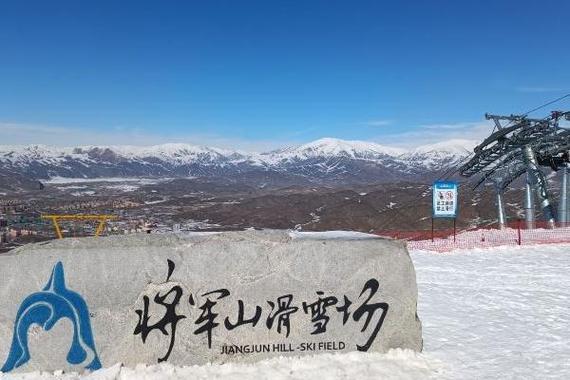
Altay markets itself as one of the birthplaces of skiing, and the resorts clustered around the city are the most complete option for a learning trip. Jiangjunshan (General Mountain) has a dedicated beginner area served by carpet lifts, a ski school with a reasonably large instructor roster, and enough easy blue terrain that you can graduate off the nursery slope without a jarring step up in difficulty. It is the option most likely to have someone available who can teach in basic English, particularly during international events and peak holiday weeks.
Keketuohai
Keketuohai is better known for steep terrain, deep snow, and one of the longest seasons in the country, which makes it an odd recommendation for a first-timer. In practice it still works, because the base area has separate beginner zones and the resort is rarely crowded. Consider it if you are travelling with a stronger skier who wants serious terrain while you learn, since the two of you can share a base and meet for lunch.
Silk Road and the Urumqi Resorts
The resorts within an hour or two of Urumqi, including Silk Road, Baiyungou, and the Nanshan cluster, are the most convenient way to fit lessons into a short trip. They are smaller and busier at weekends, but the logistics are simple: fly into Urumqi, transfer the same day, and be on snow the following morning. If you only have a long weekend, this cluster removes an internal flight and a lot of driving from the plan.
For a broader look at how these mountains compare on terrain, vertical, and facilities rather than just teaching, the main Xinjiang skiing guide breaks the region down resort by resort.
Group Lessons Versus Private Instruction
Chinese ski schools structure lessons differently from the European model. Multi-day group courses that run at a fixed time every morning for a week are uncommon. Instead, most lessons are sold by the hour or by the half-day, and private instruction is the default rather than the premium upgrade.
- Private lessons usually run one to two hours per session. For a complete beginner, two hours on day one is close to the limit of useful concentration.
- Group lessons exist at the larger resorts but often mean an instructor supervising four to eight people of mixed ability, which is less structured than a European ski school class.
- Semi-private arrangements, where two or three friends share one instructor, are the best value and easy to arrange informally.
For most international visitors, private or semi-private is the right call. You are paying for clear communication as much as for technique, and splitting an instructor between two people roughly halves the per-person cost without meaningfully reducing the coaching you receive.
What Lessons Cost
Prices move year to year and spike during Spring Festival, but the shape of the market is stable. Expect roughly 300 to 600 CNY per hour for a private instructor, with the higher end reflecting peak holiday dates, senior instructors, or English capability. Half-day packages that bundle three or four hours generally work out cheaper per hour than booking single sessions.
Budget separately for these items, which are almost never included in the lesson price:
- Lift pass. Beginner carpet lifts are sometimes free or cheap, but you will want a full pass by day two.
- Rental equipment. Skis, boots, and poles are widely available on site; helmets are usually a small extra charge and worth taking.
- Insurance. Resorts frequently sell a low-cost daily accident policy at the ticket window.
- Deposit. Rental shops may hold a refundable deposit against equipment, often settled by mobile payment.
If you are unsure whether to rent locally or bring your own kit, the practical trade-offs are covered in the China ski rental and equipment guide. For a first trip, renting is almost always correct: boots are the only piece of equipment that genuinely needs to fit you, and rental staff will size them properly.
Dealing With the Language Barrier
Most instructors in Xinjiang teach in Mandarin, and some also speak Uyghur or Kazakh. English-speaking instructors exist but are a limited resource, so treat them as something to book ahead rather than something to find on arrival.
Three practical tactics help:
- Ask the hotel to call the ski school. Resort hotels routinely arrange instructors for guests and can request an English speaker a day or two in advance.
- Accept a Mandarin-speaking instructor plus a translation app. Skiing is a physical, demonstrative skill. An instructor who shows a movement, watches you copy it, and corrects your stance with gestures can teach you a great deal without shared vocabulary.
- Learn five words. Knowing the Mandarin for snowplough, turn, stop, faster, and slower covers most of what gets said on a nursery slope.
Do not let language uncertainty push you into skipping lessons and teaching yourself from videos. Self-taught beginners tend to build defensive habits, particularly leaning back, that take far longer to unpick than they took to acquire.
A Realistic Three-Day Beginner Plan
Three days on snow is enough to turn a complete novice into someone who can ski easy blue runs with control. A sensible structure looks like this:
- Day one. Two hours of instruction in the morning covering equipment, sliding, the snowplough, and stopping. One hour of unsupervised practice in the afternoon, then stop before you get tired and start reinforcing bad habits.
- Day two. Two hours of instruction on linked turns and using the chairlift, followed by two or three hours of mileage on the easiest full-length run.
- Day three. One hour of coaching to fix whatever has gone wrong, then a full day of skiing. This is the day the sport starts to feel like fun rather than homework.
Resist the temptation to book five hours of lessons on day one. Beginners fatigue quickly at altitude in cold weather, and tired legs learn nothing.
Timing Your Trip
January and February deliver the most reliable snow but also the harshest cold and the Spring Festival crowds. Early December and mid-March are the sweet spots for lessons specifically: instructors are easier to book, slopes are quieter, and temperatures are far more tolerable for someone spending long periods standing still. The detailed seasonal breakdown in the guide to the best time to ski in Xinjiang is worth reading before you fix dates, especially if you are travelling with children.
Common First-Timer Mistakes
- Renting boots that are too big. Comfortable in the shop means sloppy on the slope. Boots should be snug with toes just brushing the front when you stand upright.
- Overdressing in cotton. Cotton holds sweat, then freezes. Synthetic or merino base layers only.
- Skipping goggles. Sunglasses are inadequate in wind and flat light, and both are common in northern Xinjiang.
- Booking lessons only for day one. The second and third sessions produce far more improvement than the first.
- Ignoring hydration. Dry continental air dehydrates you quickly, and dehydration amplifies both fatigue and altitude discomfort.
Frequently Asked Questions
How many days of lessons do I need to ski independently?
Most adults can ski easy groomed runs with control after two to three days of instruction combined with practice. Skiing confidently on steeper terrain takes considerably longer, typically several trips rather than several days.
Can I find an English-speaking ski instructor in Xinjiang?
Yes, but supply is limited and concentrated at the larger resorts around Altay and Urumqi. Request one through your hotel or the ski school at least a day or two ahead. If none is available, a Mandarin-speaking instructor with a translation app on hand works better than most people expect.
Is Xinjiang too cold for a beginner?
Mid-winter mornings are genuinely severe, but the cold is manageable with proper layering and short, focused sessions. Beginners who want milder conditions should target early December or March, when daytime temperatures are far more comfortable.
Should I learn to ski or snowboard first?
Skiing is easier in the first few days because your feet move independently and stopping is intuitive. Snowboarding has a steeper initial learning curve with more falls in the first two days but progresses quickly afterwards. For a short trip, skiing usually delivers more enjoyment per day.
Do I need to bring my own equipment?
No. Every major resort in Xinjiang rents skis, boots, poles, and helmets on site, and rental quality has improved substantially in recent years. Bring your own goggles, gloves, and base layers, since those are personal items that rental shops do not supply well.