

For powder-focused skiers planning an Asia trip, the shortlist usually starts with Japan – and increasingly ends with a hard look at Xinjiang. Hokkaido built its reputation on meters of reliable maritime snowfall, polished resort operations and a tourism machine that makes everything easy. Xinjiang, in China’s far northwest, offers something different: ultra-dry continental powder in the Altay mountains, brand-new lift infrastructure, empty slopes on weekdays and prices that undercut Japan almost everywhere except the airfare. Neither destination is simply “better” – they reward different priorities. This comparison breaks down snow quality, terrain, costs, crowds, access, food and culture so you can decide which side of the East Asian winter suits your next trip. If Xinjiang wins your vote, our complete Xinjiang skiing guide covers everything from visas to village guesthouses.
Snow Quality: Maritime Depth vs Continental Dryness
Japan’s famous “Japow” comes from Siberian air crossing the Sea of Japan, loading moisture and dumping it on Hokkaido and Honshu’s west coast. The result is enormous volume – Niseko averages 14 to 15 meters per season – with snow that is light by world standards but still maritime, typically 6 to 9 percent water content.
Xinjiang’s Altay region sits deep inside the Eurasian continent, about as far from any ocean as it is possible to get. Storms are less frequent and totals are lower – roughly 3 to 5 meters in the mountains – but the snow that falls is exceptionally dry, often 4 to 6 percent water content, and it stays cold and preserved for days or weeks after a storm. In practical terms:
- Japan wins on frequency: near-daily refills in January mean you can hit fresh snow on almost any trip window.
- Xinjiang wins on quality and preservation: colder temperatures and low humidity keep powder soft long after it falls, and wind-protected tree runs at Koktokay or Hemu hold cold smoke for a week.
- Season length: Xinjiang’s season runs longer, from November into late March or April at altitude, while Japan’s prime powder window is tighter, roughly late December through February.
Timing matters more in Xinjiang precisely because storms are spaced out; see our guide to the best time to ski Xinjiang to line up your dates with the deepest weeks.
Terrain and Resorts
Japan offers hundreds of ski areas, from tiny single-lift hills to interconnected zones like Niseko United. Terrain is mostly below treeline, with legendary birch glades but modest vertical – most Hokkaido resorts have under 1,000 meters of drop, and strict boundary rules vary by resort.
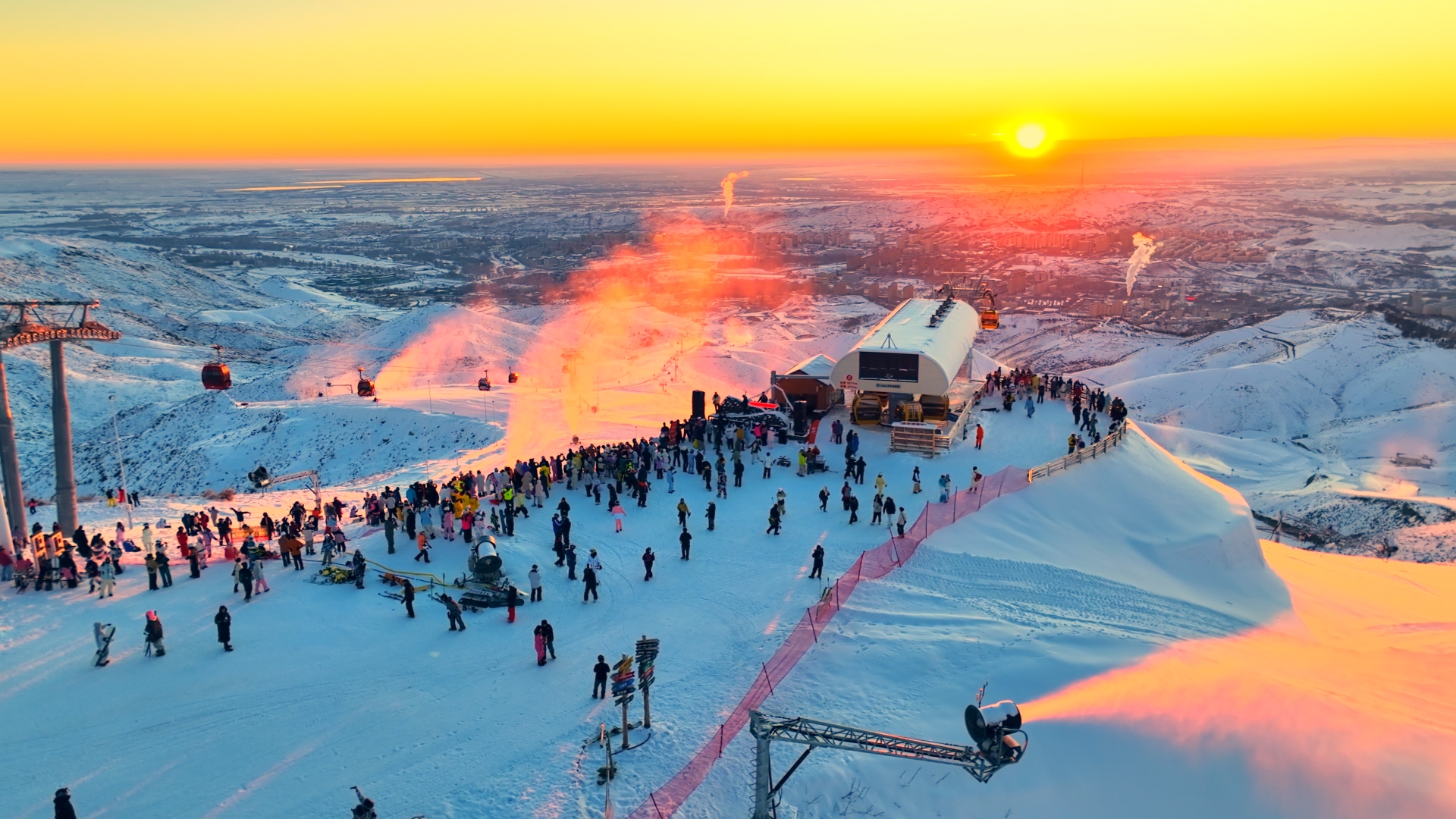
Xinjiang has fewer but surprisingly serious mountains. Koktokay boasts one of China’s longest verticals at around 1,200 meters with genuinely steep alpine faces. Silk Road above Urumqi mixes wide groomers with an expanding freeride zone, and Jiangjunshan delivers night skiing right above Altay City. Lifts are new – heated gondolas and high-speed chairs built in the last few years – and slopes are dramatically quieter. For a full rundown of each mountain, browse our Xinjiang ski resorts overview. Skiers chasing untouched lines can go further: guided touring and cat-ski style operations are emerging fast, detailed in our heliski and backcountry guide.
Cost Comparison: Where Your Money Goes Further
Japan has become noticeably more expensive since international tourism rebounded, especially in Niseko and Hakuba where prices approach North American levels. Xinjiang remains one of skiing’s best bargains.
- Lift tickets: Niseko day passes now exceed 500 to 700 RMB equivalent. Xinjiang resorts charge roughly 200 to 400 RMB, with multi-day and early-season deals cutting that further.
- Lodging: A Niseko slopeside hotel in January can run 1,500 to 4,000 RMB per night. In Altay City or near Silk Road, comfortable hotels cost 250 to 600 RMB; Hemu guesthouses are cheaper still.
- Food: Resort lunch in Japan is famously reasonable (1,000 to 1,500 yen), and Xinjiang matches or beats it – a bowl of hand-pulled laghman noodles or lamb pilaf near the slopes costs 20 to 40 RMB.
- Lessons and rentals: Both are cheaper in Xinjiang, though English-speaking instructors are scarcer and worth booking ahead.
Overall, a week in Xinjiang typically costs 30 to 50 percent less than the same week in Hokkaido once you are on the ground. Our detailed China ski cost breakdown itemizes a full trip budget.
Crowds and Atmosphere
This is where the two destinations feel most different. Niseko in January is an international village – English signage everywhere, Australian and Singaporean accents in every lift line, and yes, lift lines. Powder mornings are competitive, with fresh snow tracked out within hours on the main faces.
Xinjiang on a weekday can feel like a private mountain. Outside Chinese public holidays (especially Spring Festival), lift queues are rare, and powder stashes survive for days. The trade-off is less English, fewer international-standard bars and a nightlife scene that revolves around hotpot, barbecue skewers and hot springs rather than izakayas and craft beer. Travelers who see that as cultural immersion rather than inconvenience tend to love it.
Access, Visas and Logistics
- Getting there: Japan is served by cheap direct flights from most of Asia; Sapporo is effortless. Xinjiang requires reaching Urumqi – well connected domestically and increasingly from Central Asia and the Middle East – then a short flight or drive north to Altay for the powder resorts.
- Visas: Japan is visa-free for many Western passports. China now offers visa-free entry or transit for a growing list of countries, and the process has become far simpler than most skiers assume; comparisons across the region are covered in our China vs Korea vs Japan skiing article.
- On-the-ground apps: Japan runs on cash and IC cards; Xinjiang runs on WeChat Pay and Alipay, both of which now accept foreign cards. Offline maps and a translation app cover the rest.
Food and Culture Off the Slopes
Japan’s apres scene needs no introduction: onsens, ramen, sushi and convenience-store perfection. Xinjiang counters with Central Asian flavors found nowhere else in the ski world – lamb skewers over charcoal, big-plate chicken, fresh naan from tandoor ovens, and Kazakh and Tuvan village hospitality in Hemu and Kanas. Altay is also arguably the historical birthplace of skiing, with 10,000-year-old cave paintings and locals who still craft traditional fur-skinned skis. For travelers who count culture as part of the trip, Xinjiang delivers a rarer story.
Verdict: Which Should You Choose?
- Choose Japan if you want maximum snowfall frequency, polished English-friendly service, easy access and vibrant nightlife – and you accept the crowds and rising prices that come with it.
- Choose Xinjiang if you want drier snow, empty slopes, longer seasons, bigger vertical at Koktokay, dramatically lower costs and a frontier cultural experience – and you are comfortable with a little more logistics.
- Do both: increasing numbers of skiers pair a Japan week with a Xinjiang week in the same winter; the contrast is the point.
Frequently Asked Questions
Is Xinjiang powder really drier than Hokkaido’s?
On average, yes. Altay’s continental climate produces snow with lower water content than Hokkaido’s maritime snowfall, and colder inter-storm temperatures preserve it far longer. Japan compensates with sheer frequency of refills.
Is Xinjiang harder to travel than Japan for non-Chinese speakers?
Somewhat. English is less common and signage is mostly Chinese, but payment apps now accept foreign cards, resort staff are used to helping international guests, and hiring an English-speaking guide is inexpensive. Most visitors find it easier than expected.
Which is better for a first overseas ski trip?
Japan is smoother for complete self-planners. Xinjiang suits travelers with some independent travel experience or those willing to book a guide or package – the reward is emptier slopes and lower costs.
How do lift ticket prices compare in 2026?
Xinjiang day passes generally run 200 to 400 RMB, while Niseko-area passes exceed 500 to 700 RMB equivalent and continue to rise. Multi-day passes widen the gap further.
Can I combine Xinjiang and Japan in one season?
Easily. Fly into Urumqi for Altay powder in December or January, then connect through a hub city to Sapporo. The two snowpacks peak on overlapping but not identical schedules, so a January-February split works well.