

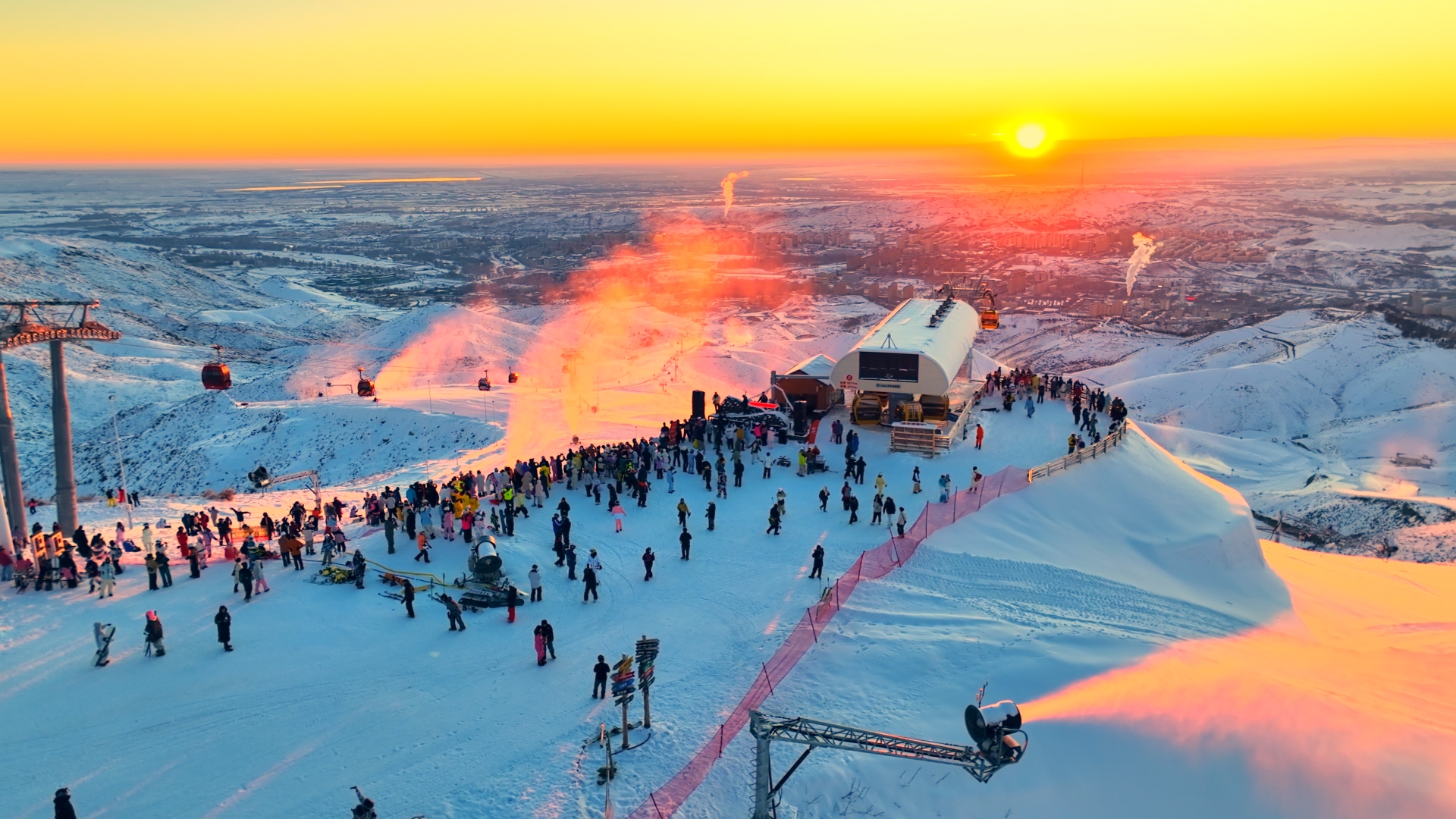
Skiing with a toddler in tow is a completely different sport from skiing alone. You are not just planning lifts and lunch; you are planning naps, snack windows, spare mittens and the exact moment somebody melts down in a boot room. Xinjiang’s resorts have grown up fast over the past few seasons, and the childcare side of the operation has grown with them. Silk Road Resort outside Urumqi, the Altay cluster around Jiangjunshan and Keketuohai, and the smaller Tianshan hills now all offer some form of supervised care, kids’ instruction or indoor play space. What varies enormously is the age range accepted, the language spoken by staff, and whether you need to book weeks ahead or can simply walk up on the morning.
This guide breaks down what childcare actually looks like on the ground in Xinjiang, what it costs, how to book it, and how to build a ski day that works for both a four-year-old and a parent who genuinely wants to get some vertical in. If you are still choosing a destination, start with our overview of Xinjiang ski resorts and then come back here for the family logistics.
The Three Tiers of Childcare You Will Find
It helps to think of Xinjiang childcare in three tiers, because resort marketing tends to blur them together under one cheerful “kids club” banner.
Tier One: Supervised Indoor Play Rooms
These are heated rooms with soft flooring, blocks, slides, cartoons on a screen and one or two attendants. They accept children roughly from age two to eight and operate on an hourly rate. Nobody is teaching anything; the goal is warmth, safety and containment while parents ski. Silk Road Resort and the larger Altay hotels run rooms like this, usually inside the main base building or in an attached hotel lobby. Expect to pay somewhere between 40 and 80 RMB per hour, sometimes with a daily cap.
Tier Two: Snow Kindergartens and Kids’ Camps
A step up: a fenced beginner area with magic carpet, mini gates, snow toys and instructors who take small groups through the basics. Children are outside in gear for two to three hours, then come inside for hot water and a rest. This tier overlaps heavily with beginner instruction, and the resorts that do it well run it as a half-day or full-day programme with lunch included. If your child is four or older and reasonably confident, this is where the value is — they get exercise, they get social, and you get a genuine ski morning. Our dedicated write-up on Xinjiang resort kids’ camps goes deeper into the daily schedule.
Tier Three: Private Nannies and Hotel-Arranged Sitters
Higher-end hotels in Altay and Urumqi can arrange an in-room or in-hotel sitter, often through a local agency. This is the only realistic option for infants under two, and the only option that flexes around an unusual schedule — an early start, a late dinner, an afternoon nap at the hotel rather than at the base. Rates run higher, typically 300 to 600 RMB for a half day, and you should ask about the sitter’s language ability before committing.
Age Cut-Offs: The Detail That Trips People Up
The single most common problem foreign families hit in Xinjiang is an age policy that was never published in English. A few practical rules of thumb:
- Under 2: Almost no resort-run facility will take an infant. Plan on a hotel sitter or on parents alternating ski shifts.
- Ages 2–3: Indoor play rooms usually accept them, but many require a parent to remain on the property and reachable by phone. Some ask that the child be reliably toilet-trained.
- Ages 4–6: The sweet spot. Snow kindergartens, group lessons and play rooms all open up.
- Ages 7–12: Kids move into standard group lessons rather than childcare, and childcare rooms may turn them away as too old.
Always confirm the cut-off in writing before you travel. A WeChat message to the resort’s reservations account, answered with a screenshot you can show at the desk, has saved more than one family a very expensive morning.
Booking: How Far Ahead and Through Which Channel
Xinjiang resorts run on WeChat and domestic booking platforms far more than on international web forms. Practically, that means the resort website in English may show no childcare option at all while the Chinese WeChat mini-programme has a full booking calendar. Three approaches work:
- Book through your hotel. If you stay in an on-mountain or resort-affiliated hotel, the front desk will usually reserve childcare on your behalf. This is the lowest-friction route for foreign visitors and the one we recommend.
- Book via WeChat with a translation app. Workable if you already have WeChat Pay set up. Send the dates, the child’s age and the hours you need.
- Walk up on the day. Fine on weekdays in December and March. Risky on weekends, during Spring Festival, and across the whole January peak, when play rooms sell out by mid-morning.
Peak-period demand is the real constraint. If your trip lands in the busiest weeks, reserve childcare at the same time you reserve lift tickets — see our notes on the best time to ski in Xinjiang for which weeks to avoid if you have flexibility.
What It Costs in Practice
A realistic budget for a family of four with one child in care, per ski day, looks roughly like this:
- Indoor play room, four hours: 160–320 RMB
- Snow kindergarten half day with instructor: 300–500 RMB
- Full-day kids’ camp including lunch and gear: 500–800 RMB
- Private hotel sitter, half day: 300–600 RMB
- Child rental gear if not bundled: 80–150 RMB
Multi-day packages almost always beat day rates. Several Altay resorts price a three-day kids’ camp at roughly the cost of two single days, and family bundles that combine adult lift passes with a child programme can cut another ten to fifteen percent. Ask specifically about Xinjiang resort family packages rather than assuming the day rate is the only option.
Language: The Practical Reality
Most childcare attendants in Xinjiang speak Mandarin, and many also speak Uyghur or Kazakh. English is uncommon among play-room staff and more likely among instructors at the larger resorts, some of whom have trained abroad or worked seasons in Japan. This matters less than parents fear for very young children — a two-year-old in a play room communicates in pointing and crying regardless of language — and more than parents expect for a six-year-old in a lesson, who needs to understand instructions on a slope.
Practical mitigations that work well:
- Write your child’s name, age, allergies, and your phone number in Chinese on a card and clip it inside their jacket.
- Ask whether an English-speaking instructor is available and pay the premium if one is; it is usually modest.
- Install a translation app with offline Chinese before you leave, since mountain data coverage is patchy.
- Agree a check-in time and a WeChat contact with the attendant so you get photo updates.
For a fuller picture of what English support exists across the mountain — signage, ticket desks, ski school and medical — read our companion piece on English-friendly services at Xinjiang ski resorts.
Building a Ski Day That Actually Works
The families who have the best time in Xinjiang are the ones who stop trying to ski a full day. A structure that repeatedly works:
- 08:30–09:00 — Slow start. Xinjiang runs on Beijing time but sits far west, so daylight arrives late. There is no advantage to a 7 a.m. alarm; lifts often do not spin until 10.
- 10:00 — Drop-off. Get the child settled first, before boots and lift queues.
- 10:15–12:30 — Parents ski. This is your genuine ski window. Use it.
- 12:30–13:30 — Family lunch. Collect the child, eat together, warm up.
- 13:30–15:30 — Split shift. One parent takes the child sledding or back to the room; the other skis. Swap the next day.
- 15:30 — Done. The light goes flat and temperatures drop hard in late afternoon. Cut the day early and everyone stays happy.
Two half-days per adult across a four-day trip adds up to more real skiing than one heroic full day followed by three days of exhausted negotiation. Parents new to the region should also skim our general Xinjiang skiing guide for altitude, cold and transport context that applies to the whole family.
What to Pack for the Childcare Room
Resort facilities supply warmth and supervision, not equipment. Bring:
- A full change of clothes, including socks — snow gets everywhere
- Two pairs of mittens, because one pair will be soaked by 11 a.m.
- Indoor shoes or thick slipper socks; play rooms are shoes-off
- A familiar snack, since resort food is unfamiliar and often spicy
- Any medication, clearly labelled, handed over in person
- A water bottle — the air in Xinjiang is exceptionally dry and children dehydrate quickly
Resort-by-Resort Snapshot
Silk Road Resort, Urumqi: The most convenient option for a short trip. Indoor play space, kids’ instruction, and city hotels forty minutes away, so a sitter is easy to arrange. Best for first-time family visitors.
Jiangjunshan, Altay: Larger terrain, a proper snow kindergarten in peak season, and on-mountain hotels that simplify drop-off. Book childcare ahead in January.
Keketuohai: Serious terrain and a longer season, but the thinnest family infrastructure of the three. Suitable if one parent is a strong skier and the other is happy to base in the village.
Smaller Tianshan hills: Cheap, friendly, low-key, and generally without formal childcare. Fine for a day trip where both parents take turns.
Frequently Asked Questions
Do Xinjiang ski resorts accept babies under two years old?
Resort-operated childcare rooms almost never do. The workable options are a private sitter arranged through your hotel, or parents alternating ski sessions. If you are travelling with an infant, choose a resort with on-mountain or very nearby accommodation so the non-skiing parent is not stranded in a cold base lodge.
Is English spoken in resort kids’ clubs?
Rarely by play-room attendants, occasionally by instructors at the larger resorts. Request an English-speaking instructor when you book, and prepare a bilingual information card with your child’s details and your phone number as a backup.
How far in advance should I book childcare?
Two to three weeks ahead for January and Spring Festival, and for any weekend. Weekdays in early December or March can usually be walked up, though calling the day before still costs nothing and removes the risk.
Can my child take a ski lesson instead of going into childcare?
Yes, and from around age four it is usually the better value. A half-day group lesson costs roughly the same as half a day of supervised play but leaves your child able to slide, which changes every subsequent family ski trip.
What happens if my child gets sick or upset during the day?
Staff will contact you by phone or WeChat, which is why you must leave a reachable number and confirm you have mountain signal. Agree a meeting point in advance — base lodges in Xinjiang are large and finding each other in a crowded boot room takes longer than you would think.
Is childcare available outside the main season?
Generally no. Programmes typically run from late December to early March, with reduced or no service at the shoulders of the season even when lifts are still turning.