

Skiing and deserts do not usually belong in the same sentence, but Xinjiang makes it possible. After days of cold-smoke powder in the northern mountains, a Xinjiang ski Turpan side trip drops you into a sun-baked oasis depression famous for the Flaming Mountains, ancient Silk Road ruins, and a network of underground irrigation channels. It is one of the most surreal contrasts in Asian travel — morning frost on the slopes, afternoon sun in a desert basin — and it is far easier to arrange than most visitors assume.
Turpan sits close to Urumqi, the region’s transport hub, which makes it the most convenient cultural add-on to a ski holiday. Unlike a far-south detour, Turpan can be reached in a couple of hours from the capital, so it slots neatly into the beginning or end of a ski week without a long extra flight.
This guide walks through why the desert and the slopes complement each other, when to visit, how to move between them, what to see once you arrive, and roughly what the whole thing costs. The aim is a trip that feels like a single, coherent journey across the astonishing range of landscapes Xinjiang packs into one region — from powder bowls to sand-coloured ruins — rather than two holidays awkwardly stitched together.
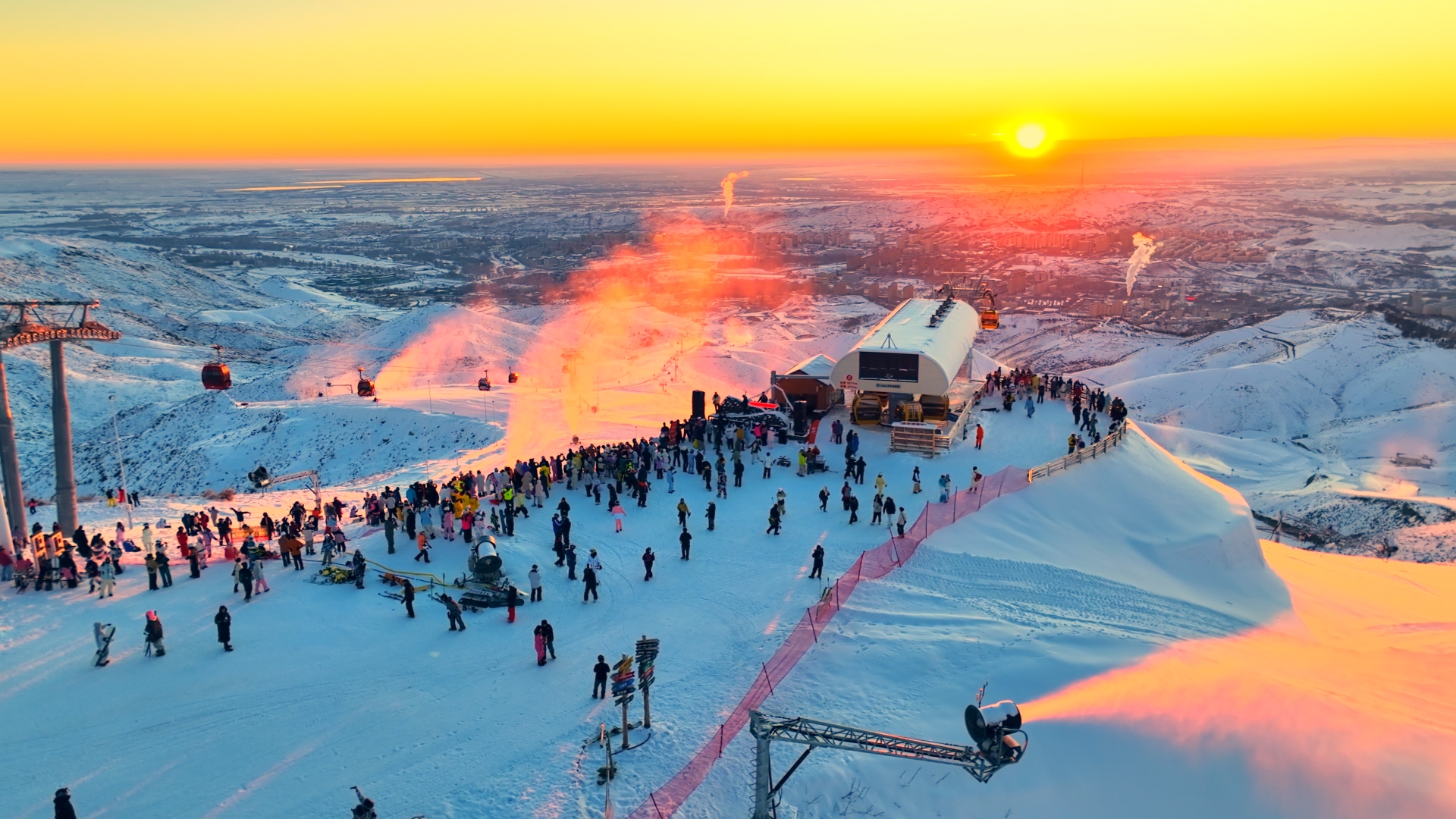
Why Turpan pairs so well with skiing
Turpan is one of the lowest and driest places in China, and even in winter it feels milder than the mountains. That makes it a comfortable, low-altitude counterpoint to the effort of skiing. The historical sites are genuinely world-class, and winter’s thin crowds mean you often have them nearly to yourself.
- Proximity: only about two hours from Urumqi by road or high-speed rail.
- Mild winter days: the basin’s low elevation keeps daytime temperatures relatively gentle.
- History everywhere: Jiaohe and Gaochang ruins, the Emin Minaret, and the karez water system.
- No extra flight: unlike a far-south detour, Turpan is reached by rail or road, keeping the add-on cheap and simple.
If you are still mapping out the northern half of the trip, start with our Xinjiang skiing guide to lock in the resorts, then treat Turpan as the desert bookend.
When to visit Turpan on a winter trip
Turpan is a year-round destination, but winter has real advantages: cool rather than scorching temperatures, clear skies, and almost no tour buses. Because it overlaps completely with the ski season, timing is simple. Confirm your snow window using our notes on the best time to ski in Xinjiang and then add the desert days on whichever end suits your flights.
What the weather feels like
Expect crisp, dry, sunny days. Nights are cold, but you will already have packed warm layers for the slopes, so you are well equipped. The dryness makes the cold feel less biting than in the mountains.
Getting from the slopes to Turpan
The logistics are refreshingly simple because everything funnels through Urumqi. For the full entry picture, see our guide on how to get to Xinjiang for skiing.
- Ski first: spend your powder days in the Altay region.
- Return to Urumqi: the central hub for onward travel.
- Urumqi to Turpan: high-speed rail or a road transfer, both around two hours.
Some travelers prefer their own vehicle for the desert leg so they can reach the ruins on their own schedule; a private car from Urumqi gives the most flexibility. Others simply extend the framework in our Xinjiang ski trip itinerary by two days for Turpan.
What to see in Turpan
Two days is enough for the essentials:
- Flaming Mountains: the red sandstone ridges made famous in Chinese legend, striking against winter light.
- Jiaohe Ruins: a remarkably preserved ancient city carved from a natural plateau.
- Gaochang Ruins: the sprawling remains of a Silk Road capital.
- Karez water system: ingenious underground channels that turned the desert into an oasis.
- Emin Minaret: an elegant 18th-century tower on the edge of town, especially photogenic in low winter sun.
- Grape valleys: the trellised lanes are bare in winter but still atmospheric, and local guides love explaining how the summer harvest works.
If you have a third day, slow down and spend it wandering the town’s bazaars and sampling dried fruit and nan, which Turpan produces in abundance. The unhurried pace is a deliberate contrast to the intensity of the slopes and is part of what makes the pairing so satisfying.
These calm, historical days round out the adrenaline of the mountains and fit naturally with the wider Xinjiang ski cultural experiences many visitors seek out.
Practical tips for a smooth desert leg
The historical sites are spread across the basin, so a private car or small tour saves a lot of waiting around in cold weather. Start early to make the most of short winter daylight, and carry water even in the cold — the dry air is dehydrating. Entrance tickets to the ruins are modest but add up, so budget for several. Because Turpan sits at very low elevation, you may notice the descent feels easier on your body than the mountains did; it is a genuine physical break as much as a cultural one.
Layering for the basin
Daytime sun in Turpan can feel surprisingly warm on the exposed ruins, while shaded spots and evenings stay cold. Bring the same versatile layering system you used for skiing so you can peel off and add back as needed. Sunglasses and sunscreen are worth carrying too, as the desert light is bright and reflective even in winter.
Budgeting the desert add-on
Turpan is inexpensive. The main costs are the short transfer from Urumqi, entrance tickets to the historical sites, and two nights of accommodation. Because it avoids an extra flight, it is one of the cheapest cultural extensions you can bolt onto a ski trip — weigh it against the core numbers in our Xinjiang ski trip cost breakdown.
Sample 8-day ski-and-desert plan
- Days 1–2: Arrive Urumqi, transfer to the Altay ski base.
- Days 3–5: Ski the northern powder.
- Day 6: Return to Urumqi, continue to Turpan.
- Days 7: Flaming Mountains, Jiaohe, and the karez system.
- Day 8: Gaochang or Emin Minaret, then return to Urumqi for departure.
Frequently Asked Questions
Is Turpan worth visiting in winter?
Absolutely. Winter brings mild days, clear skies, and almost no crowds, making it a comfortable and photogenic counterpoint to the cold mountains.
How far is Turpan from the ski areas?
The desert basin is a couple of hours from Urumqi, which is the hub you return to after skiing in the north. That short hop makes it the easiest cultural add-on in the region.
Can you actually ski near Turpan?
No. Turpan is a warm desert oasis, not a ski destination. The snow is in the northern mountains; Turpan is purely a cultural and historical detour.
How many days should I spend in Turpan?
Two days covers the Flaming Mountains, Jiaohe and Gaochang ruins, the karez system, and the Emin Minaret at a relaxed pace.
What is the best way to get around Turpan?
A private car or a small guided tour is ideal because the sites are spread out. Renting a vehicle from Urumqi gives you the most flexibility.