

Xinjiang is enormous — three times the size of France — and its best ski experiences are scattered across the Altai foothills, remote river valleys, and mountains ringing Urumqi. Public transport reaches the major resorts, but a rental car unlocks the region in a way no bus schedule ever will: sunrise starts, spontaneous photo stops on frozen steppe, and the freedom to chase storms between resorts. This guide covers everything foreign and domestic travelers need to know about renting and driving a car for skiing in Xinjiang, from license rules to winter road safety. If you are still planning the broader journey, start with our overview of how to get to Xinjiang for skiing.
Can Foreigners Rent and Drive a Car in Xinjiang?
Yes, but there is one critical rule: China does not recognize the International Driving Permit (IDP) or most foreign licenses. To legally drive, foreign visitors need a Chinese driving license or a temporary driving permit (临时驾驶许可). The temporary permit is realistic for travelers:
- It is issued to holders of a valid foreign license plus a certified Chinese translation.
- Major entry cities offer processing at traffic police (vehicle administration) offices; some airports, including Urumqi Diwopu’s associated offices, can handle it, and several rental agencies will assist with the paperwork for a fee.
- You typically need your passport, visa, foreign license, translation, a health declaration, and passport photos. Processing can take from an hour to a full day.
- Permits are usually valid for up to three months, matching a tourist visa nicely.
If the permit process sounds like too much friction, the standard alternative is a car with driver, which in Xinjiang often costs only 30 to 50 percent more than self-drive once fuel and insurance are counted — and the driver handles ice, police checkpoints, and navigation.
Where to Rent: Urumqi vs Altay
Urumqi
Urumqi has the deepest rental market in the region. International-style platforms (Shenzhou/CAR Inc., eHi) and local agencies operate at Diwopu Airport and downtown. Book through the Ctrip/Trip.com app for English-language support. Urumqi is the natural starting point if your trip combines Silk Road Ski Resort with a drive north — most itineraries begin with a flight into the city, covered in our flights to Urumqi guide.
Altay
Altay’s rental scene is smaller but functional, with local agencies near the airport and city center. If you fly Urumqi to Altay and only need wheels for the Jiangjunshan–Hemu–Kanas triangle, renting locally saves you the 600-plus kilometer highway drive north. Expect fewer vehicle choices and negotiate winter equipment explicitly.
What a Winter Rental Costs
- Compact sedan: 200–350 RMB per day. Fine for city driving and the Urumqi–Silk Road run, marginal for the north in heavy snow.
- SUV (strongly recommended): 400–700 RMB per day for a Haval, Tank 300, or similar. All-wheel drive plus ground clearance is what you want for Altay backroads.
- Car with driver: 800–1,200 RMB per day including fuel, common for Kanas-region winter itineraries.
- Deposit: 3,000–10,000 RMB pre-authorized on a credit card, plus a violation deposit sometimes held for weeks after return.
- Insurance: Take the full package (全险). Winter claims are the norm, not the exception.
Confirm in writing that the car comes with winter tires — not guaranteed in China the way it is in alpine Europe. Snow chains, an ice scraper, and a shovel are worth requesting; agencies in Altay usually understand why.
Winter Driving Conditions in Xinjiang
Northern Xinjiang in January is seriously cold: minus 20 to minus 35 Celsius overnight in the Altay region. The main roads are well-maintained and plowed — the G216 and S11 expressway north from Urumqi are modern, fast highways — but conditions demand respect:
- Black ice forms on bridges and shaded bends; reduce speed well below posted limits after any thaw-freeze cycle.
- Ground blizzards on the open steppe between Karamay and Burqin can cut visibility to meters within minutes. Check forecasts and do not out-drive your sightline.
- Short daylight: the sun sets before 19:00 local (Beijing) time in midwinter, and effectively earlier given Xinjiang’s western longitude. Plan drives for daylight.
- Fuel discipline: stations are frequent on highways but sparse toward Hemu and Kanas. Refill at half a tank, and note that attendants pump for you — passengers may be asked to exit and register ID at station gates.
- Checkpoints: police checkpoints on regional roads are routine. Keep passports, permits, and rental documents handy; foreign travelers are processed politely and usually quickly.
- Cold starts: ask for a diesel alternative only if the car has winter diesel; petrol engines are safer at minus 30. Park facing the morning sun where possible.
The Two Classic Self-Drive Ski Routes
Route 1: Urumqi Loop (3–4 days)
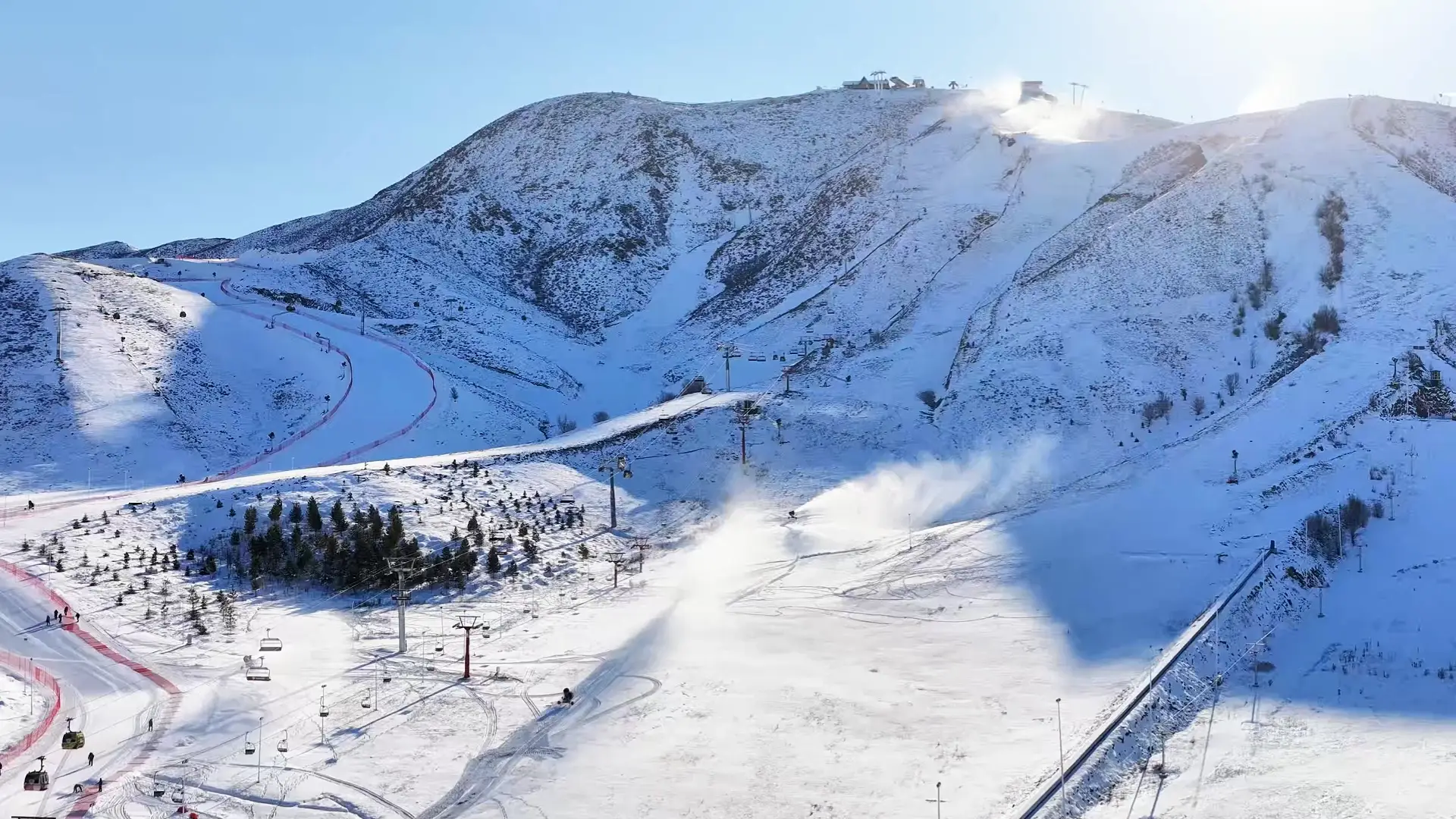
Base in Urumqi, drive one hour to Silk Road International Resort for two or three days of lift-served skiing with big verticals and city comforts each night. Add a day trip toward the Tianshan foothills for scenery. This route works even with a compact car and is the gentlest introduction to winter driving in the region.
Route 2: The Altay Grand Circuit (6–9 days)
Fly or drive to Altay City, ski Jiangjunshan for two days, then drive west toward Burqin and up into the mountains for Hemu village skiing and the frozen-fairy-tale landscapes of the Kanas valley. Return via Cocoa Tuohai for a final resort day. Total driving is roughly 800–1,000 km, almost all of it spectacular. An SUV is mandatory in midwinter, and the mountain section to Hemu may require joining a convoy or transferring to local vehicles after major snowfalls — build one buffer day into the plan. The full transport picture, including the non-driving options, is in our guide on how to get from Urumqi to Altay.
Should You Self-Drive or Not?
Self-drive suits confident winter drivers who value flexibility and travel as a pair or group, splitting costs. Choose a driver or organized transfers if you have never driven on packed snow, if your itinerary sticks to one resort, or if visa-time constraints make the temporary permit process a poor use of a day. Plenty of skiers combine approaches: transfers for the long Urumqi–Altay leg, then a locally rented SUV for resort-hopping around Altay. Whichever you choose, browse the full lineup of Xinjiang ski resorts before locking in a route.
Frequently Asked Questions
Can I drive in Xinjiang with an International Driving Permit?
No. China does not recognize the IDP. You need a Chinese license or a temporary driving permit issued against your home license and passport. Many travelers arrange the permit in Urumqi with agency help within a day.
Do rental cars in Xinjiang come with winter tires?
Not automatically. Always confirm winter tires in writing when booking, and inspect the tread on pickup. In Altay, agencies are more winter-savvy than in many other Chinese regions, but never assume.
Is it safe to drive from Urumqi to Altay in winter?
Yes, on the main expressway in fair weather — it is a modern, plowed highway taking seven to nine hours. The risks are black ice, ground blizzards on open steppe, and fatigue. Depart early, monitor forecasts, and be willing to delay a day in bad weather.
How much does a one-week winter rental cost?
A suitable SUV runs roughly 3,000–5,000 RMB per week plus fuel (about 8 RMB per liter) and insurance. Split between three or four skiers, self-drive is usually cheaper and far more flexible than separate transfers.
Can I take a rental car up to Hemu or Kanas in January?
Often yes, but the final mountain sections are snow-dependent. After storms, authorities may restrict access to vehicles with chains or require local transfer vehicles. Confirm current conditions with your guesthouse in Hemu one or two days before driving up.