

If you ski Xinjiang and never take a photo, you are leaving half the trip unremembered. Xinjiang ski photography is a genuine pleasure here because the scenery does most of the work for you: endless dry powder, jagged Altai ridgelines, and a clear, thin light you rarely get at crowded European resorts. This guide shares what I have learned shooting across both the Altai and the Tianshan, from keeping batteries alive in minus-25 air to finding the compositions that actually sell the scale of the place. Whether you shoot on a phone or a full camera system, the principles are the same, and the region rewards even modest kit with frame after frame of postcard material.
Why Xinjiang Is a Photographer’s Dream
Three things make the region special for anyone holding a camera. First, the snow. The dry Siberian-fed powder is bright white and rarely slushy, so it reads cleanly in frame even on overcast days when a wetter resort would look grey and flat. Second, the light. The high latitude and thin, dry air produce crisp contrast and long, soft golden hours in deep winter that flatter every subject. Third, the emptiness. You can frame a run with no lift towers or crowds in shot, a luxury almost impossible in Japan or the Alps, where a stranger is in every second frame. Pair the trip planning with the Xinjiang Skiing Guide and you will arrive knowing exactly which zones to point your lens at.
Gear That Survives the Cold
Cold is the enemy of cameras more than of skiers. Lithium batteries drain fast below freezing, so carry two or three and keep one in an inside pocket against your body where your warmth slows the loss. A small padded insert inside your jacket is the simplest way to keep both you and the gear warm between shots, and it saves your back from a hard body. Wide-angle zooms, roughly 16 to 35 millimetres, are ideal for big mountain scenes, while a short telephoto, 70 to 200 millimetres, compresses ridgelines and isolates a skier against a distant peak. A polariser helps cut glare off snow, but avoid over-darkening already-blue skies. If you want a dedicated action cam, mount it on your helmet for point-of-view runs and keep a real camera in your pack for the hero shots. A power bank in that same warm pocket keeps your phone alive as a backup camera and a map.
Best Light of the Day
In deep winter the sun sits low and stays low, which is a gift rather than a problem. The two golden hours, shortly after the late nine o’clock sunrise and again before the five o’clock sunset, give long shadows and warm tone on white snow without blowing out highlights. Midday is harsher but perfectly fine for action shots among the trees, where the canopy dapples the light anyway. Blue hour, just after sunset, is when floodlit night skiing in Xinjiang and city-lit resorts like Jiangjunshan come alive; a steady grip and a higher ISO will capture it without a tripod if you must travel light. Watch for clean storms too, because right after a fresh dump the light often goes flat yet the snow detail is unreal if you expose for the bright field.
Composition Tips for Mountain Scenes
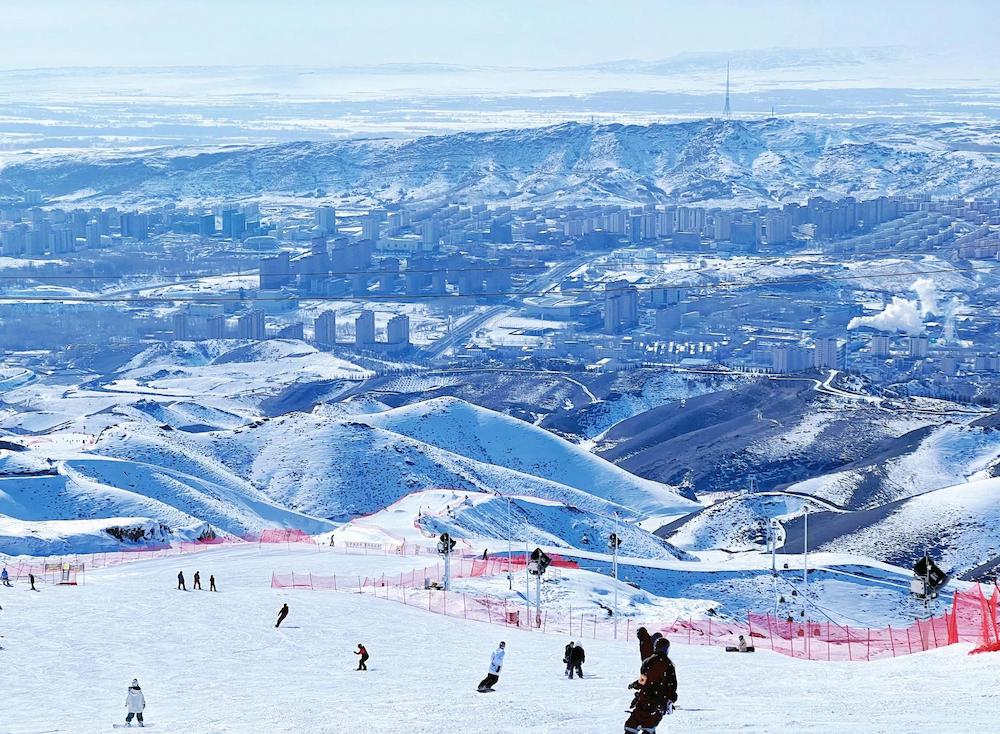
Scale is the hardest thing to convey and the easiest to fake with a person in frame. Always include a skier, a tree, or a hut for size reference, because an empty white slope looks small without it and the viewer has nothing to measure the mountain against. Use leading lines: a groomed piste, a river of powder, or a ridge that draws the eye up to the peak. For resort shots, get low and shoot up the fall line to make the pitch look steeper than it is, and step to the side so you are not framing lift machinery. For the big Altai panoramas, climb a little above the base lodge so the composition is all nature. The where to ski in Xinjiang guide helps you choose locations with the strongest backdrops before you travel.
Shooting Action on the Slopes
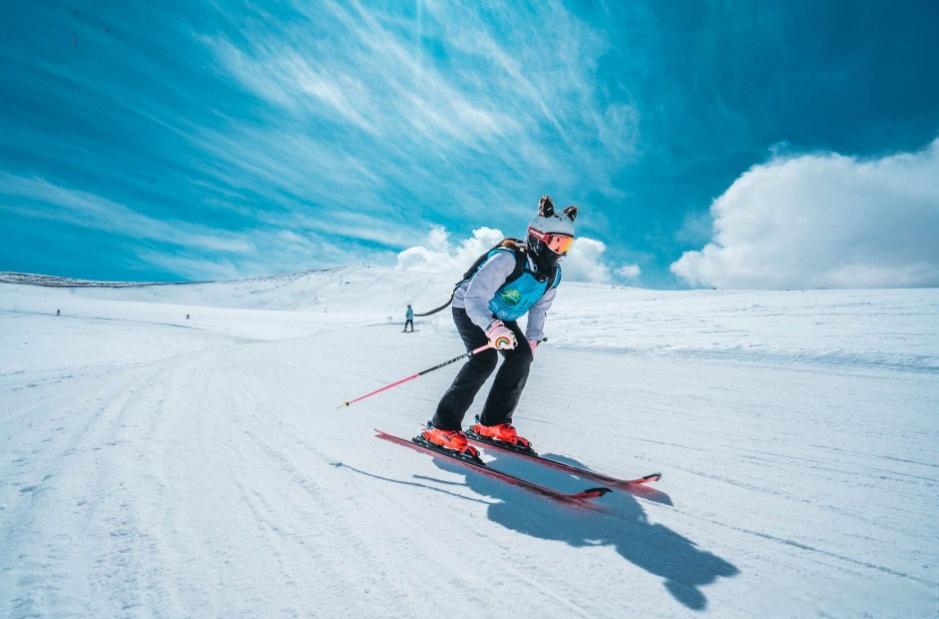
To freeze spray, use a fast shutter, around one thousandth of a second or quicker, and burst mode, and prefocus on the spot where the skier will pop off a roller. For a sense of motion, slow the shutter to roughly one sixtieth and pan with the rider so the background blurs while they stay sharp, a technique that reads as speed even in a still frame. Backlight from a low sun turns spray into little diamonds, so position yourself looking toward the light when the wind allows. Tell your subject where to turn and where to stop before they drop, because shouting over wind rarely works and ruins the moment. A bright jacket helps the eye find the skier in a busy frame, and a calm blue day at Altai Jiangjunshan ski resort is perfect for first attempts before you chase bigger terrain.
Cultural and Village Photography
Some of the most memorable Xinjiang images are not on the hill at all. The wooden Tuva cabins of Hemu under deep snow, a frozen river, and steam from a noodle house tell the story a ski shot cannot. Ask before photographing people, smile, and show them the result on your screen, because it goes a long way and often earns you a better pose. Early morning, before tour buses, is the quiet window for village scenes and gives you clean, untracked snow in the foreground. Combining a ski day with a slower cultural day is easy if you read up on the local heritage before you go.
Staying Safe While Shooting
A camera in hand is a distraction on skis, and the Altai’s sidecountry hides real risk behind its beauty. Keep to resort boundaries, never stop in a blind spot below a roller, and be honest about your ability when scrambling for an angle you cannot safely reach. Cold and altitude both dull judgement, so the safety and altitude guidance for skiers applies double when you are thinking about a photograph instead of your line. If you are serious about backcountry imagery, hire a local guide rather than bushwhacking alone, and always tell someone where you are going and when you will be back.
Editing and Sharing
Shoot raw so you can recover highlight detail in snow and lift shadow tone in trees during editing. Most Xinjiang shots need only a nudge: pull highlights down, lift shadows a touch, and add a little clarity for the snow crystals without making the scene look fake. Avoid crushing the blues, because the sky is genuinely that colour on a clear Tianshan morning and oversaturation reads as stock imagery. When you share, geotag lightly or not at all, because some areas near the mountains sit in restricted zones and it is simpler to keep locations general. A short edit of a powder run set to local music tends to outperform a long montage that loses the viewer halfway through.
A Simple Shooting Kit List
- Two spare batteries kept warm in an inside pocket, swapped as the live one drops.
- One wide zoom and one short telephoto, plus a polariser for glare.
- A small padded insert worn inside the jacket against your body.
- Microfibre cloths, because snow spray fogs every lens eventually.
- A lightweight tripod or monopod for blue-hour and night shots.
- A power bank for the phone you use as a backup camera and map.
None of this is exotic, and you can improvise most of it, but the warm-battery rule is the one that saves a trip. The best time to ski in Xinjiang is also the best window for photos, because January and February bring the deepest snow and the most reliable bluebird days for clean light.
Frequently Asked Questions
Do I need an expensive camera for good Xinjiang ski photos?
No. A modern phone shoots excellent snow scenes in good light; a real camera mainly helps in low light, for action freeze, and for print-quality panoramas you might frame later.
How do I stop my battery dying on the mountain?
Carry spares in a warm inside pocket, swap when the live one drops, and keep the camera inside your jacket between shots. Cold is the main killer of battery life in the Altai.
When is the best light for shooting?
The two golden hours after the late sunrise and before sunset, plus blue hour for night skiing. January and February give the most reliable clear days for clean frames.
Can I photograph people in the villages?
Yes, with permission. Ask, smile, and show the result. Early morning is the best, quietest time for village and cabin scenes before the light flattens.
Is it safe to shoot off-piste?
Stay within resort boundaries and never stop where you cannot be seen from above. For real backcountry images, hire a guide and read the safety guidance first rather than wandering alone.
What is the biggest composition mistake here?
Shooting an empty white slope with nothing for scale. Always include a skier, tree, or hut so the viewer feels the true size of the mountains around you.