

For riders who have outgrown the groomer, off-piste skiing in Xinjiang is the real prize. The region’s dry, deep Altai snow and sprawling Tianshan faces hold some of the most rewarding ungroomed terrain in Asia — but the reward comes with responsibility. This guide is written for confident intermediates and experts who want to push beyond the ropes, and it should be read alongside our Xinjiang Skiing Guide for the regional context before you commit to a backcountry day in the cold north.
What “Off-Piste” Means Here
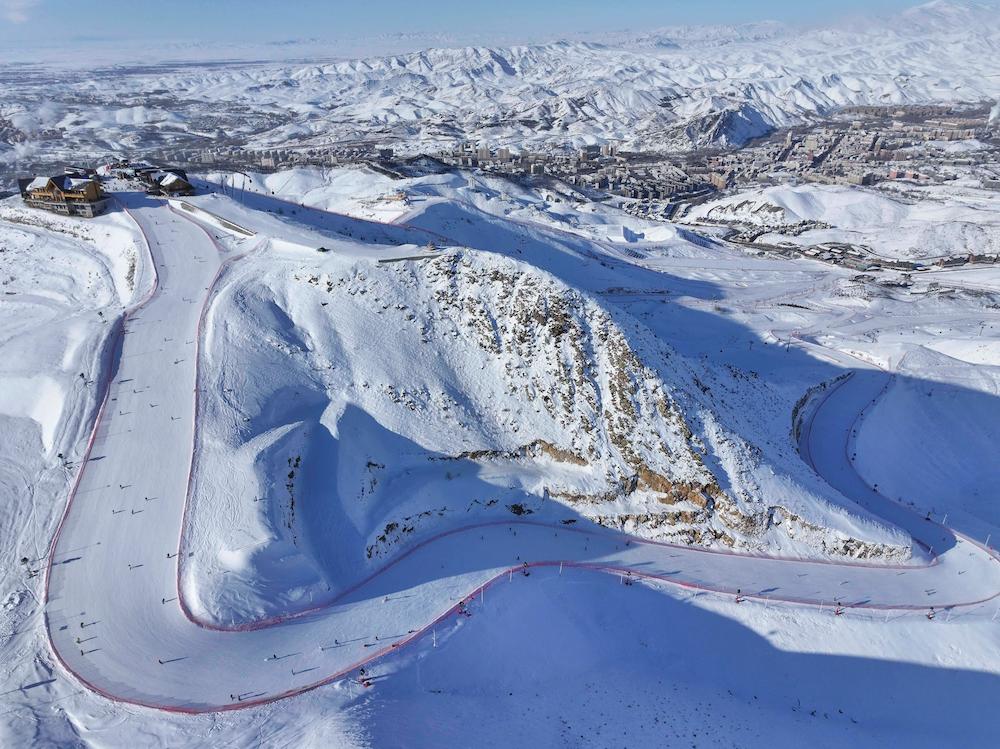
In Xinjiang, most riding still happens in-bounds at staffed resorts, but the terrain adjacent to marked runs — the sidecountry — is where the reputation is earned. After a Siberian storm, the gladed trails and open faces just beyond the boundary can hold light, untracked caches within a short hike of the lifts. True backcountry, beyond resort control, is a different commitment: no patrol, no markings, and real avalanche exposure. Our backcountry skiing Xinjiang guide goes deeper on the untracked touring side, while this piece focuses on freeride and sidecountry access for riders who want powder without a multi-day expedition into the wild.
Best Regions for Freeride
The Altai is the heartland. The same latitude band as Hokkaido but with far fewer people, it delivers what riders call Champagne powder — snow so dry it squeaks and piles into waist-deep caches. Cocoa Tuohai ski resort, with its dramatic canyon walls and big vertical, is the standout for confident freeriders wanting steep, dramatic lines; its upper pitches and sidecountry hold the region’s most serious terrain. The Tianshan is more groomer-oriented, but its higher, exposed ridges still offer legitimate sidecountry after a dump, and the convenience of a Urumqi base makes it an easy place to sample off-piste between resort days without committing to a remote northern base camp.
The Powder Window
Timing is everything. The deepest, most stable off-piste conditions land in January and February, when the base is thick and storms are frequent. Our best time to ski in Xinjiang breakdown maps the month-by-month snow, but the short version for freeriders: come in deep winter, chase the storm cycles, and avoid the early-January cold snaps unless you are geared for minus-30 mornings. A fresh Altai front can deliver the best run of your life one day and a whiteout the next, so build a buffer into your plan and never stake a whole trip on a single perfect storm that may or may not arrive on schedule.
Gear for the Ungroomed
Freeride kit differs from the rental-shop default. Wide skis or a fat board float the powder; a helmet and back protector are non-negotiable on steep lines; and for anything beyond the ropes you need the backcountry trinity — beacon, probe, shovel — plus the training to use them. The equipment rental guide covers what you can hire versus what you must bring, and most riders bring their own powder board given how cheap the tickets are relative to the experience. Add a small pack with water, a layer, and a headtorch, because short winter daylight can turn a long sidecountry lap into a race against the dark if you lose track of time on a big northern face.
Safety: The Part You Cannot Skip
This is the section that matters most. Ungroomed and backcountry terrain in Xinjiang is not patrolled, and avalanche, terrain traps, and sudden weather are genuine hazards. Before you stray from the piste, read the Xinjiang ski safety guide, carry and know how to use your beacon, and never ride alone off-rope. Hire a licensed local guide for your first backcountry days — the Altai’s hidden creek beds and cliff bands are not where you want to learn by mistake. Altitude adds another layer: the thinner air and colder temps tire you faster, shortening your judgement window and making a conservative call the smart one every single time you face a dicey line above the treeline.
Skills to Have Before You Go
Off-piste demands more than groomed confidence. You should be able to:
- Control speed and direction in variable, deep snow, not just on a manicured piste.
- Assess slope angle and recognise avalanche-prone terrain like convex rolls and gullies.
- Use transceiver, probe and shovel under pressure, not just in a quiet classroom.
- Read weather and visibility and bail when it turns rather than pressing on regardless.
- Ski or ride trees and crust without panic when the snow is not perfectly soft.
If any of those is a gap, close it with lessons first — the English lessons guide lists schools that coach beyond the beginner level and can sharpen your off-piste fundamentals before you point them at real, unforgiving terrain in the Altai’s steep northern valleys and canyon walls.
Sample Freeride Day Plan
A realistic Altai freeride day starts early and stays disciplined:
- Check the resort snow and weather; confirm any closed sidecountry and understand the reason.
- Warm up on-piste, then hike the boundary ridge after a fresh dump with your group in tow.
- Drop one line, regroup at the bottom, repeat — never push fatigue or a fragile ego.
- Finish with a lit evening run, because daylight is short and the dark comes fast up north.
Keep the ambition proportional to the group’s weakest member, and always tell someone your plan and your expected return. A satellite messenger costs little and removes the worst-case scenario from a backcountry mishap in a region where help can be hours away rather than minutes from the nearest staffed base lodge or road.
Respect and Etiquette
Xinjiang’s backcountry is still developing its rider culture. Stay within resort rules, pack out what you bring, and avoid closed zones — they are closed for safety or protection, not to spoil your fun. A respectful rider gets invited back and earns local trust, which often means better beta on where the snow is deepest and which lines are safely filled in after the latest storm. Treat the mountain as a shared, fragile resource and it will keep rewarding riders for years to come, long after the obvious powder stashes have been skied out by the slowly growing crowds discovering this corner of Asia.
Frequently Asked Questions
Is off-piste skiing allowed at Xinjiang resorts?
Sidecountry adjacent to marked runs is often rideable, but true backcountry beyond the boundary is unpatrolled. Always obey closure signs and resort rules, which exist for your safety and the protection of the terrain you came to enjoy.
Do I need avalanche gear?
Yes, for anything beyond the ropes. Beacon, probe and shovel are essential, plus the training to use them — the safety guide explains the fundamentals every rider should know before stepping out into the ungroomed.
Which resort has the best freeride terrain?
Cocoa Tuohai in the Altai for steep, dramatic lines; the Altai generally for the deepest powder. The Cocoa Tuohai profile has the mountain layout and the sidecountry detail you need to plan a safe day.
Can beginners try off-piste?
Not safely. Build groomed confidence first via the beginner guide, then progress with a guide who can manage the risk while you learn the feel of untracked snow beneath your skis.
When is the best snow for freeride?
January–February after storms. The best time guide maps it by month, and local guides know which aspects hold the best snow as the window shifts through the deep winter.
Should I hire a guide?
For your first backcountry days, absolutely. Licensed Altai guides know the terrain traps and the best lines, and they carry the safety margin you lack on unfamiliar northern slopes and hidden creek beds.