

China’s ski season is not a single window. The country spans more than 5,000 kilometres east to west and covers everything from the sub-Arctic forests of Heilongjiang to the high-altitude ranges of Xinjiang and the Tibetan plateau. A resort in Chongli might close its last lift in early April while a glacier-adjacent slope in the Altay mountains is still running natural snow. Knowing the actual operating windows region by region – rather than a vague “winter” – is what separates a trip with good snow from an expensive weekend on thin man-made cover.
This guide sets out opening and closing dates by region, explains what drives the variation, and identifies the specific weeks that offer the best combination of snow quality, crowd levels, and price. For deeper regional detail, our China skiing guide covers resorts, transport, and costs across the whole country.
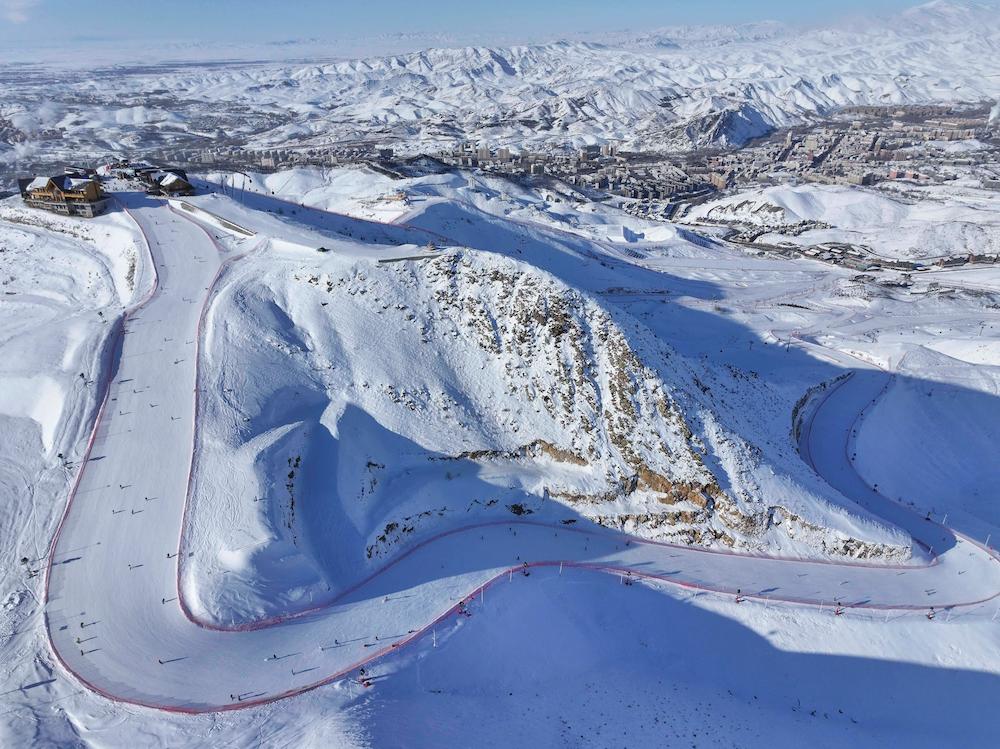
Season Dates at a Glance
- Xinjiang (Altay region) – mid-November to early April. The longest natural-snow season in China.
- Xinjiang (Urumqi area) – late November to mid-March.
- Heilongjiang and Jilin (Northeast) – late November to late March.
- Hebei and Beijing (Chongli, Yanqing) – late November to early April, heavily snowmaking-dependent.
- Inner Mongolia – early December to mid-March.
- Sichuan and Yunnan (high-altitude southwest) – late December to early March, short and variable.
- Indoor snow domes (Guangzhou, Shanghai, Harbin) – year-round.
These are operating windows, not guarantees of good conditions. The first and last two weeks of any season typically run on partial terrain.
Xinjiang: The Longest Season
The Altay mountains in northern Xinjiang receive the most reliable natural snowfall in China. Cold air settling from Siberia combines with moisture arriving on westerly systems, producing a deep, dry snowpack that arrives early and lasts.
Altay region (Jiangjunshan, Koktokay)
Lifts typically begin turning in mid to late November, with full terrain open by mid-December. The base holds through March and larger resorts often run into the first week of April. Koktokay, sitting higher and more sheltered, sometimes extends past mid-April in a strong year.
Urumqi area (Silk Road, Baiyungou, Nanshan)
Lower and drier than Altay. Opening is usually late November, and closing arrives around mid-March. These are day-trip mountains from the city rather than destination resorts, and they lean on snowmaking more than the Altay slopes do.
If you are choosing specific weeks for a Xinjiang trip, our detailed breakdown of the best time to ski in Xinjiang goes month by month, and where to ski in Xinjiang compares the individual mountains.
The Northeast: Heilongjiang and Jilin
China’s most established ski region and the home of its largest resorts by skier volume.
Jilin (Beidahu, Songhua Lake, Changbaishan)
Opening runs from late November, and the season holds solidly through March. Changbaishan, at higher elevation on the Korean border, generally runs the longest and can extend into early April. Snow here is reliably cold and dry through January and February.
Heilongjiang (Yabuli, Sun Mountain)
Yabuli typically opens in late November and closes in mid to late March. Temperatures are brutal in January – regularly below -25C – which keeps the snow excellent and the crowds slightly thinner than you might expect.
Hebei and Beijing: Chongli and the Olympic Corridor
Chongli is where most international visitors and Beijing residents ski, and the 2022 Winter Olympics infrastructure means it operates the most sophisticated snowmaking systems in the country. That matters because natural snowfall here is modest – typically under 40cm of accumulation across a whole season.
Lifts open in late November and the biggest resorts push through to early April. The season is effectively manufactured: cold nights allow snowmaking from mid-November, and the packed base survives long after natural snow would have gone. Conditions are dependable but the snow is firm rather than soft, which suits carving and racing more than powder skiing.
What Drives the Variation
Four factors explain why one Chinese resort skis for five months and another for ten weeks:
- Latitude – Altay sits at roughly 47-48 degrees north, further north than most of the European Alps.
- Elevation – Sichuan and Yunnan resorts sit at 3,000-4,500m, which keeps them cold enough to ski at a latitude that would otherwise be impossible.
- Moisture supply – Xinjiang’s Altay region catches westerly moisture; Chongli sits in a comparatively dry continental pocket.
- Snowmaking capacity – resorts near major cities have invested heavily in snowmaking and can open weeks before natural snow arrives.
Our notes on snow conditions across Chinese resorts go into more depth on what these differences mean day to day.
Choosing Your Weeks
Best snow quality
Mid-January to late February, everywhere. Cold air is at its most stable, the base is deep, and natural snowfall events are most frequent. In Xinjiang this window is exceptional.
Best value
Early December and mid-March. Lift tickets and lodging drop significantly outside peak weeks. Early December carries some terrain risk; mid-March in the Altay region generally does not, since the base there is still substantial.
Weeks to avoid
- Chinese New Year – the single busiest week of the Chinese travel year. Dates shift between late January and mid-February. Prices double or triple and lift queues are long.
- New Year holiday (1-3 January) – a short but intense domestic rush.
- Opening and closing fortnights – limited terrain for full-price tickets.
The sweet spots
Two windows consistently deliver: the second and third weeks of January (before Chinese New Year in most years), and the first two weeks of March in northern Xinjiang, when the base is still deep, days are longer, and temperatures have moderated from January extremes. If you are planning around a family trip, moderate March temperatures make a real difference – see our guide to skiing in Xinjiang with kids.
Practical Planning Notes
- Confirm dates directly. Resorts publish opening dates on WeChat official accounts roughly two to three weeks ahead, and these are more current than any third-party listing.
- Book flights before lodging in peak weeks. Domestic flights to Altay and Urumqi sell out faster than hotel rooms during Chinese New Year.
- Allow buffer days at season margins. If skiing in late March or early April, build in a spare day in case warm weather closes upper terrain.
- Check terrain percentage, not just “open”. A resort can be technically open with 20 percent of runs available.
Frequently Asked Questions
When does the ski season start in China?
Most Chinese resorts open between mid-November and early December. Northern Xinjiang’s Altay region is usually first, opening in mid to late November on natural snow. Chongli and Northeast resorts follow from late November, largely on man-made snow.
Which Chinese region has the longest ski season?
Northern Xinjiang, specifically the Altay mountains. High latitude, elevation, and reliable natural snowfall combine to give a season running from mid-November to early April, and occasionally later at Koktokay.
Is March a good time to ski in China?
In northern Xinjiang and higher Northeast resorts, yes – the base is still deep, days are longer, temperatures have moderated, and prices drop. At lower-elevation resorts near Beijing, March conditions get soft and variable by mid-month.
Should I avoid Chinese New Year for a ski trip?
If you can, yes. It is the busiest travel week of the Chinese year, with lift queues, sold-out hotels, and prices two to three times normal. The dates move between late January and mid-February depending on the lunar calendar, so check well in advance.
Do Chinese resorts rely on artificial snow?
It varies widely. Chongli and resorts near Beijing depend heavily on snowmaking, since natural accumulation rarely exceeds 40cm a season. Altay-region resorts in Xinjiang run largely on natural snow, with snowmaking used mainly to extend the shoulder weeks.
Can I ski in China during summer?
Only indoors. Large indoor snow domes in Guangzhou, Shanghai, and Harbin operate year-round with real snow at controlled temperatures. All outdoor resorts close by mid-April at the latest.