

China is now home to more than 700 ski areas, but they are not spread evenly across the country. Almost everything worth an international flight sits inside four distinct regions: Xinjiang in the far northwest, the Northeast provinces bordering Russia and North Korea, the Chongli cluster two hours from Beijing, and a scattering of high-altitude and indoor options elsewhere. If you sketch a mental China ski resorts map, those four zones are the pins that matter. This guide walks through each region the way a map would — from west to east — explaining what kind of skier each area suits, how the snow differs, and how hard each zone is to reach in 2026. By the end you should know exactly where to point your compass, whether you are chasing dry continental powder, family-friendly groomers, or a quick city ski break.
How to Read the Map: China’s Four Ski Zones
Before diving into individual resorts, it helps to understand the geography. China’s skiable terrain follows its northern latitudes and western mountain ranges:
- Zone 1 — Xinjiang (northwest): the Altay Mountains and Tianshan range. Coldest, driest snow in the country and the longest natural season.
- Zone 2 — The Northeast (Heilongjiang, Jilin): China’s traditional ski heartland, anchored by Yabuli and the Changbaishan area.
- Zone 3 — Beijing and Chongli (Hebei): the 2022 Olympic corridor, with the most modern lift infrastructure and easiest international access.
- Zone 4 — Everywhere else: high-altitude areas in Sichuan and western China, plus the world’s largest indoor snow domes in southern cities.
Each zone trades off snow quality, convenience, and cost differently. For a full country-level overview of logistics, visas, and costs, start with our China Skiing Guide and come back to this map when you are ready to choose a region.
Zone 1: Xinjiang — The Powder Capital
On any honest ranking of Chinese snow quality, Xinjiang sits alone at the top. The Altay Mountains in the far north receive cold, low-moisture storms that produce the driest powder in the country, and the region’s claim as one of humanity’s birthplaces of skiing gives it genuine cultural depth.
Key resorts to pin
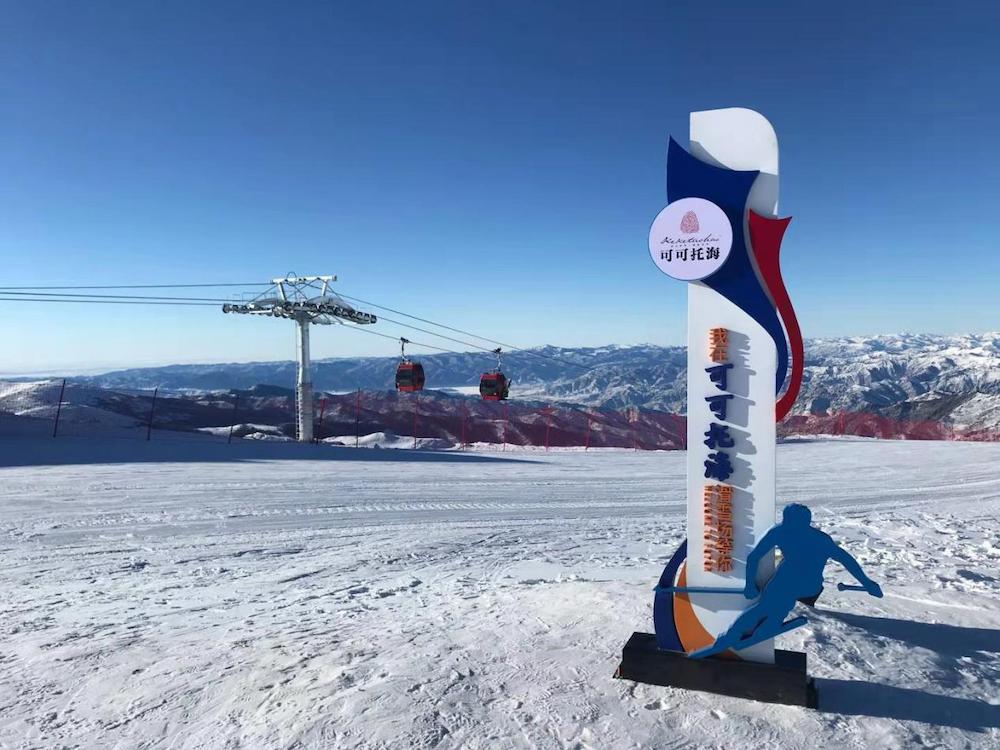
- Koktokay (Keketuohai): Xinjiang’s big-mountain flagship, with over 1,200 meters of vertical and steep alpine terrain that rivals anything in Asia.
- General’s Hill (Jiangjunshan): right beside Altay City, famous for night skiing and an unusually long season that regularly stretches past six months.
- Silk Road (Sichouzhilu): in the Tianshan range near Urumqi, convenient for international arrivals and known for tree runs and reliable storm cycles.
The trade-off is distance: Altay is a connecting flight beyond Urumqi, and English services are thinner than in Chongli. But for confident intermediates and above, the reward is empty pistes and snow that squeaks underfoot. Browse the complete resort-by-resort breakdown in our guide to Xinjiang ski resorts, and if you are still weighing regions, read why Xinjiang is China’s best ski destination for the full argument.
Zone 2: The Northeast — China’s Ski Heartland
Heilongjiang and Jilin provinces built China’s ski culture, and they remain the country’s highest-volume winter destinations. Winters here are brutally cold — January averages below -20°C are normal — which keeps the snow dry even when totals are modest.
Key resorts to pin
- Yabuli (Heilongjiang): China’s oldest major resort and a former national training base, with the longest continuous runs in the Northeast.
- Changbaishan (Jilin): a resort complex near the North Korean border with hot springs, forest skiing, and strong hotel infrastructure.
- Beidahu and Songhua Lake (Jilin): two well-developed areas near Jilin City that host international freestyle events and offer excellent value.
The Northeast suits skiers who want a classic winter atmosphere — think Harbin’s ice festival paired with a ski week — and travelers who prefer established tourism infrastructure over frontier adventure. Deeper regional details live in our guide to skiing in Northeast China.
Zone 3: Beijing and Chongli — Olympic Convenience
The Chongli cluster in Hebei province hosted the 2022 Winter Olympics, and it shows. Thaiwoo, Genting Secret Garden, Wanlong, and Fulong operate the most modern lift systems in China, with heated eight-person chairs, extensive snowmaking, and the country’s best English-language ski schools.
Natural snowfall is the weak point — Chongli relies heavily on snowmaking — but grooming standards are high and the season runs reliably from late November to mid-March. A high-speed train connects Beijing to Taizicheng station in under an hour, making this the only Chinese ski region you can plausibly visit as a side trip from a business or sightseeing itinerary. For first-time visitors to China who value convenience over powder, Chongli is the obvious pin on the map.
Zone 4: The Rest of the Map
Beyond the big three zones, a few outliers deserve mention:
- Western high-altitude areas: ski areas in Sichuan and other western provinces sit at dramatic elevations with striking scenery, though lift-served vertical and infrastructure remain limited compared with the main zones.
- Indoor snow domes: Harbin, Shanghai, Guangzhou, and Chengdu all host massive indoor ski facilities — useful for a lesson or a novelty session, and open 365 days a year.
- City hills: small areas ring most northern cities. They are fine for a first-ever lesson but should not anchor an international trip.
Choosing Your Pin: Which Region Fits Which Skier
Here is the short version of the map, matched to skier profiles:
- Powder hunters and advanced skiers: Xinjiang, without hesitation. Koktokay’s steeps and Altay’s snow quality are unmatched in China.
- Families and mixed-ability groups: Chongli for infrastructure and lessons, or Changbaishan for the resort-village experience with hot springs.
- Budget travelers: the Northeast delivers the lowest lift-ticket and lodging costs per ski day.
- Time-poor visitors: Chongli, one hour from Beijing by rail.
- Season chasers: Xinjiang again — General’s Hill opens in November and Koktokay often spins lifts into April and beyond.
Timing matters as much as location: the same resort can feel completely different in December versus March. Our companion piece on how long ski season lasts across China breaks down opening and closing dates region by region, and the monthly planner on the best time to ski in China helps you match dates to conditions.
Practical Notes for 2026
A few map-wide logistics apply no matter which zone you choose. Domestic flights and high-speed rail make multi-region trips feasible: a popular two-week route pairs Chongli’s convenience with Xinjiang’s powder. Lift tickets remain inexpensive by Western standards — even flagship resorts rarely exceed the price of a mid-tier day pass in Europe or North America. Mobile payment (Alipay or WeChat Pay linked to an international card) is essentially mandatory everywhere, and translation apps close most language gaps outside Chongli. Book Lunar New Year weeks far in advance; the holiday crowds in early-to-mid February 2026 will be the busiest window of the season at every resort on this map.
Frequently Asked Questions
Which region on the China ski map has the best snow?
Xinjiang’s Altay Mountains receive the driest, most consistent natural snow in China. Cold continental storms produce light powder that stays fresh for days, while most other regions depend partly or heavily on snowmaking.
What is the easiest Chinese ski region to reach from abroad?
Chongli, near Beijing. Fly into Beijing Capital or Daxing airport, take the high-speed train to Taizicheng in about an hour, and you can be on snow the same day you land.
How many ski resorts does China have in 2026?
China counts more than 700 ski areas, but the large majority are small local hills. Fewer than two dozen resorts offer the vertical, lift capacity, and services that international visitors expect.
Can I combine two ski regions in one China trip?
Yes. The most popular combination is Beijing/Chongli plus Xinjiang, linked by a four-to-five-hour flight to Urumqi. Two weeks is comfortable for a dual-region itinerary including travel days.
Is skiing in China expensive compared with Japan or Europe?
No. Lift tickets, lessons, and food cost significantly less than in Japan, Europe, or North America. Flights and premium slope-side hotels are where budgets grow, especially during Chinese holidays.