

Karamay is not on anyone’s ski bucket list. It is an oil city — China’s first great petroleum boomtown, built from nothing on a gravel desert where, as the old local saying goes, there was “no grass, no water, and not even birds flying over.” Foreign visitors who pass through are usually on their way somewhere else: north to Kanas, east to Altay, or south down the Duku Highway in summer. Almost nobody stops here in winter to ski.
That is a mistake, and a fairly cheap one to correct. Karamay municipality operates four ski areas, one of which holds a national 4S grade and autonomous-region resort status, plus a frozen-lake ice park and six public skating rinks. Lift tickets start around 100 yuan. The city sits two and a half to three hours by road from Urumqi. And because it markets itself to its own residents rather than to tour groups, you will ski uncrowded pistes on weekdays in a place that has genuinely good snow.
Why There Is Snow Here At All
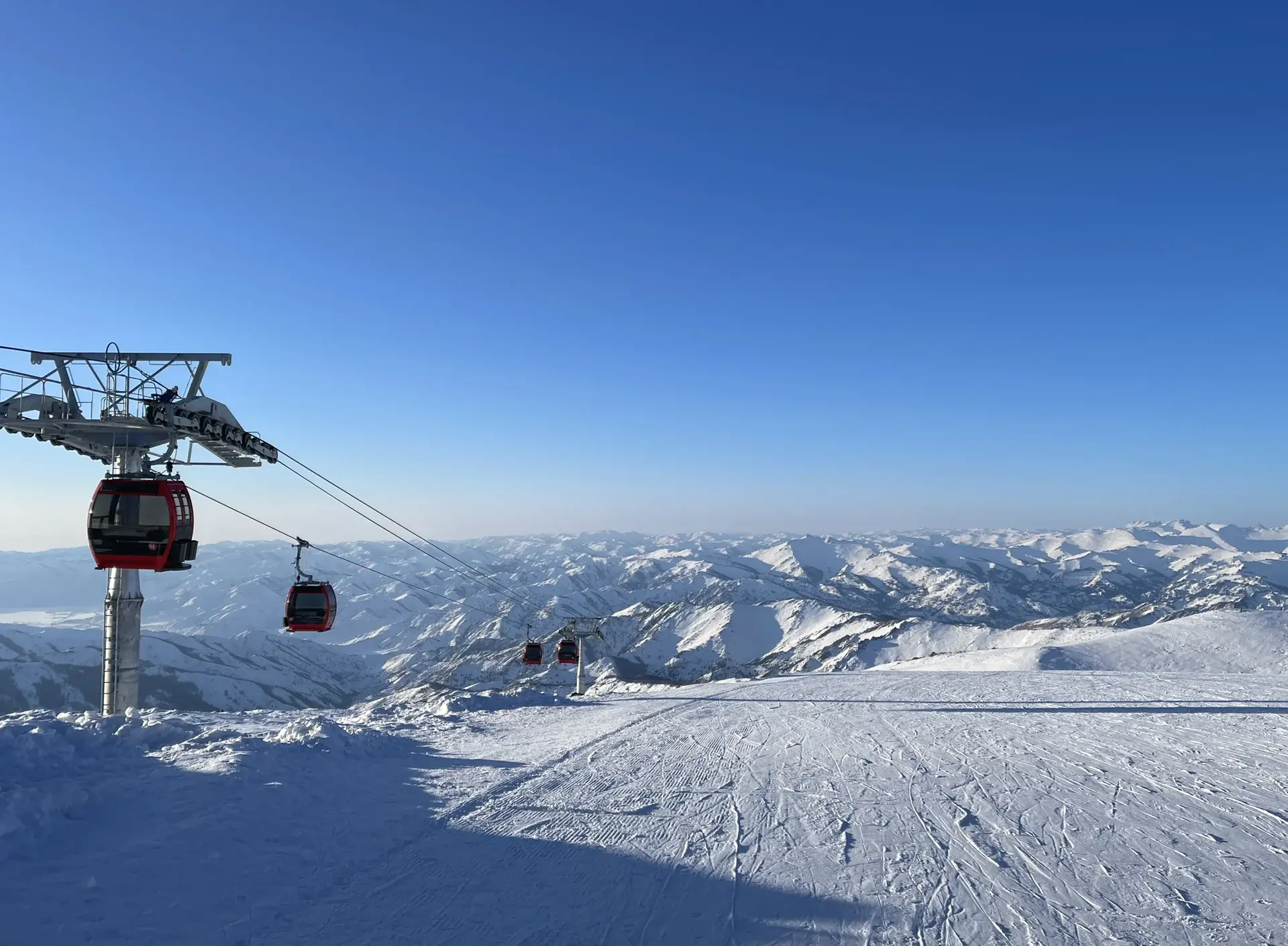
Karamay’s ski terrain is not in the city. It is in Dushanzi District, roughly an hour south, where the flat Junggar desert finally runs into the northern foothills of the Tianshan range beside National Highway 217. That transition zone of low hills is where the snow collects. Winter lows in the municipality sit between about -10°C and -20°C, cold enough to keep the snowpack dry and stable from December through March, and the resorts supplement natural cover with snowmaking so the season does not depend on any single storm cycle.
This is a different proposition from the big-mountain skiing further north. Nobody comes to Dushanzi for 1,000-metre vertical descents. What you get instead is a compact, well-groomed, low-stress hill with hot springs at the bottom and desert canyons half an hour away — and the reassurance of a season that behaves predictably, which is worth understanding alongside the wider picture in our guide to the best time to ski in Xinjiang.
Bingfeng Ski Resort: The One That Justifies the Detour
Bingfeng (“Ice Peak”) is the serious one. It carries an SSSS rating — national 4S grade — and is the only 4S-rated ski area in the Kuitun–Dushanzi–Wusu industrial triangle, as well as an autonomous-region-level ski tourism resort. It runs seven to eight all-purpose trails served by a chairlift and magic carpets.
What makes Bingfeng interesting is not the terrain statistics but how thoroughly it has been built out into a full winter resort rather than a bare hill:
- Skiing plus hot springs. The on-site Bingfeng Hot Spring Holiday Hotel means you can finish a cold afternoon by soaking rather than driving. This ski-and-soak pairing is the single best reason to choose Karamay over a closer day hill, and it slots neatly into the circuit described in our roundup of Xinjiang ski hot spring hotels.
- Night skiing. Floodlighting was installed in 2023, along with a barbecue plaza, which extends a short winter day considerably.
- Indoor backup. The reception hall was renovated with an arcade and VR installations — unremarkable in itself, but genuinely useful when someone in your group does not ski.
- Food and evenings. Hotpot and KTV on site. This is a domestic-tourism resort, and it is unapologetic about it.
Tianshan Ski Resort: Recently Upgraded, Good for Learning
Tianshan Ski Resort shares the Dushanzi hills with Bingfeng and was upgraded to an SSS (3S) grade in March 2025. The upgrade was substantive rather than cosmetic: the beginner slope was widened and a problematic bend removed from it, and the advanced trail was extended past one kilometre.
Together the two Dushanzi areas cover about 29 hectares, with a 300-metre beginner run, a snowboard park, four magic carpets, one chairlift, and an 8,000-square-metre snow play zone. Combined capacity is roughly 500 skiers, opening hours run 10:00 to 18:00 in winter, and tickets start from about 100 yuan.
Tianshan also runs a “little ski classroom” aimed at getting complete beginners and local teenagers onto snow at a low price point. If you are travelling with children or learning yourself, the widened beginner slope plus the adjacent snow play park is a more forgiving combination than most Xinjiang resorts offer, and it fits the pattern we describe in our Xinjiang family skiing guide.
Longshan and the City-Adjacent Option
Longshan Ski Resort sits inside Karamay District proper, on Zhungeer Road, making it the closest snow to the city centre and the obvious choice if you have half a spare day and no car. It is small. Treat it as a practice slope rather than a destination. A fourth, smaller operation runs near Dushanzi as well, which is how the municipality arrives at four ski areas in total.
Jinlong Lake: The Part Nobody Expects
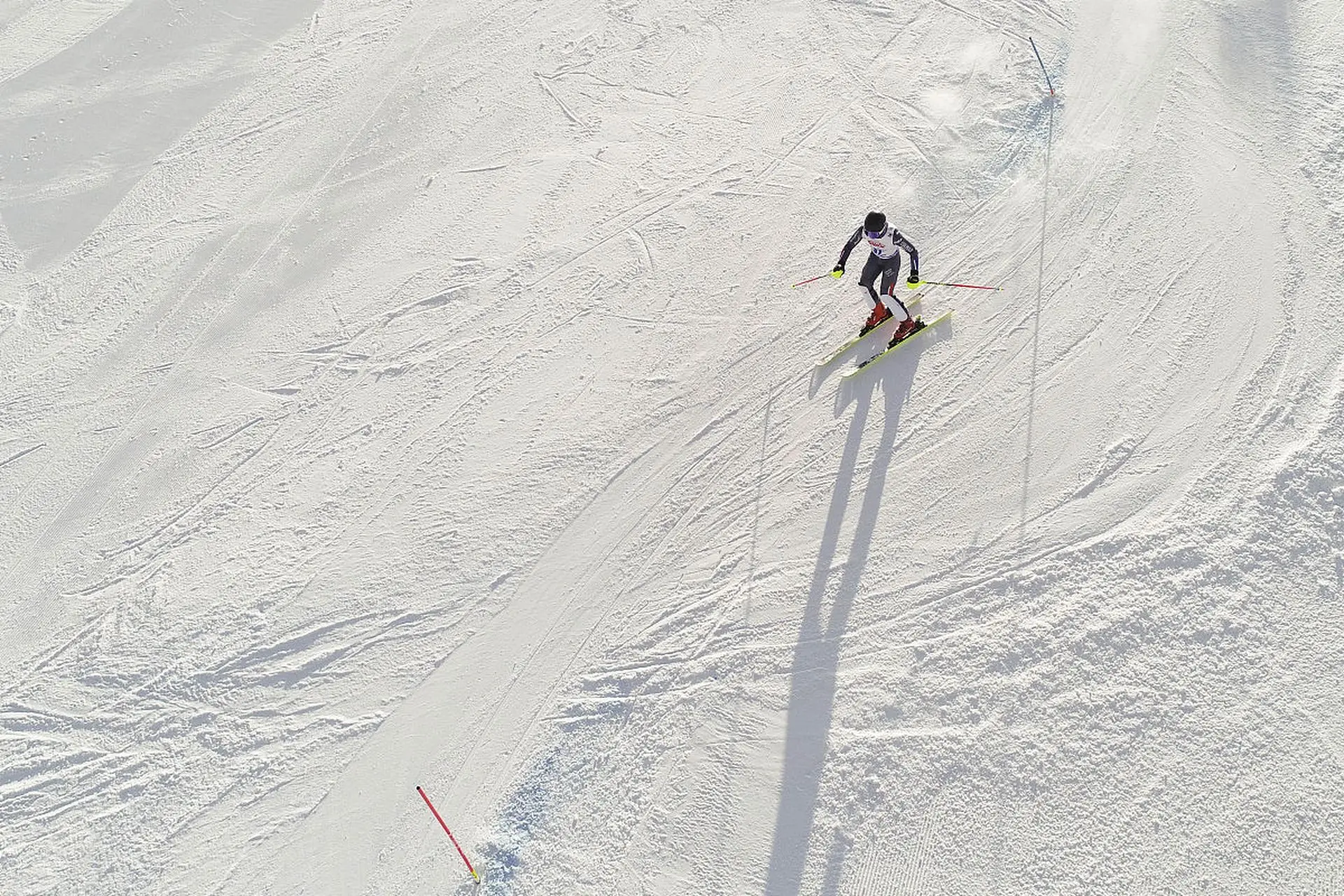
Karamay’s most distinctive winter attraction is not a ski hill. Jinlong Lake, in the city itself, freezes hard enough to host an entire ice park, and the programming is unusually inventive:
- Ice dragon boat racing. A super-league competition moves the traditional summer water sport onto the ice, typically staged in late January. Crews paddle across a frozen lake at -20°C, throwing up ice chips. It is a genuinely strange and excellent thing to watch.
- “Ice-and-fire” tents. Heated tents held at 20–25°C sit directly on the ice, where you eat hotpot or brew tea around a stove while snow blows past the window. Reservations are required.
- Ice fishing, ice bikes, spinning tops and a very long ice slide, plus non-powered play equipment for younger children.
Six public skating rinks operate across the city, and the municipality programmes on the order of 100 ice-and-snow sports events and 80 winter cultural tourism activities each season, with government-issued sports and cultural consumption vouchers to subsidise participation. The year-end Hot Snow Festival is the peak of it.
Beyond the Snow: What Else Is Here in Winter
Karamay’s non-ski winter sights are the real argument for a two- or three-day stop, because they look nothing like the rest of Xinjiang:
- Dushanzi Grand Canyon. Cliffs under snow with a partly unfrozen river cutting a dark line through white — and fewer than 100 visitors on an average winter day. Entry is around 30 yuan. Note that the canyon runs 3–5°C colder than the city, so overdress.
- World Devil City. Yadan wind-eroded rock formations, less harsh under snow than in summer heat, and much less windy in winter.
- Wuerhe ancient poplar forest. Designated a national 3A scenic area in 2024; in deep winter the branches carry heavy rime frost.
- Xiaoguai Township Winter Slaughter Festival. Held December into January, this blends Kazakh pastoral tradition with bingtuan military-reclamation culture: horse racing, meat-cutting and milk-tea-drinking contests, a winter market for fresh grass-fed mutton and beef, and a livestock auction where prize animals have gone for 89,900 yuan for the lead ox and 68,888 yuan for the lead sheep.
Getting There and Practical Planning
Karamay Guhai Airport operates around 15 scheduled routes, so flying in is realistic. Driving from Urumqi takes roughly two and a half to three hours on good winter roads. Accommodation exists in both the city centre and Dushanzi District, and resorts including Bingfeng sell ski-plus-lodging packages, which is usually the cheapest way to do two days on snow.
A few practical notes. Bring genuine windproof insulation: -20°C on an exposed frozen lake is a different experience from -20°C in a sheltered valley. If you are chaining Karamay into a longer trip, it sits naturally between Urumqi and the Altay resorts, so compare it against the day options in our Urumqi ski resorts guide before committing a day. And if you are still deciding where Karamay fits at all, the full national picture is laid out in our Xinjiang ski resorts overview.
The honest summary: Karamay is not a ski destination. It is a very good ski stopover — cheap, uncrowded, warm at the end of the day, and surrounded by desert scenery you cannot see anywhere else in China. For a traveller already crossing northern Xinjiang, that is a strong case.
Frequently Asked Questions
How many ski resorts does Karamay have?
Four ski areas operate within Karamay municipality. The two main ones are in Dushanzi District: Bingfeng Ski Resort (national 4S grade) and Tianshan Ski Resort (3S grade, upgraded in March 2025). Longshan Ski Resort sits inside Karamay District itself, and a fourth smaller operation runs near Dushanzi.
When is the ski season in Karamay?
The Dushanzi resorts run from December to March. Winter lows of -10°C to -20°C keep the snow dry, and snowmaking supplements natural cover so conditions do not depend on a single storm. Resorts typically open 10:00 to 18:00, with night skiing available at Bingfeng under lights installed in 2023.
How much does skiing in Karamay cost?
Lift tickets start from around 100 yuan, which is considerably cheaper than the marquee resorts in Altay or near Urumqi. Ski-and-accommodation packages through resort hotels are usually the best value for a two-day trip, and the municipality issues winter sports consumption vouchers that further reduce costs.
Is Karamay suitable for beginner skiers?
Yes, and arguably better than most Xinjiang resorts. Tianshan’s beginner slope was widened and straightened in its 2025 upgrade, there is a 300-metre beginner run plus four magic carpets across the Dushanzi areas, an 8,000-square-metre snow play zone for non-skiers, and Tianshan runs low-cost beginner lessons.
How do I get to Karamay?
Karamay Guhai Airport has around 15 scheduled routes. By road, Urumqi to Karamay takes about two and a half to three hours. The ski areas are in Dushanzi District, roughly an hour south of the city centre beside National Highway 217, so a rental car or resort shuttle is useful.
Is Karamay worth visiting if I only want to ski?
Probably not on its own — the vertical drop and trail count are modest. Karamay makes sense as a stopover on a northern Xinjiang route, or for travellers who value the combination of easy skiing, on-site hot springs, near-empty pistes and unusual desert and canyon scenery over pure terrain quality.