

Xinjiang’s Altay Mountains hold some of the deepest, driest powder in Asia, and that is exactly why more foreign skiers are venturing beyond the ropes each winter. But untracked snow comes with a serious price: avalanche risk. Unlike the tightly managed resorts of Japan or the Alps, much of Xinjiang’s backcountry is remote, lightly patrolled, and hours from advanced medical care. Understanding avalanche safety in Xinjiang is not optional for anyone leaving the groomed runs, it is the single most important skill you can carry into the mountains. This guide covers the fundamentals every visiting rider needs before dropping into the trees or bowls of the Altay range.
If you are still planning the trip itself, start with our broader Xinjiang skiing guide and then use this article to prepare for the terrain that lies past the resort boundary.
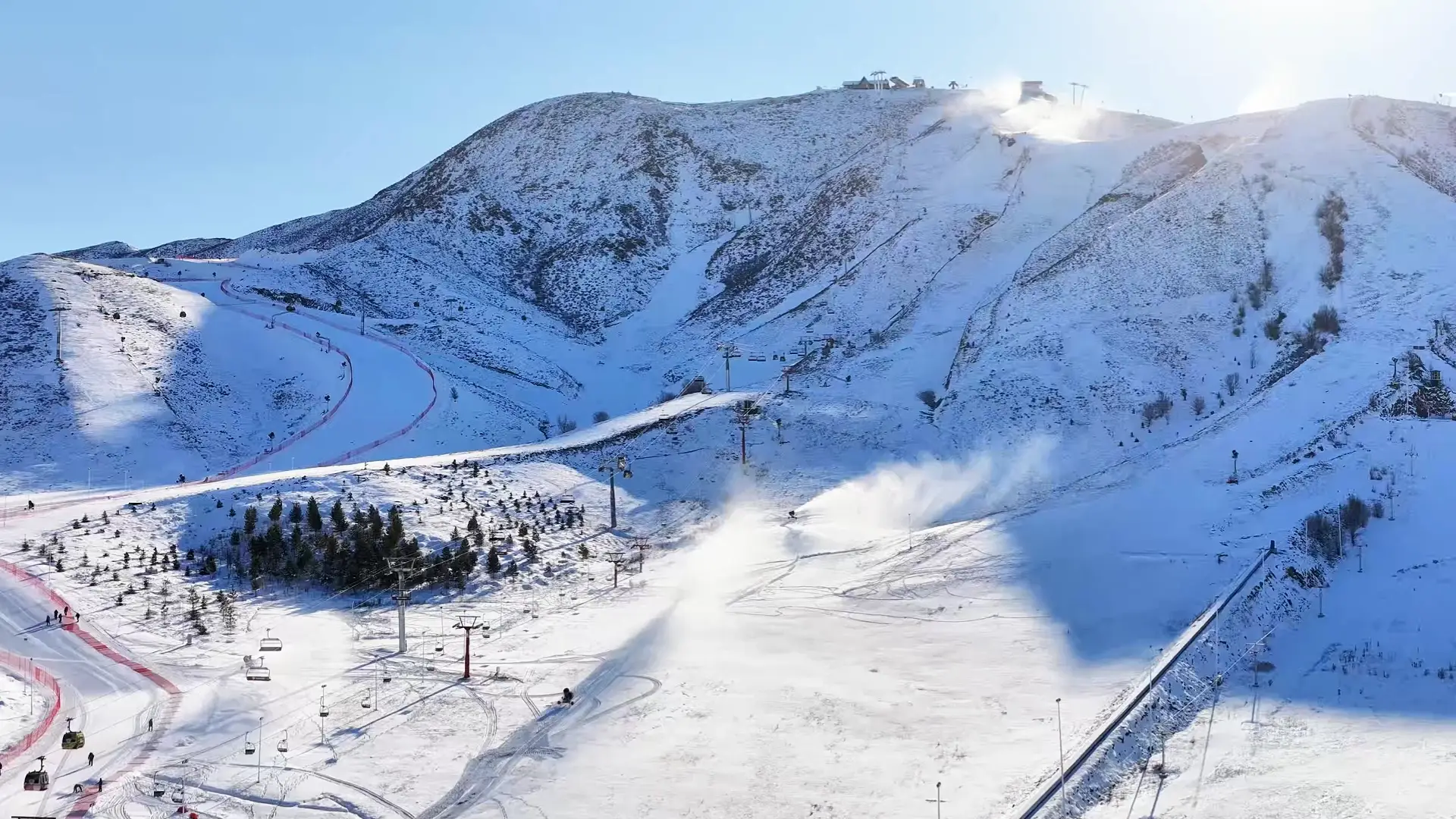
Why Xinjiang Backcountry Demands Respect
The snowpack in the Altay is continental, meaning it is generally cold and dry all season. That creates fantastic powder, but continental snowpacks are also notorious for persistent weak layers, buried surfaces that can stay unstable for weeks after a storm. A slope that felt safe yesterday can slide today with no obvious warning. Combine that with:
- Sparse infrastructure. Many zones have no ski patrol, no avalanche control, and no cell coverage.
- Cold temperatures. Deep winter lows preserve weak layers and slow the healing of the snowpack.
- Long access. Rescue helicopters are limited, and self-rescue is often the only realistic option.
These factors mean the margin for error is thinner here than at a controlled resort. Riders coming from lift-served terrain should treat every backcountry lap as a decision that they, not a patrol team, are responsible for.
The Essential Avalanche Safety Kit
No one should enter avalanche terrain in Xinjiang without the standard trio, and the training to use it:
- Transceiver (beacon). Worn on your body, switched to transmit. Everyone in the group needs one and must know how to switch to search mode.
- Probe. A collapsible pole used to pinpoint a buried partner once the beacon narrows the location.
- Shovel. A metal-bladed avalanche shovel for fast, efficient digging. Plastic toys will not cut compacted debris.
Increasingly, experienced riders also carry an avalanche airbag pack, which can help keep a caught skier near the surface. None of this gear replaces good decision-making, but a beacon-probe-shovel setup is the bare minimum for group survival. Practice a full companion rescue until you can locate and expose a buried beacon in under ten minutes.
Reading the Snowpack and the Weather
Avalanche awareness starts before you leave the hotel. Check the most recent snowfall totals, wind direction, and temperature swings. In Xinjiang, watch especially for:
- Recent heavy snow (30cm or more in 24 hours dramatically raises danger).
- Wind loading that builds slabs on leeward slopes.
- Rapid warming, which can weaken bonds even in a cold climate.
On the mountain, dig a quick snow pit to inspect layering, listen for “whumpfing” collapses, and look for recent avalanche activity on similar aspects and angles. Slopes between 30 and 45 degrees are the classic avalanche range, exactly the pitch that skis so well. Timing your trip also matters; our notes on the best time to ski in Xinjiang can help you avoid the most volatile storm cycles.

Terrain Choices and Group Habits
The safest tool you own is terrain selection. When stability is questionable, choose lower-angle slopes, ride one at a time, and keep a spotter watching from a safe zone. Never regroup in the middle of a slide path or at the bottom of a big face. Good backcountry etiquette in the Altay looks like this:
- Discuss the plan and the danger rating before you start.
- Space out on exposed slopes so only one person is at risk at a time.
- Identify escape routes and safe islands (ridges, dense timber, rock outcrops).
- Turn around when conditions do not match the plan, ego kills more skiers than snow.
If you are new to off-piste terrain here, consider starting inside the resort boundary. Many riders build confidence on lift-served powder before committing to the deep backcountry, and our where to ski in Xinjiang overview shows which resorts offer accessible, patrolled off-piste zones.
Hire a Local Guide
For most visiting foreigners, the smartest avalanche safety decision is simply hiring a certified local guide. A good guide knows the season’s problem layers, the safe lines, and the fastest way out if something goes wrong. Guides also carry rescue gear and communication devices that solo travelers rarely have. If budget is a concern, read our breakdown of Xinjiang ski guide costs to understand what professional backcountry support actually costs, and why it is worth every yuan when the snow is unstable.
Building Avalanche Skills Before You Arrive
Avalanche competence is a learned skill, not a purchase. The best preparation for a Xinjiang backcountry trip happens long before your flight. Take a recognized avalanche course, such as an AIARE, AST, or equivalent program, in your home country. These courses teach you to recognize dangerous terrain, interpret snowpack tests, and perform a fast companion rescue under pressure. Then practice regularly: bury a beacon in your backyard or a local slope and time yourself until multiple-burial searches feel automatic. When you land in the Altay, your training becomes muscle memory rather than theory.
It is also worth understanding how Xinjiang’s snow differs from wherever you usually ski. Riders arriving from maritime climates like Japan or the Pacific Northwest are often surprised by how long weak layers persist in a cold continental snowpack. A slope that would have stabilized in three days back home may stay reactive for two or three weeks here. Adjust your mental model accordingly, and default to conservative terrain when you are still learning the local pattern.
Emergency Planning
Before you head out, make sure someone knows your route and expected return time. Carry a satellite messenger or personal locator beacon, since cell service is unreliable across the range. Know the nearest clinic or hospital, and keep travel insurance that covers backcountry skiing and evacuation, our Xinjiang ski travel insurance guide explains what to look for. In a burial, the group’s own rescue is what saves lives; outside help is almost always too slow. Rehearse your emergency plan out loud with the group at the trailhead so everyone knows their role before anything goes wrong.
Frequently Asked Questions
Is there an avalanche forecast service for Xinjiang?
Formal public avalanche bulletins are limited compared with North America or Europe. This makes local guides, resort patrol advice, and your own snowpack observations especially important. Always assume you are responsible for your own assessment.
Can beginners ski the Xinjiang backcountry safely?
Not without a guide and avalanche training. Beginners should stick to patrolled, in-bounds terrain. The backcountry rewards experience, fitness, and rescue skills, none of which appear overnight.
What avalanche gear can I rent in Xinjiang?
Some resort towns and guiding operations rent beacons, probes, and shovels, but availability is inconsistent. It is safer to bring your own tested gear or confirm rentals in advance through your guide.
When is avalanche danger highest in Xinjiang?
Danger spikes during and immediately after heavy storms, on wind-loaded slopes, and during rapid temperature changes. Persistent weak layers can also keep danger elevated for weeks in a cold, continental snowpack.