

Skimo — short for ski mountaineering racing and, more broadly, fitness-focused uphill skiing — is booming worldwide, and Xinjiang is a superb place to try it. With light rando gear you skin up a slope under your own power, then ski down, often repeating laps for training or exploring quiet terrain that lifts never reach. Compared with full-blown ski mountaineering in the Xinjiang mountains, skimo uses lighter equipment, mellower objectives, and shorter days, making it an ideal entry point for fit resort skiers. This guide covers gear, technique, where to skin, and how to stay safe in the cold, dry Xinjiang winter.
What Is Skimo and How Does Rando Differ?
“Rando” (from the French randonnee) simply means ski touring: climbing uphill on skins and descending on the same gear. “Skimo” usually implies a lighter, faster, fitness-oriented version, sometimes raced on set courses with lightning-quick transitions. In practice the two overlap heavily. For visitors to Xinjiang, the key idea is that you can access untouched snow and get a serious workout without relying on a chairlift, which is perfect given how spread out the region’s terrain is and how uncrowded the mountains remain.
- Rando touring: longer, exploratory days at a relaxed, sustainable pace.
- Skimo: lighter kit, faster transitions, often lap-based interval training.
- Shared skills: efficient skinning, clean kick turns, and smooth transitions.
Because Xinjiang is a big-mountain environment rather than a manicured resort scene, even a casual skimo outing should be treated with backcountry respect. The reward is quiet, high-quality snow and a genuine sense of exploration that lift-served skiing rarely delivers.
Where to Skin in Xinjiang
Resort-Adjacent Uphill Laps
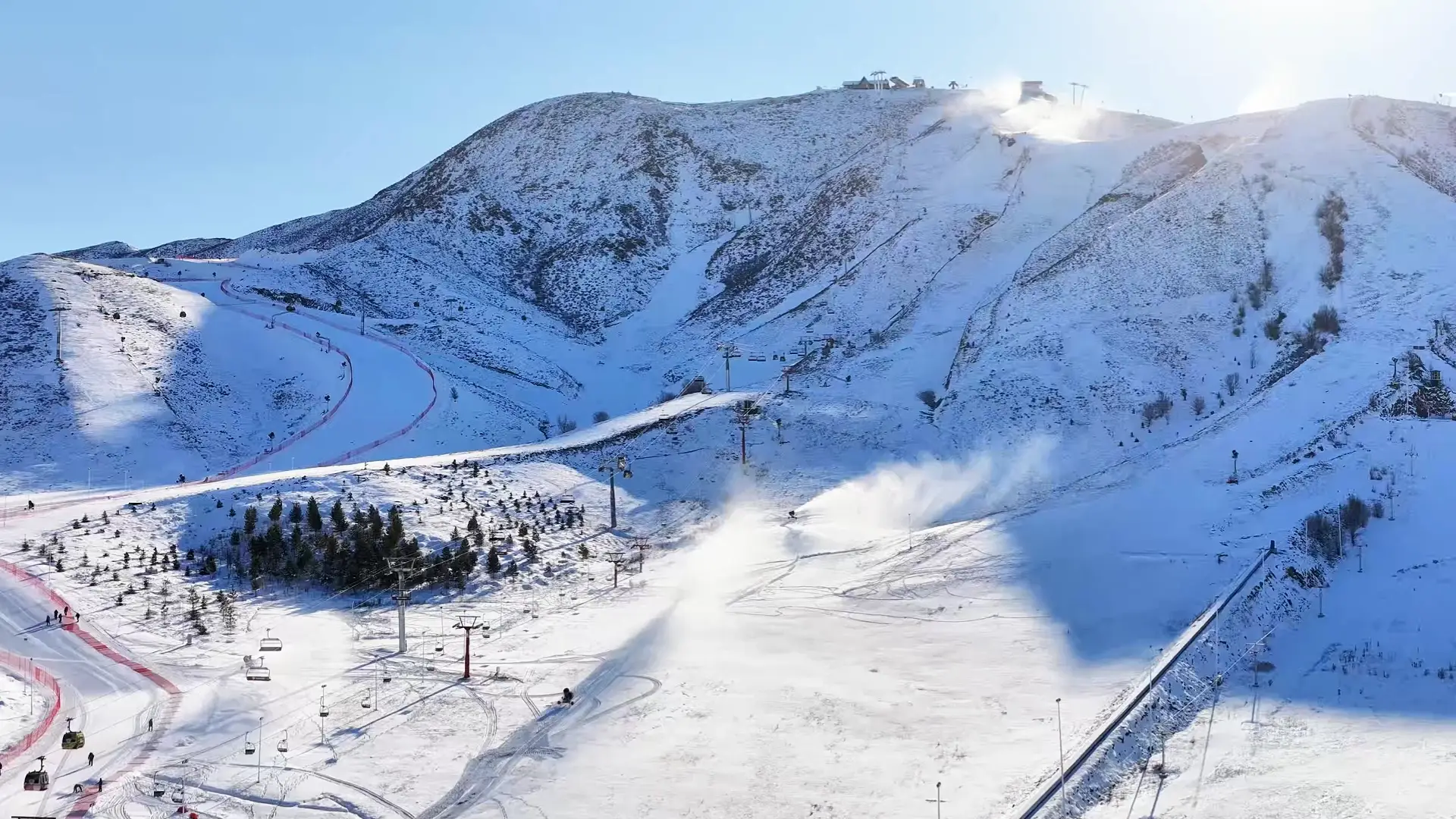
Many Xinjiang resorts have quiet edges and closed runs early or late in the day that are ideal for uphill laps. Skinning beside a groomed piste lets you build fitness while staying near patrol, warmth, and easy exits. It is also a low-stress way to test new gear and dial in your transitions before venturing further. Always check each resort’s uphill policy and hours first; our Xinjiang skiing guide lists the main resort areas around Altay and Urumqi where this approach works well.
Gentle Altai Backcountry
The rolling terrain around the Altai villages is tailor-made for rando. Treeline meadows near Koktokay and Hemu offer low-angle, low-consequence skinning with excellent, wind-protected snow. These slopes are forgiving for practicing technique and for judging how the snowpack behaves. When you feel ready for deeper, more remote lines, progress toward the backcountry powder skiing zones of Xinjiang, always with proper training, a partner, and full avalanche gear.
Skimo Gear: Light and Efficient
The whole point of skimo is saving weight so you can climb faster and farther. That said, in Xinjiang’s deep cold you must still carry safety and warmth — shaving grams should never mean skipping essentials.
- Lightweight touring skis or a light splitboard setup.
- Low-weight tech bindings and skimo or light touring boots with a good walk mode.
- Mohair or mixed skins that glide well and pack small.
- Avalanche transceiver, probe, and shovel — non-negotiable even on mellow terrain.
- Compact insulated layers, a wind shell, warm gloves, and a hat that fits under a helmet.
- Thermos, high-calorie snacks, offline navigation, and a small repair kit.
Keep your batteries warm, carry a spare buff for your face, and test every transition at home before the trip. For a broader kit reference you can trim down for skimo, see the advanced Xinjiang ski gear checklist.
Technique: Skinning and Transitions
Efficient skinning is about a low, gliding stride rather than lifting the ski off the snow. Keep your weight centered over your feet, use the heel risers on steep sections to save your calves, and practice smooth kick turns to change direction on a slope. In skimo, transitions — switching from climb to descent mode — are where you save the most time, so rehearse them until they are quick and cold-proof, ideally with gloves on. Pace yourself on the climb so you arrive at the top with enough energy to ski well. Beginners should build these skills on gentle, familiar slopes before venturing out; the terrain itself will punish sloppy technique less if the angle is low.
Altitude, Cold, and Safety
Even on mellow objectives, Xinjiang’s altitude and extreme cold demand respect. Acclimatize before long efforts using our altitude acclimatization tips, dress in adjustable layers so you do not overheat on the climb or freeze on the descent, and never skin alone in avalanche terrain. Carry rescue gear, know how to use it, and set a clear turnaround time so fatigue does not push you into poor decisions. Watch each other for early signs of frostbite on cheeks and fingers, and refuel often, because cold burns calories fast. Treat every outside-the-ropes lap as a genuine backcountry commitment.
Building a Skimo Trip Plan
- Warm-up days: uphill laps at a resort edge to dial in gear and fitness.
- Exploration days: gentle Altai tours with a guide or an experienced partner.
- Recovery: mix in a lift-served powder day to rest the climbing muscles.
- Progression: only step up terrain angle once transitions and rescue skills are solid.
Layer your ambition across the week and let conditions dictate the plan. A conservative, curious mindset will get you more good days than chasing a single big objective. Build in a spare weather day if your schedule allows, because a single storm can flip the whole week from bluebird laps to a snowed-in rest day.
Etiquette and Local Awareness
Xinjiang’s ski villages are welcoming but quiet, and skimo is still a novelty to many locals. Park considerately at trailheads, avoid skinning up the middle of groomed pistes at busy resorts, and yield to downhill traffic. Carry out all your trash, keep noise low near homes and livestock, and greet the people whose land you are crossing. A little courtesy goes a long way and helps keep backcountry access open for the visitors who follow you. Respecting local customs and pace is part of the experience, not an afterthought, and it makes every interaction on and off the snow smoother.
Frequently Asked Questions
Is skimo harder than resort skiing?
It is more physically demanding because you climb under your own power, but the downhill skiing on gentle rando terrain can actually feel easier than steep resort runs.
Do I need avalanche gear for uphill laps?
On controlled resort edges the risk is lower, but the moment you enter uncontrolled terrain you must carry and know how to use a transceiver, probe, and shovel.
Can beginners try skimo in Xinjiang?
Fit intermediate skiers can start with resort-adjacent laps and gentle Altai meadows, ideally with instruction or a guide. Save remote objectives for later.
What is the best snow for rando?
Cold, dry midwinter powder in January and February gives the best glide and descents while offering more stable conditions on low-angle terrain.
How is skimo different from full ski mountaineering?
Skimo uses lighter gear on shorter, mellower objectives, while ski mountaineering tackles bigger, often glaciated peaks that require rope work and more expedition planning.
How fit do I need to be?
You should be comfortable hiking uphill for one to three hours with a light pack. Building leg endurance and cardio before your trip makes uphill days far more enjoyable.