

Most foreign skiers who reach Xinjiang go north. They fly to Altay, ride the lifts at Jiangjunshan, chase powder at Koktokay, and fly home convinced they have seen the province’s winter. They have seen half of it. On the other side of the Tianshan range, in the far south-west of the Ili Kazakh Autonomous Prefecture, sits a high grassland county that has quietly branded itself the “Tianshan Snow Capital” — Zhaosu. It has a lift-served ski area next to its own airport, a genuinely ambitious backcountry project taking shape in the mountains to the south, and a winter festival built around horses rather than halfpipes. Almost no English-language coverage exists. This guide fixes that.
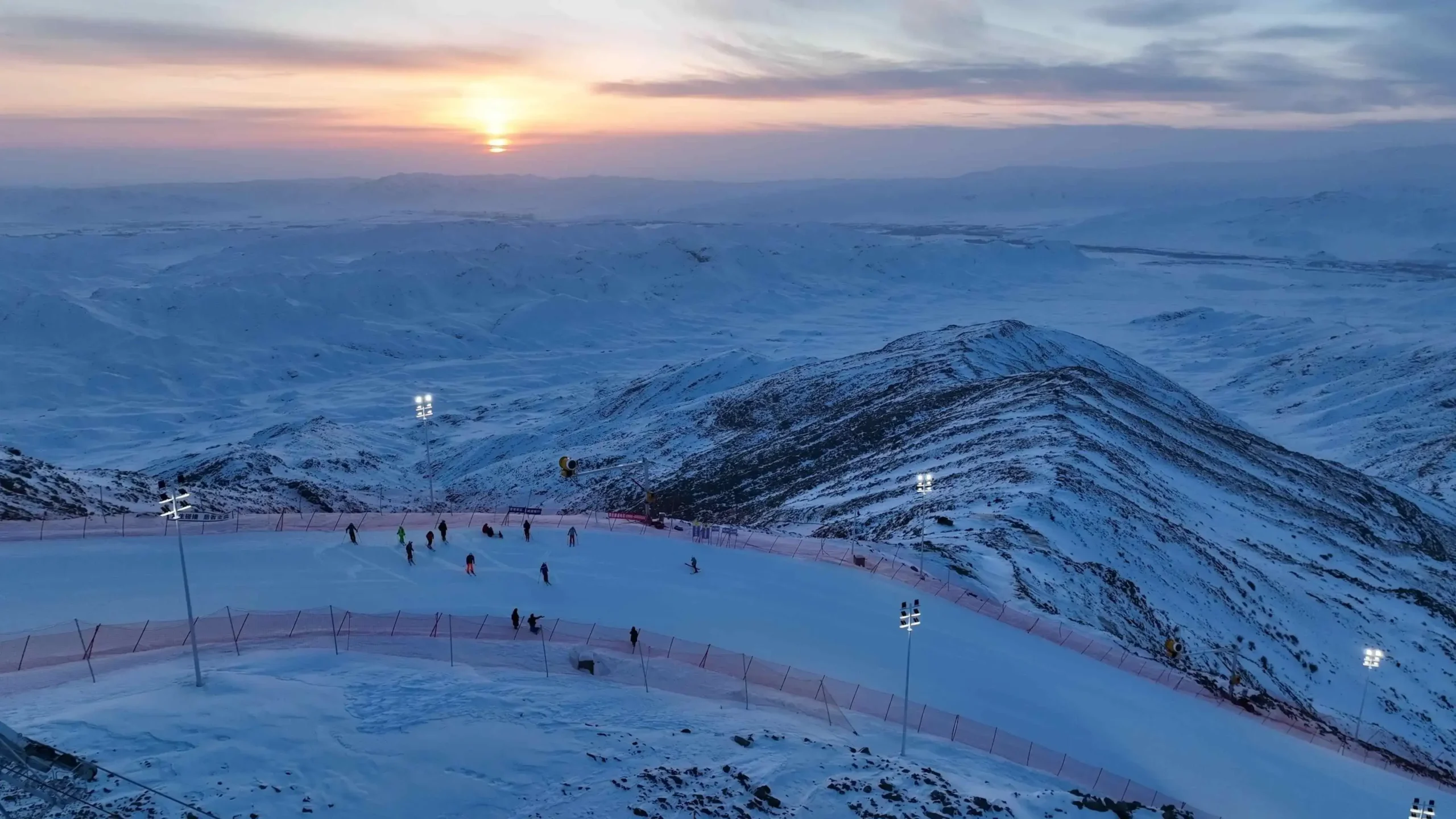
Where Zhaosu Is, and Why the Snow Piles Up Here
Zhaosu County occupies a broad basin at the western end of the Tianshan, ringed by mountains on three sides and opening toward the Ili valley. That bowl shape matters. Moist air pushing in from the west gets trapped and lifted, and the county records long, heavy, reliably cold winters — snow settles on the surrounding slopes to depths of 30–40 cm and holds its structure rather than crusting over. Winter here is not a short shoulder season bolted onto a summer grassland destination; it runs from late autumn deep into spring.
Two things follow from the geography. First, the snow quality is closer to the dry, light powder that makes northern Xinjiang famous than to the heavy coastal snow of eastern China. Second, because Zhaosu sits in a basin at altitude with clear skies between systems, the scenery is genuinely spectacular — white grassland running to a wall of peaks, with the Khan Tengri massif anchoring the horizon. If you have already worked through the classic itineraries in our Xinjiang ski resorts overview, Zhaosu is the logical next frontier.
Administratively, Zhaosu was named in China’s first batch of national all-region tourism demonstration counties, which in practice means sustained investment in roads, signage, visitor centres and service training. For an independent traveller, that infrastructure is the difference between an adventure and an ordeal.
Zhaosu County Ski Resort: The Main Lift-Served Option
The county’s operating ski area is Zhaosu County Ski Resort, rated 2S under China’s national resort grading system and located conveniently close to Zhaosu Tianma Airport. It is not a mega-resort, and you should not arrive expecting Alpine scale. What it is, however, is a properly built small mountain with a full service base.
What the Runs Are Like
The resort maintains separate beginner, intermediate and advanced trails, which is more range than the “2S” rating suggests. Practically speaking:
- Beginner terrain is wide, low-angle and well suited to first-time skiers, with instruction available on site.
- Intermediate runs give you enough pitch and length to link real turns and build confidence over a two-day stay.
- Advanced trails exist but are short by international standards — treat them as a warm-up rather than the point of the trip.
The base area includes a visitor service centre, a ski equipment hall for rentals, a café, a dedicated ice-skating rink, and an on-snow restaurant serving Kazakh and other local dishes. That last detail is worth flagging: eating lunch in an ethnic-themed restaurant on the snow, rather than queuing at a generic cafeteria, is one of the small pleasures that distinguishes Xinjiang from the mega-resorts of Hebei.
Non-Ski Activities at the Resort
Zhaosu leans hard into activities that suit families and non-skiers, and the resort operates several alongside the trails:
- Horse-drawn sleighs — a local speciality, given Zhaosu’s equestrian heritage
- High-speed snow tubing
- Snowmobile circuits
- Skating on the resort rink
If you are travelling with a partner or children who do not ski, this matters more than trail statistics. Our guide to non-skier activities in Xinjiang covers the wider picture, but Zhaosu is unusually well equipped in this respect.
Hantengri Backcountry Park: Xinjiang’s Big Unfinished Project
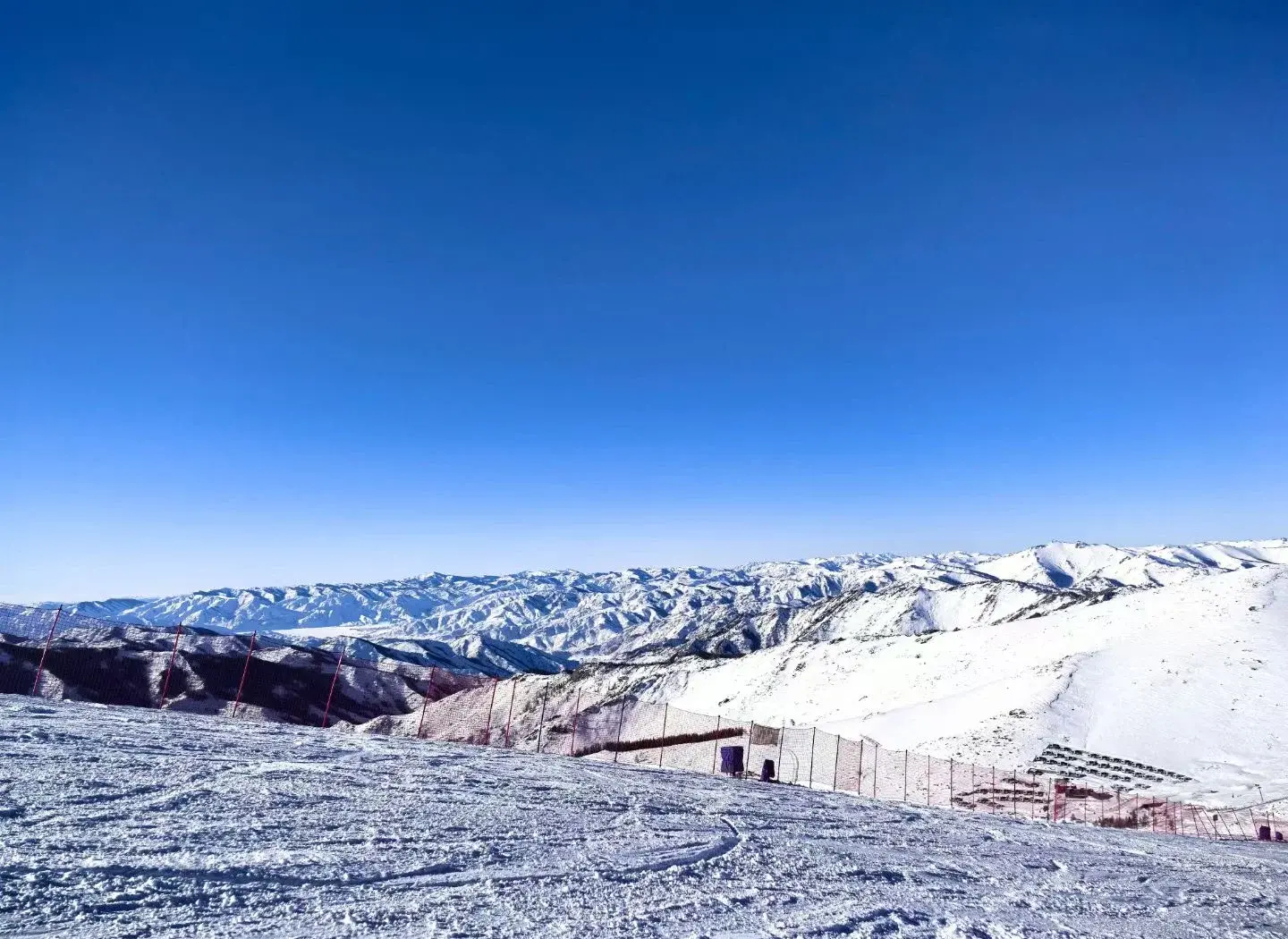
The more interesting story sits south of the county seat, in the Tianshan mountains near Chahan Wusu township. This is the Hantengri (Khan Tengri) Ski Resort Backcountry Park, and it is currently under development — not a finished resort you can book.
The stated ambition is large: local authorities describe the goal as building the core zone of a “Tianshan International Ice and Snow Region”, an international-grade winter destination, a national-level snow sports training base, and the flagship of Ili prefecture’s snow industry. Officials have claimed the site offers the greatest single-mountain vertical drop in China, and among the greatest in Asia. The terrain rationale is credible: a large mountain footprint, substantial effective vertical, moderate overall gradients that allow a sensible mix of beginner, intermediate and advanced trails, and consistent 30–40 cm snow cover with good visual coverage through winter.
Crucially, backcountry skiing at the site has already officially opened even while lift and resort construction continues. That is the realistic proposition today: guided off-piste skiing on a big, largely undeveloped mountain, not a serviced resort day.
Two honest caveats. Development timelines for projects of this type in China routinely slip, so treat any opening date you read as provisional and verify directly before booking travel around it. And backcountry terrain means backcountry risk — avalanche hazard, no patrol coverage in undeveloped zones, and no lift infrastructure to bail you out. Go with a qualified local guide, carry transceiver, probe and shovel, and know how to use them. This is not the place for your first off-piste day.
The Tianshan Ice and Snow Paradise
Zhaosu’s biggest visitor draw is not, strictly speaking, a ski hill. Inside Zhaosu Wetland Park the county has built the “Tianshan Ice and Snow Paradise”, a constructed winter attraction covering roughly 350,000 square metres, with a core viewing area of about 170,000 square metres.
The build numbers are substantial: approximately 10,000 cubic metres of ice and 30,000 cubic metres of snow, shaped into 14 ice sculptures and 10 snow sculptures, plus a 300-metre ice slide and a 520-metre snow slide. Nine themed zones are linked by a “three horizontal, three vertical” circulation plan, so you walk a designed route rather than wandering a field. Recurring installations have included a heart-shaped ice-hanging maze and large-scale ice carvings.
The visitor response has been dramatic. Across the whole of December 2025 the wetland park received 1,736 visitors, averaging around 56 per day. After the ice and snow season opened, the park drew roughly 31,700 visitors in ten days — about 3,170 per day, an increase of around 55 times. Expect crowds at weekends and during festival periods.
An 800-square-metre inflatable air-dome service station provides heated rest space, folk culture experiences, food and tourist information, with small performances daily. Local specialities on sale include smoked horse sausage, crystal noodles, honey and horse-oil soap.
Heavenly Horses on Snow: Zhaosu’s Signature Culture
Zhaosu is known across China as the homeland of the “heavenly horses”, and the county has built its winter identity around that rather than importing a generic snow-park formula. The centrepiece is the tianma tashe performance — heavenly horses treading snow — in which riders drive horses across open snow, hooves throwing up spray against the white. Visitors consistently describe it as the most striking thing they see in Zhaosu.
The Xinjiang Rexue (Hot Snow) Festival and the Ili Zhaosu Tianma Ice and Snow Tourism Season anchor the calendar, typically opening at the very end of December, with all-night opening on launch day and a single ticket covering the snow activities. Traditional Kazakh events run alongside the modern attractions: snow horse racing and kokpar, the contested goat-carcass game. Folk music, dance and singing competitions run on weekend evenings.
This cultural depth is the real argument for Zhaosu over a bigger resort elsewhere. The connection between horses, herding and snow travel in the western Tianshan runs deep, and it is the same lineage explored in our piece on Altay’s fur-skinned skiing heritage. Riding traditions here are not a tourist add-on; they are the reason the county has an identity to market in the first place.
Getting There, and Fitting Zhaosu Into a Trip
Zhaosu has its own airport — Zhaosu Tianma Airport — which is the single biggest practical advantage over most Xinjiang ski destinations, and it sits close to the county ski area. Connections typically route through Urumqi. Alternatively, fly to Yining, the Ili valley’s main gateway, and continue overland to Zhaosu; this is the more common approach and lets you combine Zhaosu with other Ili destinations.
The sensible itinerary treats Zhaosu as part of an Ili valley circuit rather than a standalone destination. Pair it with Nalati ski resort in Ili, which has expanded to 14 trails with night lighting on eight of them — between the two you have enough lift-served terrain for a satisfying week without crossing the Tianshan. Add Zhaosu’s Yuhu (Jade Lake) scenic area and the swan habitat at Yining county’s Tianefquan for non-ski days.
On timing, the county’s festival season peaks from late December through January, which is also when it is coldest and busiest. February offers a good compromise of snow depth and thinner crowds. Our guide to the best time to ski Xinjiang breaks the season down month by month.
Pack for genuine cold and high-altitude sun — the basin gets brutally cold on clear nights, and glare off open snow is severe. Work through our Xinjiang ski packing list before you fly, and do not skimp on goggles and lip protection.
Frequently Asked Questions
Is Zhaosu worth visiting if I only have one ski trip in Xinjiang?
Probably not as your only destination. If you have one week and want maximum lift-served vertical and reliable powder, go to Altay. Zhaosu makes sense as a second Xinjiang trip, as part of a wider Ili valley circuit, or if the cultural side — heavenly horses, Kazakh winter traditions, festival atmosphere — matters as much to you as the skiing.
Can I ski the Hantengri backcountry park right now?
Backcountry skiing has officially opened at the site, but the resort itself remains under construction, so there are no lifts or patrolled trails in the undeveloped zones. Treat it as a guided off-piste objective requiring avalanche equipment and a local guide, and confirm current access conditions before travelling.
How big is Zhaosu County Ski Resort really?
It is a small resort with a 2S national rating, offering beginner, intermediate and advanced trails plus a full service base with rentals, dining, a café and an ice rink. It suits beginners, intermediates and families well. Advanced skiers will exhaust the terrain quickly.
Do I need a special permit to visit Zhaosu as a foreigner?
Zhaosu is an open tourist county with its own airport and receives domestic and international visitors, but border-region rules in western Xinjiang can change with little notice. Carry your passport at all times, expect routine checkpoint registration, and confirm the current position with your accommodation or a local operator before setting out.
When does the Zhaosu ice and snow season open?
The Xinjiang Rexue Festival and the Ili Zhaosu Tianma Ice and Snow Tourism Season have typically opened at the very end of December, running through the coldest weeks of winter. Exact dates shift each year with conditions, so check the county’s current announcements when planning.