

Xinjiang is famous for deep, dry, wind-packed powder that falls from November through March. Yet almost every groomed run you will ski at a commercial resort here has been touched by a snow gun at some point in the season. Understanding how snowmaking works in northwest China changes the way you read a trail map, choose your travel dates and set your expectations for surface quality. It also explains why two resorts only ninety minutes apart can offer wildly different conditions on the same weekend.
This guide explains where artificial snow comes from in Xinjiang, how resorts layer it under and over natural snowfall, what it feels like underfoot, and how to use snowmaking schedules to your advantage. If you are still deciding on a destination, pair this article with our Xinjiang Ski Resorts overview before you book.
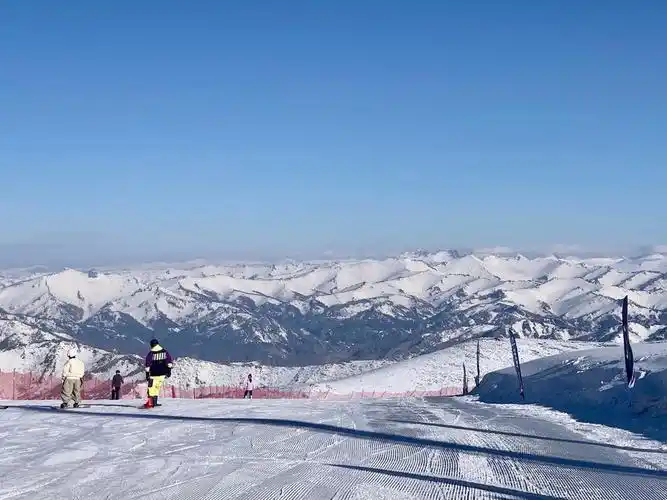
Why Xinjiang Resorts Need Snowmaking at All
It sounds counterintuitive in a region that regularly records more than a metre of settled snow. But natural snowfall and a reliable ski surface are two different products. Three factors push Xinjiang operators toward heavy snowmaking investment:
- Early-season revenue. Resorts near Urumqi want to open in mid-November, several weeks before natural cover is deep enough to protect rocks, irrigation pipes and grass. Machine snow builds the base layer that makes an early opening safe.
- Wind scouring. The Tianshan foothills are exposed. Strong northwesterly winds strip natural snow off ridges and upper pitches, dumping it into gullies. Snow guns replace what the wind removes.
- Traffic density. A single popular blue run near a major city can absorb thousands of skier-days per week. Natural snow simply cannot regenerate fast enough under that load, so resorts top up worn sections continuously.
The result is a hybrid surface: a dense manufactured base that lasts, with natural snow refreshing the top few centimetres after each storm. That combination is actually why the season here runs so long compared with many other Asian destinations.
How the Systems Actually Work
Snowmaking needs three inputs: water, compressed air or a fan, and cold dry air. Xinjiang has an abundance of the third. Winter humidity in the Urumqi basin is often very low, which pushes the wet-bulb temperature well below the air temperature and makes snow guns dramatically more efficient than they would be in a coastal climate.
Water sources
Most resorts pump from reservoirs filled by autumn snowmelt and seasonal streams. Larger operations build dedicated holding ponds near the base area and run insulated mains up the mountain. Water availability, not cold, is usually the binding constraint on how much terrain a Xinjiang resort can cover.
Gun types you will see
- Fan guns on towers or sleds along main arteries. High output, movable, and the workhorse for building base depth.
- Lances (tall vertical poles) lining wider pistes. Lower energy use, finer crystal, quieter.
- Portable sled units wheeled out to patch specific problem spots such as lift unload ramps and merge zones.
The overnight cycle
Snowmaking almost always happens between roughly 22:00 and 08:00, when temperatures bottom out. Crews then let the piles set for a few hours before winch cats push and till them into a running surface. This is why the first hour of the morning can feel firm and chalky rather than soft.
What Artificial Snow Feels Like Underfoot
Machine snow is made of smaller, rounder, denser crystals than natural flakes. In practice that means:
- It grips edges well and holds a carve, which most intermediates enjoy.
- It gets slick and squeaky in the early morning before the sun softens it.
- It resists getting skied off, so a groomed run stays skiable much later into the afternoon.
- It is noticeably heavier if you push into it off-piste, so tracked-out edges can feel grabby.
Powder hunters sometimes complain about this, but the trade-off is consistency. Learning to read the difference is a genuinely useful skill, and our notes on reading snow conditions in Xinjiang go deeper into identifying surfaces from the chairlift.
Resort by Resort: What to Expect
Urumqi-area day resorts
The cluster of hills within an hour of the city relies most heavily on machines. Expect near-total coverage on marked pistes, an early opening, and firm fast groomers. These are excellent for lesson days and lapping technique. See our roundup of ski resorts near Urumqi for specific options.
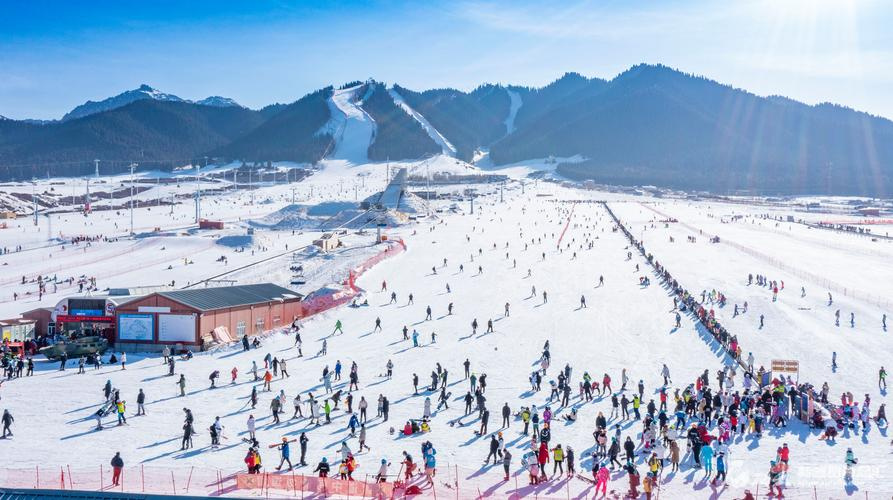
Larger destination resorts
Bigger mountains with more vertical use snowmaking strategically rather than everywhere: main descents, race and training lanes, beginner zones, and the return route to the base. Upper bowls and tree zones stay natural. This is the best of both worlds if you like groomers in the morning and soft snow after fresh snowfall.
Altay and northern areas
Further north, natural snowfall is deep and cold enough that snowmaking is more of a supplement than a foundation. Coverage focuses on lower slopes where elevation is marginal and on high-traffic learning areas. If untouched natural snow is your priority, weight your itinerary north.
Using Snowmaking Knowledge to Plan Better
Pick dates around the base build
If you travel in the first two weeks of the season, you will ski a limited number of fully open, machine-made runs. That can be perfect for a beginner trip and it is usually cheaper. If you want breadth of terrain, come later. Our breakdown of the best time to ski in Xinjiang maps this month by month.
Watch the trail map, not the brochure
Resort websites publish an open-runs count daily. Early season, compare that number with the total. A resort advertising forty runs but operating six is still building base. This single check prevents most disappointment.
Plan your first hour
On heavily machine-made terrain, arrive a little later rather than at first light, or start on east-facing slopes that catch morning sun. Freshly tilled machine snow needs a short window to soften.
Bring the right edges
Dense manufactured snow is harder on bases and edges than natural powder. Rental fleets are tuned frequently, but if you bring your own skis, arrive with sharp edges and expect to touch them up mid-trip. A basic file and pocket diamond stone earn their space in your bag alongside the rest of your cold-weather kit.
Environmental and Practical Realities
Snowmaking uses water and electricity, and in an arid region that matters. Xinjiang operators increasingly run high-efficiency lances, night-only production cycles and reservoir recapture to reduce consumption. Water is not lost permanently, it returns to the watershed at spring melt, but the timing shift and the energy footprint are real. As a visitor, the most useful thing you can do is ski the terrain that is open rather than pushing onto thin marginal cover, which forces resorts to make more snow to repair damage.
There is also a safety dimension. Snow guns and their hoses operate near piste edges, sometimes during the day. Treat any gun, hose or hydrant as a fixed obstacle, give it a wide berth, and never ski between a gun and the fence line.
Quick Reference Checklist
- Check the open-runs ratio, not the total run count, before booking early-season dates.
- Assume firm morning surfaces on machine-made pistes; plan a warm-up run accordingly.
- Head north or higher for natural snow, stay near the city for reliable groomers.
- Respect gun and hose zones on the edges of pistes.
- Carry basic edge-tuning tools for a multi-day trip.
For the wider picture on trip logistics, seasons and skill progression, start with our main Xinjiang Skiing Guide, which links out to every specialised topic on the site.
Frequently Asked Questions
Do Xinjiang ski resorts rely mostly on artificial snow?
It depends on location. Resorts close to Urumqi depend heavily on snowmaking for their base and early opening, while northern areas such as Altay receive enough natural snowfall that machine snow mainly supplements lower slopes and beginner zones.
Does artificial snow ski worse than natural snow?
Not worse, just different. Machine snow is denser and holds an edge well, making it excellent for carving and lessons. Natural snow is lighter and more forgiving off-piste. Most visitors end up appreciating the reliability of the hybrid surface.
When is snowmaking done each day?
Almost always overnight, roughly from late evening until early morning, when temperatures and humidity are lowest. Grooming crews then till the new snow before lifts open, which is why early runs can feel firm.
Can I ski while snow guns are running?
Sometimes resorts run guns on the edges of open pistes during the day. Stay well clear of guns, hoses and hydrants, follow any fencing or signage, and never pass between a gun and the piste boundary.
Does heavy snowmaking make a trip cheaper or more expensive?
Early-season periods that rely on machine snow usually come with lower lift and hotel prices because terrain is limited. Peak-season pricing reflects full terrain availability rather than snowmaking cost directly. Our budget guide to skiing in Xinjiang covers the seasonal price curve.
Which is better for a first-time skier?
Machine-groomed terrain near Urumqi is generally ideal for a first trip: consistent surfaces, gentle gradients, short transfers and easy access to instruction.