

If you are looking for a winter stop where real skiing sits side by side with Kazakh herding culture and steaming hot springs, Nilka winter travel is one of the Ili valley’s most rewarding surprises. Nilka County, whose name means “hope” or “new life” in Mongolian, lies in the eastern Ili River Valley of western Xinjiang. Its centerpiece is the Tangbula grassland, which in winter becomes a “Hundred-Li Ice-Snow Gallery” of white meadows and dark spruce, threaded by the Kash River. Add the new Tangbula International Ski Resort, the Bulong Hot Spring, and a string of folk festivals, and you get a low-altitude, family-friendly counterpoint to the big Altay resorts. It slots neatly into a wider skiing in Xinjiang plan.
Why Choose Nilka in Winter
Most foreign visitors race to Altay for deep powder, but the Ili valley offers a gentler, warmer kind of winter, usually between -10°C and -20°C, with snow that lasts for months without altitude sickness. Nilka has leaned into this with a seasonal brand, “Snowy Niileke, Honey Winter” (Xue Run Niileke, Mi Jing Fu Dong Yue), built around the idea of “ice-snow + wellness + food.” The county has set an ambitious target of 11.56 million visits and 5.17 billion yuan in tourism spending for the year, and you feel that energy in the events, the new resort, and the free-admission policies at several scenic spots. For travelers comparing regions, our Xinjiang ski resort overview shows how Nilka fits among the others.
Tangbula International Ski Resort
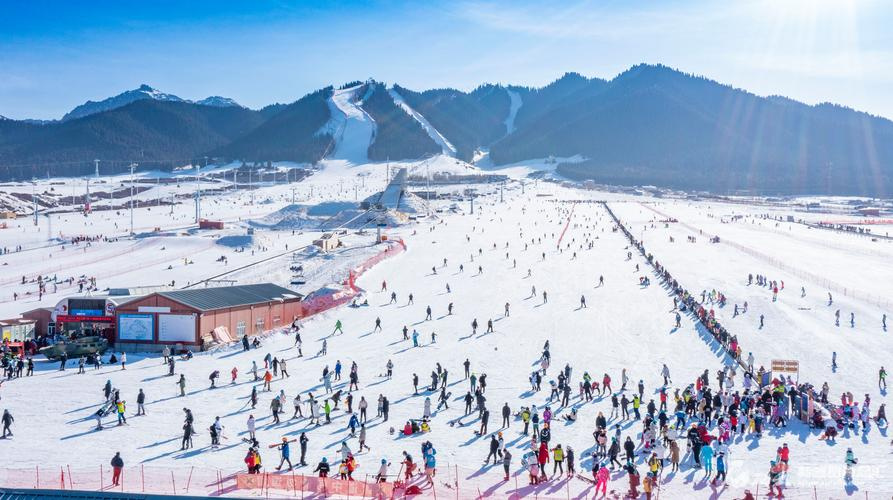
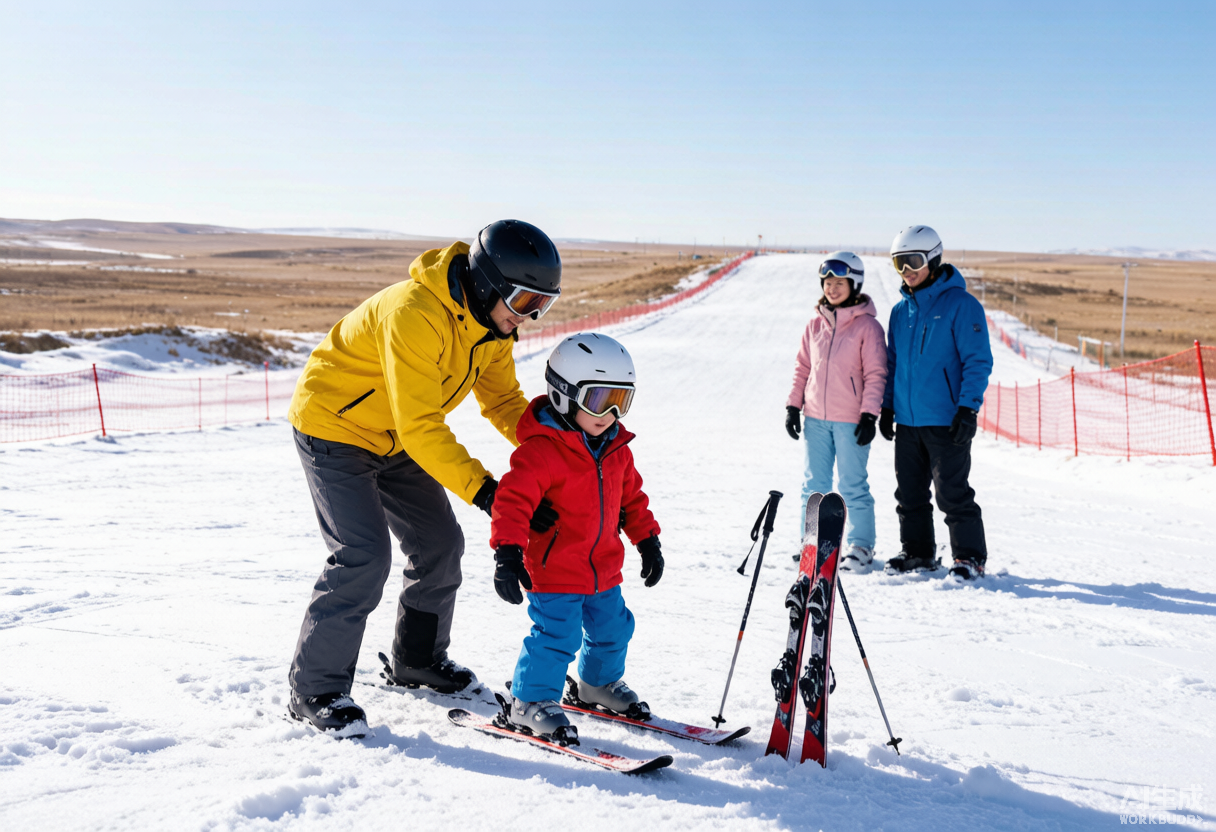
The headline for skiers is the Tangbula International Ski Resort (Tangbula Guoji Huaxue Chang). Set among the grassland and spruce of the Tangbula area, it offers beginner, intermediate, and advanced runs built on natural snow quality that local riders praise. The slopes are wide and forgiving, which makes it a strong place for first-timers and confident cruisers alike, while the surrounding scenery, open white meadows framed by a wall of spruce, is genuinely photogenic. Rentals and a beginner teaching area are on site, and the resort is pitched at casual and learning skiers rather than extreme vertical. If your main goal is big drops, treat Tangbula as a relaxed warm-up and save the serious descents for the major hills listed in our where to ski in Xinjiang guide.
The Hundred-Li Ice-Snow Gallery
Even if you never click into a binding, the Tangbula grassland in winter is the reason to come. The “Hundred-Li Ice-Snow Gallery” (Baili Bingxue Huilang) stretches along the Kash River with rime on the spruce, frozen waterfalls, and snow ridges that look like ink-wash painting. You can snowshoe or walk the cleared boardwalks, ride a horse through the snow plain with a local herder, or take a horse-drawn sleigh padded with cushions for a slow 360-degree view. Snowmobiles and snow-horse-racing with dao yang (a Kazakh wrestling-on-horseback game) are run on festival days. Notably, Tangbula’s valley has also become a spot for kite skiing, where riders use a controllable kite for wind-powered glides across the open snow, a niche scene that drew domestic enthusiasts through several recent winters.
Bulong Hot Spring: Ice and Fire
After a cold morning, the Bulong Hot Spring (Bulong Wenquan) is the perfect reset. Soaking in warm mineral water while snow falls around you, the “ice and fire in one place” (bing huo liang chong tian) experience, is a signature of Ili winter wellness. Several venues pair the spring with heated cabins and Kazakh-style meals, so you can alternate between the pool and a hot bowl of lamb. It is the kind of low-effort luxury that makes a cold day feel indulgent, and it pairs naturally with a ski morning at Tangbula.
Wetland Ancient Poplar & Village Life
Back near the county seat, the Wetland Ancient Poplar Scenic Area (Shidi Gu Yang) holds a forest of thousand-year-old poplar trees that, in deep winter, wear a coat of rime and glitter in the morning light. The park offers forest hiking and cycling loops and, importantly for budget travelers, has run free-admission and bundled discount passes in recent seasons. Nearby, Duoerbujin village has been developed into an “Ice-Snow Honey City” (Bingxue Mie Cheng) theme park, and the county stages the 4th Nadam folk-culture conference plus an “Ice-Snow Carnival, Intangible-Heritage Warm Winter” series of events. You can also visit the Mengkete ancient road for a hike, or the Qiaorma red-education base for a dose of regional history, then end the day browsing Kazakh embroidery in a village guesthouse.
Food: Far-From-Sea Salmon & Black-Bee Honey
Nilka eats like the steppe it sits on, with a twist. The county is known for cold-water salmon farming, so a full salmon feast (san wen yu quan yu yan), the “salmon farthest from the sea,” is a local specialty you will not find in most ski towns. Pair it with black-bee honey (hei feng feng mi), roasted stuffed buns (kao bao zi), hand-grabbed rice (zhua fan), and salty milk tea. Street snacks at the night market are a cheap way to sample several dishes in one walk, and the honey makes a good edible souvenir. Build a wider Ili loop by combining this stop with our Yili winter ski guide and the nearby Tekes winter travel guide for a culture-and-snow itinerary.
Getting There & Staying Warm
Fly into Yining Airport, then drive or take a shared car roughly two to three hours east into Nilka. A four-wheel-drive with snow tires helps on mountain roads after fresh snow, though the county seat and main resorts are reachable by normal vehicles in good conditions. Stay in a heated hotel near the town center for around 150 to 300 yuan per person, or book a Kazakh wooden cabin with a real hearth for a more immersive night. Dress in the three-layer system, pack sunglasses for snow glare, and carry a power bank since cold drains phone batteries fast. Timing your visit is easy with our month-by-month Xinjiang ski calendar.
Safety Notes
Cell coverage in the deeper Tangbula valleys can be spotty, so download offline maps and tell someone your plan. Stay on marked routes and respect any closed high-altitude zones, and use the herder horse teams or a local guide to explore farther sections safely. The spruce forest is beautiful but unforgiving if you wander off track.
Frequently Asked Questions
Is Nilka good for beginner skiers?
Yes. Tangbula International Ski Resort has beginner, intermediate, and advanced runs on natural snow, with a teaching area and rentals on site, making it a relaxed place to learn without the altitude or crowds of the big northern resorts.
What is the Tangbula Ice-Snow Gallery?
It is the Tangbula grassland in winter, a stretch of white meadows, frozen waterfalls, and rime-covered spruce along the Kash River, best explored on foot, by sleigh, or on horseback rather than on skis.
Do I need a car to visit Nilka?
A private four-wheel-drive helps for mountain snow roads, but the county seat, the hot spring, and the main resort are reachable by shared car from Yining and normal vehicles in good conditions.
When is the best time to visit Nilka in winter?
Late December through early February usually has the deepest, most stable snow, and the county runs folk festivals and carnivals through the whole cold season, so the town feels festive whenever you arrive.
Can I combine Nilka with other Xinjiang ski areas?
Absolutely. Nilka sits in the Ili valley and pairs naturally with nearby Yili resorts and Tekes, working as a culture-and-wellness add-on to a longer Xinjiang ski trip built around the best snow months.