

Four years on, the most useful question about the Beijing 2022 venues is not what they meant for Chinese winter sport in the abstract. It is far more practical: can you actually go and ski them, what does it cost, when are they open, and is the snow any good now that the broadcast trucks have gone home?
The answer differs sharply by venue. One cluster became a fully functioning commercial ski destination and is busier than it ever was during the Games. One is a world-class alpine venue that most visitors will never legally set foot on. And one is a free-standing city landmark that you can walk up to in a normal coat on a normal afternoon. This guide covers each as it stands today, with the access details that actually determine whether a trip is worth planning.
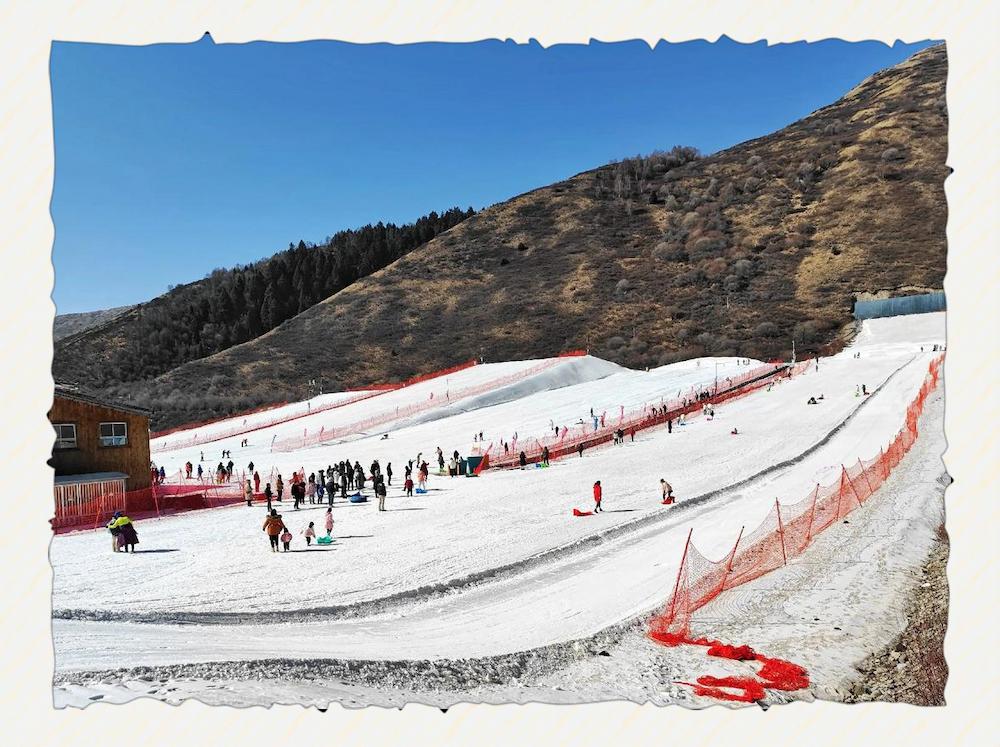
What Got Built, and What Survived
Beijing 2022 used three competition zones. Downtown Beijing hosted ice sports plus one snow event. Yanqing, in Beijing’s far northwest mountains, hosted alpine skiing and the sliding sports. Chongli, in Zhangjiakou across the provincial border in Hebei, hosted almost everything else on snow — freestyle, snowboard, cross-country, biathlon and ski jumping.
The infrastructure that mattered most to ordinary skiers was not the courses. It was the high-speed rail line that cut travel from central Beijing to Chongli from a four-hour drive to under an hour on rail, and the highway upgrades that came with it. That single change turned a weekend-only destination into a day-trip-viable one, and it is the reason the Chongli cluster kept its momentum while individual venues elsewhere went quiet.
The broader arc of how China got here — from a handful of rope-tow hills to a rail-connected resort cluster — is covered in our piece on the history of skiing in China. What follows is strictly the present-day state of the venues.
Chongli: The Cluster That Kept Skiing
Chongli is the one place where an ordinary visitor can ski Olympic terrain without special arrangement, and it is the reason to make this trip at all.
Several resorts sit within a compact valley system here, and the Games-era venues were integrated into commercial resorts rather than left standing alone. Freestyle and snowboard courses became part of the public terrain park offering. The cross-country and biathlon area operates as a Nordic centre with public trails — a rarity in China, where cross-country access is thin. The ski jumping venue functions primarily as a landmark and event site rather than something you will use.
What it is like to ski. Expect wide, well-groomed, machine-made pistes with modern high-speed lifts and genuinely good vertical for northern China. It is a strong intermediate destination with credible advanced terrain and the best-maintained park scene in the country. What it is not is a powder destination — this is dry continental snow country with low natural snowfall, and the mountain is essentially a large, well-executed snowmaking operation.
Season and hours. The season typically runs from late November into early April, with the most reliable conditions from late December through February. Lifts generally operate roughly 08:30 to 16:30, with night skiing offered on limited zones at some resorts on selected evenings. Confirm night operations before planning around them; they are weather and demand dependent.
Tickets. Full-day lift passes at the major Chongli resorts sit in the mid-range by Chinese standards — meaningfully above regional hills, well below international destination pricing. Expect peak-season weekend and holiday rates to run substantially higher than midweek, and expect multi-day and multi-resort products to offer real savings. Buying through the resort’s own mini-program or a major travel platform in advance is both cheaper and faster than the ticket window. Our Zhangjiakou ski guide covers the resort-by-resort detail, transport options and where to stay in the valley.
Getting there. High-speed rail from Beijing to Taizicheng station, then a short shuttle or taxi to the resorts. This is the single best-organised ski access route in China and takes well under two hours door to door from central Beijing. It also makes Chongli the strongest option if you are working from the capital and want snow without committing a week; see our Beijing ski day trips guide for the shorter-format alternatives.
The crowding caveat
Chongli’s accessibility is also its main weakness. Weekends, the New Year period and Spring Festival bring serious crowds from Beijing, and lift queues can be long enough to reshape your day. Midweek is a different mountain entirely. If your schedule has any flexibility at all, use it here.
Yanqing and the National Alpine Ski Centre: Look, Mostly Don’t Touch
The alpine venue at Xiaohaituo mountain — the downhill course known as “The Rock” — is the most serious piece of ski infrastructure ever built in China, and the hardest for a visitor to use.
It was constructed on steep, high, exposed terrain that had no prior ski industry around it, in a mountain area with significant ecological protection status. The competition courses are not operated as general public pistes in the way Chongli’s terrain is. Access to the alpine venue is periodically opened for training, competition, organised group programmes and seasonal public events, but it is not a resort you can simply turn up to and buy a day pass for on an arbitrary Tuesday in January.
What you can realistically do. The Yanqing zone functions today primarily as a national training base, an event venue and a sightseeing destination. Non-skiing visitor access to the venue area and the sliding centre operates seasonally, with guided or ticketed formats, and the surrounding Yanqing district has separate, ordinary commercial ski areas that anyone can ski. If you want to see the Olympic alpine venue, plan it as a sightseeing excursion; if you want to ski in Yanqing, plan it around the district’s commercial hills.
Practical guidance. Check current-season arrangements shortly before travelling rather than relying on anything written in advance, including this. Opening formats here have changed from season to season more than at any other venue, and the gap between what is theoretically available and what is bookable on a given week is wide.
Shougang Big Air: The One You Can Visit on a Weekday Afternoon
The big air ramp built into a decommissioned steelworks in western Beijing is the most photographed thing to come out of the Games, and it is genuinely easy to visit.
The site operates as an urban park and cultural district. The ramp remains standing as a permanent structure and is used for competitions and events; the surrounding industrial complex has been converted into a public space with cafés, exhibition areas and offices, reachable by metro from central Beijing. General access to the park area is free or low-cost, opening hours follow normal daytime park hours, and no skiing is involved for the ordinary visitor.
Treat it as a half-day city outing rather than a ski activity. It is an excellent stop on a non-skiing day, particularly for photographs, and it costs almost nothing.
Snow Conditions After the Renovations
An honest assessment matters here, because Olympic branding sets expectations that the climate cannot meet.
All three zones sit in a cold, dry, low-precipitation part of northern China. The Games were run almost entirely on machine-made snow, and that has not changed. What the venues genuinely have is excellent snowmaking capacity, serious grooming equipment, reliably cold temperatures that hold a surface well, and modern lift infrastructure. What they do not have is natural snowfall in any quantity.
The practical result: firm, consistent, well-groomed surfaces from late December through February, with the hardpack getting harder in cold snaps and turning soft in late-season afternoons. Piste skiers and park riders are well served. Anyone chasing deep natural snow and tree skiing is in the wrong region — that is a case for the Altay mountains, as we set out in why Xinjiang is the best place to ski in China.
Is It Worth Building a Trip Around?
- Yes, if you are already in Beijing. Chongli by rail is the most convenient quality skiing in China, and the venue sightseeing adds a genuine dimension.
- Yes, for park and piste skiers. The terrain parks and grooming standards here are the country’s best.
- Qualified yes, for first-time visitors to China. The infrastructure, signage and English-language service levels are stronger than at most Chinese resorts, which lowers the friction considerably.
- No, if you came for natural snow. Manage that expectation before booking, or plan a second leg further north or west.
- No, if you specifically want to ski the alpine downhill course. That access is not reliably available to general visitors.
For a wider comparison of how these resorts stack up against the rest of the country, our China ski resort rankings put the Chongli cluster in national context. And if you are buying gear for the trip, the retail landscape in these resort villages has its own logic — see our comparison of domestic versus imported ski gear in China before you shop at the mountain.
Frequently Asked Questions
Can the public ski the Olympic courses in Chongli?
Yes, in large part. The freestyle and snowboard venues were integrated into commercial resorts and their terrain is part of the public offering, and the Nordic area operates public cross-country trails. You buy a normal lift pass and ski. This is the main reason Chongli is worth visiting over the other two zones.
Can I ski the Yanqing alpine downhill course?
Not on a walk-up basis. The National Alpine Ski Centre functions primarily as a training and competition venue with seasonal, organised or event-based access rather than standard daily public lift ticketing. Check the current season’s arrangements before travelling, and plan ordinary skiing at Yanqing district’s commercial ski areas instead.
How much does a lift ticket cost at the Chongli resorts?
Full-day passes sit in the mid to upper range for China — well above small regional hills, well below major international destinations. Weekends, New Year and Spring Festival carry substantial premiums over midweek rates. Book through the resort mini-program or a travel platform in advance for the best price and to skip the window queue.
Is the snow natural or man-made?
Overwhelmingly man-made. Northern China’s ski regions are cold but very dry, and the Games themselves ran on machine-made snow. Expect firm, consistently groomed hardpack rather than powder, with the most reliable surfaces from late December through February.
How do I get from Beijing to Chongli?
High-speed rail to Taizicheng station, then a short shuttle or taxi to the resort area — typically under two hours total from central Beijing. It is the most convenient resort access in the country and removes any need to drive.
Is the Shougang Big Air ramp open to visitors?
Yes. It stands as a permanent structure inside a converted steelworks park in western Beijing, accessible by metro, with the surrounding area operating as a public cultural district during normal daytime hours. You visit and photograph it; you do not ski it. Budget half a day as a city outing.