

Xinjiang is enormous. The autonomous region covers roughly one sixth of China’s landmass, and the distance between its main international gateway and its best powder is measured in hours, not minutes. For visiting skiers, the transfer leg is the single most underestimated part of the trip. Flights are easy to book. Lift tickets are easy to buy. But the stretch between the arrivals hall and the slope-side hotel is where itineraries quietly fall apart, usually because someone assumed a two-hour drive would take two hours in January.
This guide walks through the realistic transfer options from Xinjiang’s main airports to its ski areas, what each one costs in time and money, and how to build enough slack into your schedule that a delayed flight does not cost you a ski day. If you are still deciding where to base yourself, read our overview of where to ski in Xinjiang before locking in flights, because the airport you choose determines almost everything that follows.
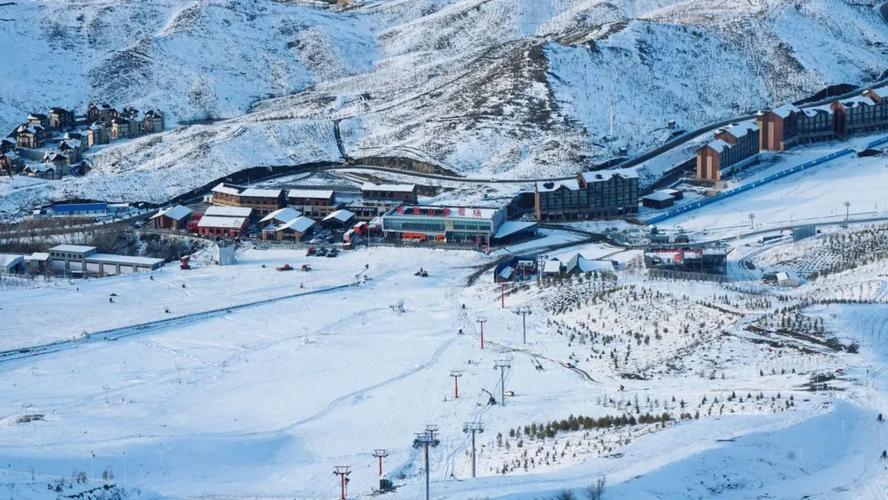
The Two Airports That Matter
Nearly every foreign skier arrives through one of two airports, and the choice between them is not really a choice at all: it depends on which mountains you want.
Urumqi Diwopu International Airport (URC)
Urumqi is the regional capital and the only airport with meaningful international connectivity. Direct flights arrive from several Central Asian cities, and domestic connections from Beijing, Shanghai, Guangzhou, Chengdu, and Xi’an run many times daily. The airport sits about 16 kilometres northwest of the city centre, and the terminal complex has expanded significantly in recent years.
From URC you can reach the resort cluster in the Tianshan foothills south of the city within an hour to ninety minutes. This is the practical base for short trips, weekend skiing, and anyone whose schedule cannot absorb a second domestic flight.
Altay Xuedu Airport (AAT)
Altay serves the far north of the region and is the gateway to the deep, dry snow that made Xinjiang’s reputation among powder skiers. It is a domestic-only airport with a modest terminal and a flight schedule dominated by connections through Urumqi. Flying time from URC is roughly one hour and forty minutes.
The trade-off is straightforward. Altay costs you an extra flight segment and an extra half day, but it puts you within striking distance of terrain that Urumqi simply cannot match. Skiers chasing snow quality accept the detour. Skiers on a four-day trip usually do not.
Transfer Options Compared
Once you land, four realistic ways exist to cover the remaining distance. Each suits a different kind of traveller.
- Resort shuttle bus — Most larger resorts operate scheduled coaches timed loosely around flight arrivals. Cheapest option, typically a fraction of a private car’s cost. The catch is the schedule: miss the last departure and you are finding a hotel in town.
- Private car with driver — Booked in advance through your hotel or a local agency. Door to door, luggage handled, no waiting. Expect to pay several times the shuttle fare, though split between three or four people it becomes reasonable.
- Ride-hailing apps — Widely available in Urumqi and workable for shorter hops. Coverage thins dramatically once you leave city limits, and drivers frequently decline long mountain runs in poor weather.
- Self-drive rental — Only advisable if you hold a valid Chinese licence and have genuine winter driving experience. Conditions on mountain approaches change fast; our notes on Xinjiang winter road conditions cover what you are actually signing up for.
Timing: Build In More Slack Than Feels Necessary
The single most common planning error is treating posted drive times as reliable. They are summer figures. In deep winter, add forty to sixty percent to any estimate you find online, and more after a heavy snowfall when ploughs are still working.
Three specific buffers are worth building in:
- Connection buffer in Urumqi. If you are transiting to Altay, leave at least three hours between arrival and onward departure. Winter fog and snow delays at URC are routine, and the Altay flight schedule is thin enough that a missed connection can mean waiting until the next day.
- Daylight buffer. Mountain roads are far more manageable in daylight. Aim to complete any transfer over 150 kilometres before dark, which in a Xinjiang December means being on the road by early afternoon.
- Arrival-day buffer. Do not plan to ski on the day you land. Treat arrival day as a transfer day, get to the resort, sort your rentals, sleep. You will ski better the next morning.
Booking Your Transfer Before You Fly
Arranging ground transport in advance is worth the small effort, particularly for a first visit. English signage at both airports is limited, and negotiating with drivers at the kerb while jet-lagged and carrying ski bags is nobody’s idea of a good start.
The most reliable route is through your accommodation. Nearly every resort hotel will arrange a pickup if you send them your flight number a few days out, and because the booking flows through the hotel, there is accountability if something goes wrong. Confirm three things in writing: the total price, whether it covers ski luggage, and what happens if your flight is delayed.
Payment deserves particular attention. Cash is increasingly awkward in China, and most drivers expect a mobile transfer. Sorting out your payment apps before departure removes a genuine friction point, and our guide to mobile payment for skiers in Xinjiang explains what actually works for foreign cards.
Travelling with Ski Luggage
Ski bags complicate transfers in ways that are easy to overlook until you are standing beside a compact sedan with two 190cm bags and nowhere to put them.
- State your luggage explicitly when booking. “Two people, two ski bags, two suitcases” gets you an appropriate vehicle. “Two people” gets you a sedan.
- Shuttle buses generally handle ski gear without fuss, but boot space fills fast on busy arrivals. Get to the pickup point early.
- Consider whether you need to bring skis at all. Rental quality at the larger Chinese resorts has improved markedly, and travelling light removes the whole problem. Our China ski rental equipment guide covers what you can realistically expect to find.
- Soft bags with wheels survive multi-leg journeys better than rigid cases and are easier to wedge into an over-full vehicle.
Staying Warm on the Transfer Itself
A detail that catches out first-time visitors: the transfer is often the coldest part of the day. You will stand outside waiting for a vehicle, possibly at night, possibly in wind, wearing whatever you wore on the plane. Northern Xinjiang in January regularly sits below minus twenty.
Keep a warm layer, hat, and gloves in your carry-on rather than buried in checked luggage. It sounds obvious. Plenty of people learn it the hard way in an airport car park. For a full breakdown of what to wear in genuine deep cold, see our guide to ski clothing layering for Xinjiang.
A Realistic Sample Itinerary
Here is how a well-paced arrival looks for a skier heading to the northern resorts:
- Day 1 morning: Land at Urumqi from your international connection. Clear immigration, collect bags, buy a local SIM or activate roaming.
- Day 1 afternoon: Domestic flight to Altay, arriving mid-afternoon with daylight remaining.
- Day 1 evening: Pre-booked transfer to your resort hotel. Check in, eat, sleep.
- Day 2 morning: Collect rentals, buy your pass, ski. First full day intact.
Compare that with the compressed version — international arrival, immediate connection, night drive, ski at dawn — and the difference in how the trip actually feels is substantial. The extra half day is not wasted; it is what makes the remaining days work. For broader trip-planning context, our Xinjiang skiing guide covers season timing, resort selection, and budgeting.
Frequently Asked Questions
How long is the transfer from Urumqi airport to the nearest ski resort?
The closest resorts in the Tianshan foothills are typically 60 to 90 minutes from Urumqi airport in good conditions. After fresh snowfall, allow two hours. Resorts further out in the range can take three hours or more.
Should I fly to Urumqi or Altay for the best snow?
Altay for snow quality, Urumqi for convenience. The northern terrain near Altay gets deeper, drier snow, but reaching it costs an additional flight and roughly half a day each way. On trips shorter than five days, the Urumqi-area resorts usually make more sense.
Can I use ride-hailing apps for airport transfers in Xinjiang?
Within Urumqi, yes. For longer mountain routes, coverage becomes unreliable and drivers often decline the trip, especially in poor weather or after dark. Pre-booking a private car or resort shuttle is far more dependable.
Do resort shuttles run to meet international flights?
Schedules are built around domestic arrival patterns rather than any specific international flight. Check the timetable before booking and confirm the last departure of the day. If your arrival lands outside the window, arrange a private transfer instead.
Is it safe to drive myself from the airport to a ski resort?
Only with a valid Chinese licence and real winter driving experience. Mountain approaches involve ice, blowing snow, and stretches with no mobile signal. Most visiting skiers are better served by a driver who knows the road.