
Xinjiang gets talked about as a skier’s frontier, but it may be even better on a snowboard. The region’s famous dry, cold powder rides beautifully on a wide board, the terrain has natural hits everywhere, and lift tickets cost a fraction of what you would pay in Japan or North America for comparable snow. At the same time, snowboarding in far western China comes with quirks — flat cat tracks that punish boarders, patchy park maintenance at smaller hills, and rental fleets built mostly around skis. This guide covers where to ride, what to expect from parks and pipes, powder strategy, gear logistics and the practical details that make or break a board trip. For the broader picture of the region’s mountains, our overview of the best Xinjiang ski resorts pairs well with this article.
Why Snowboarders Love Xinjiang Snow
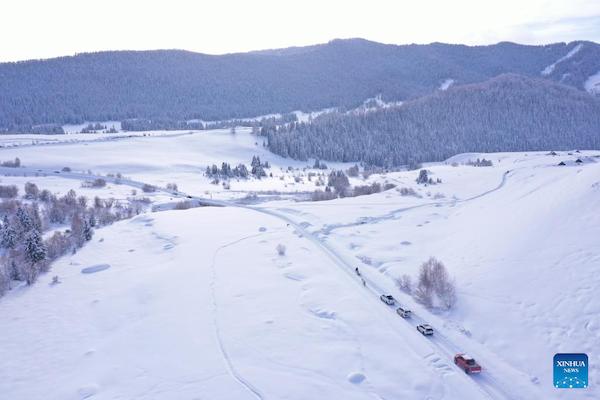
The snow here is continental and cold: low moisture content, consistent mid-winter temperatures well below freezing, and very little wind crust on sheltered aspects. On a snowboard that translates to effortless float and forgiving landings. Storm cycles are less frequent than in Japan, but the snow that falls stays soft for days because temperatures rarely rise above minus ten in January. Between storms, groomers stay chalky rather than icy — carving conditions most boarders only see a few days a season at home.
The trade-off is cold. Riding lifts at minus twenty demands serious outerwear, and snowboarders sit in the snow more than skiers, so waterproof, insulated pants and quality mittens matter even more. Boot heaters or toe warmers are close to essential for pipe and park laps where you stand around between hits.
The Best Resorts for Boarders
Silk Road Mountain Resort (Urumqi)
The most snowboarder-friendly base in the region. Silk Road runs the most consistent terrain park in Xinjiang, with a beginner jib line, a medium jump line and, in good seasons, a shaped halfpipe used for training by provincial teams. Night sessions keep the park open late, and the gondola-served upper mountain has real freeride lines between the marked pistes. Crowds are modest on weekdays.
General’s Mountain (Altay)
A city resort with surprising steeps and excellent grooming. The park is smaller and rebuilt each season, but the mountain’s playful gullies and windlips make it a natural-terrain playground. Because Altay city sits at the base, apres options beat every other Xinjiang hill.
Koktokay (Fuyun)
The big-mountain choice: nearly 1,200 metres of lift-served vertical and the region’s best steep freeride terrain. There is little to no park, so come for powder and long top-to-bottom runs. Beware the summit cat track on the way home — it is long and nearly flat in places, so carry speed or be ready to skate.
Jiangjun and Smaller Hills
Smaller local areas are fine for a novelty day but rarely maintain features, and their surface lifts (drag lifts and magic carpets) can be awkward on a board. Check lift types before committing; our resort pages note which areas rely on drag lifts. If you are still deciding between areas, the regional comparison in where to ski in Xinjiang breaks down terrain by ability level.
Powder Strategy on a Board
Xinjiang freeriding is mostly lift-accessed sidecountry rather than gated backcountry. Key tactics:
- Go wide or go swallowtail. A board 6 to 10 mm wider than your usual, or a tapered powder shape, transforms the low-density snow.
- Mind the flats. Scope runouts before dropping. Several classic lines at Koktokay end in long flat exits where skiers pole and boarders suffer.
- Ride with a partner. Tree wells and wind-loaded pockets exist here like anywhere. Basic avalanche awareness applies the moment you leave the groomed edge — read our primer on avalanche safety in Xinjiang before venturing off-piste.
- Time it right. January and February deliver the coldest, driest snow; late February adds daylight and slightly kinder temperatures.
Parks and Pipe: Managing Expectations
Chinese freestyle has boomed since the Beijing Olympics, and Xinjiang benefits from provincial team training programs. Still, park quality varies week to week. Silk Road’s medium line is reliably shaped; rails elsewhere may be rusty or oddly placed. Helmets are mandatory in most parks, and staff enforce one-at-a-time drop-in rules strictly on busy days. If pipe riding is your priority, contact the resort ahead of your trip to confirm the pipe is cut — it is weather- and staffing-dependent.
Gear: Rent, Bring or Buy
Bring your own boots, always — rental boot quality is the weakest link at every Xinjiang hill. Boards are easier: larger resorts rent modern all-mountain decks, though sizes above 160 cm run out fast on weekends, and powder shapes are rare. Airlines flying into Urumqi generally accept board bags under standard sports-equipment rules, but domestic connections to Altay use smaller aircraft, so confirm allowances. If you would rather buy locally, Urumqi has several decent snow shops with international brands at fair prices — our guide to buying ski and snowboard equipment in Xinjiang lists the reliable stores. Wax matters too: the cold, dry snow rewards a cold-temperature wax, and shop tunes are cheap in the cities.
Boarder-Specific Practicalities
- Lifts: The main resorts run gondolas and chairlifts, so drag-lift dread is mostly unfounded — except at small local hills.
- Cat tracks: Unstrap and skate, or hold speed on the high line. Locals are friendly about towing a boarder behind on poles.
- Lessons: English-speaking snowboard instructors exist at Silk Road but book out; reserve ahead through the resort.
- Language: Learn the local lift vocabulary and trail-sign basics — the Xinjiang ski terms glossary covers the Mandarin phrases you will actually use on the hill.
- Recovery: Boarders’ first days hammer wrists and knees; pads help, and evening stretching keeps you riding all week.
A Sample Week for a Snowboarder
- Days 1–2: Silk Road Mountain Resort — park laps, groomers, one night session.
- Day 3: Fly Urumqi to Altay; afternoon riding at General’s Mountain.
- Days 4–5: Koktokay — big vertical, sidecountry powder with a local guide.
- Day 6: Storm-day flexibility or a second General’s Mountain day; sauna in the evening.
- Day 7: Return to Urumqi, gear shopping and bazaar visit before flying out.
Frequently Asked Questions
Is Xinjiang good for beginner snowboarders?
Yes at the bigger resorts. Silk Road and General’s Mountain have wide, well-groomed learning zones and carpet lifts. Book an instructor in advance if you need English-language teaching.
Does Xinjiang have a halfpipe?
Silk Road Mountain Resort cuts a pipe in most seasons, primarily for team training, and it opens to the public when conditions allow. Confirm with the resort before building your trip around it.
Can I rent a powder board in Xinjiang?
Rarely. Rental fleets are all-mountain oriented. If powder is your goal, bring your own wide board or buy one in Urumqi.
Are there flat sections snowboarders should avoid?
Koktokay’s summit return track is the most notorious. Keep speed out of the final bowls or plan to skate a few hundred metres. At other resorts, flats are short and manageable.
Is off-piste riding allowed at Xinjiang resorts?
Sidecountry between runs is generally tolerated at your own risk, but ropes and closure signs are enforced. Hire a local guide for anything beyond the resort boundary and carry avalanche gear.