

When you move beyond the groomed trails, Xinjiang ski gear stops being about comfort and becomes about survival. The region’s backcountry — the Altai’s open bowls and the Tianshan’s hidden glades — holds some of the lightest, deepest snow in Asia, but it also sits at serious altitude with real avalanche risk and rescue times measured in hours, not minutes. A resort day pack will not cut it. This advanced checklist walks through exactly what experienced skiers should carry and wear for a safe off-piste or touring day in Xinjiang, and why each item earns its place in the pack rather than staying in the hotel drawer.

The Non-Negotiable Avalanche Kit
If you tour or drop into ungroomed sidecountry, three items are mandatory and must be on your body or in your pack at all times: a transceiver (beacon), a probe, and a shovel. Xinjiang’s snowpack can slab up after big Siberian dumps, and a partner without a beacon is a partner you cannot find. The ski safety in Xinjiang guide covers how rescue actually works here; your kit is what makes that rescue possible in the first minutes after a burial. Add an avalanche airbag backpack if you can — it will not replace the beacon, but it can keep you near the surface where searchers can reach you. Practise with the gear before the trip; a beacon you have never switched on is a beacon you will fumble under stress.
- Digital transceiver: three-antennae, fresh batteries, tested with your partner at the trailhead.
- Probe: at least 240 cm for deep Xinjiang snow, collapsible for the pack.
- Shovel: metal blade, extendable handle — plastic will fail on hardpack and wind slab.
- Airbag pack: 25-35 L, with the canister fuelled and within its service date before you leave town.
Skins, Ski Crampons and Touring Setup
For any uphill travel you need climbing skins that fit your ski width, and on icy bootpacks a ski crampon saves your knees and your dignity. Telemark and alpine-touring bindings should be serviced before the trip; a failed pin at 3,000 m is not a field repair you want to attempt in a whiteout. If you are renting rather than flying your own kit out, the Xinjiang ski equipment rental guide notes which shops stock touring gear, though availability is thinner than for alpine kits and quality is inconsistent. For a deeper compare on owning versus hiring, see rent or buy ski equipment in Xinjiang before you decide what to lug across the world.
Layering for Cold and Altitude
Xinjiang’s interior climate is continental and brutal. At altitude, temperatures swing hard between sun and shade, and wind chill on a ridgeline can drop fast. Pack a proper system rather than one heavy coat:
- Base layer: merino or synthetic, never cotton, because wet cotton is a hypothermia risk on a long descent.
- Mid layer: light down or synthetic insulation for the uptrack and for breaks at the top.
- Shell: waterproof, windproof, with pit zips and a powder skirt to keep snow out of your layers.
- Extra puffy: a belay jacket kept in the pack for an unplanned stop or a long wait for the group.
- Gloves: a light pair for skinning and a big insulated pair for the descent when your hands take the wind.
- Buff, goggles, and a spare lens: flat light is common after storms and ruins depth perception.
Navigation, Comms and Emergency
Phone signal disappears fast in the Altai valleys. Carry a GPS or a phone with offline maps, a fully charged power bank, and ideally a satellite communicator (a PLB or satellite messenger) so you can call for help when no cell tower can hear you. A small first-aid kit, a bivy sack, and a headlamp belong in the pack on every tour, even a short one, because weather turns quickly up high. Our apps, maps and tools for Xinjiang skiing article lists the offline mapping apps that actually work in the region and how to pre-load the layers you need before you lose wifi.
Where This Gear Gets Used
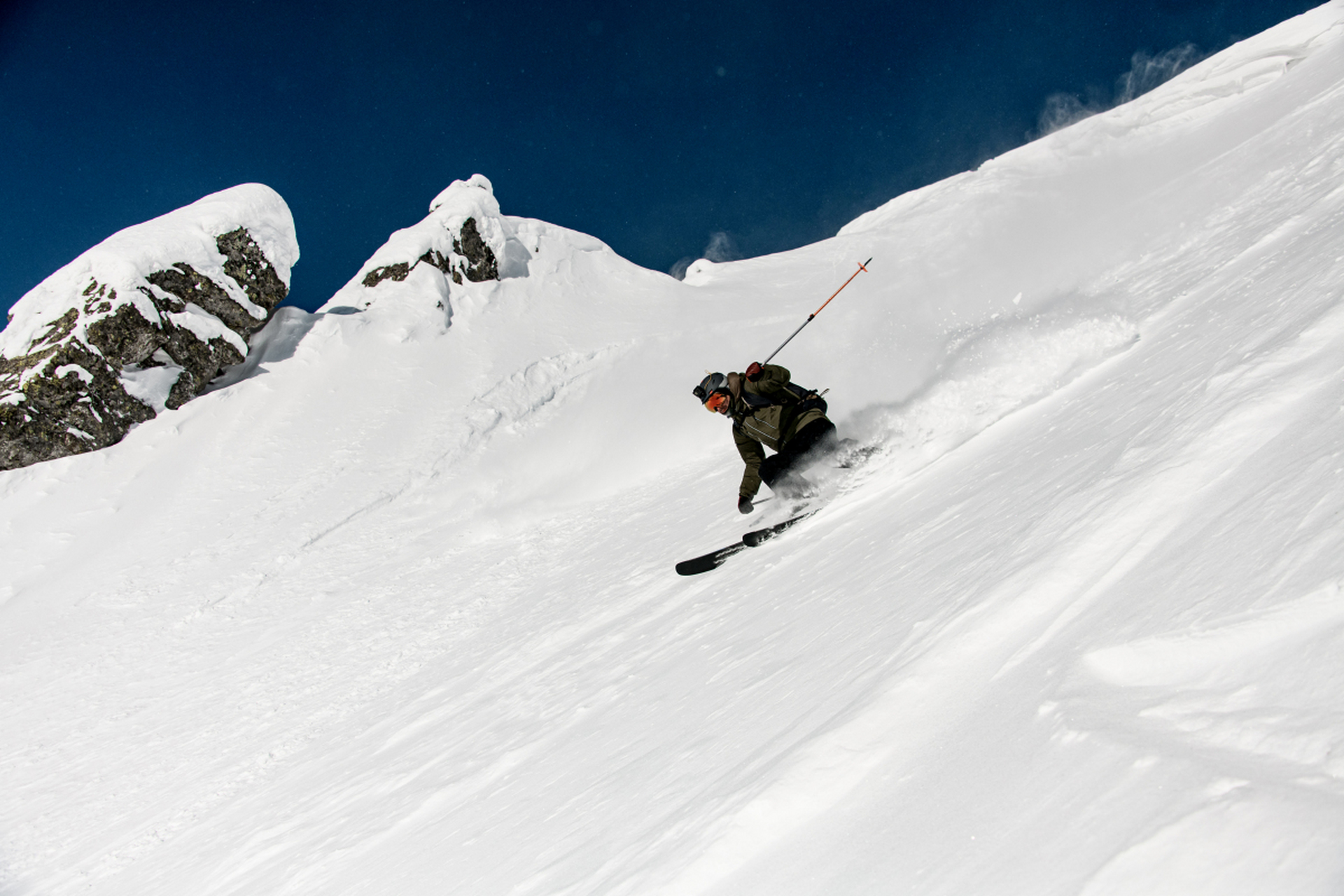
The terrain that demands this kit is the same terrain that draws experts: open Altai powder fields above the resorts, the canyon walls of Cocoa Tuohai, and the quiet Tianshan glades reachable only on skins. The backcountry skiing in Xinjiang guide maps the access points and the mentality you need before you earn your turns here. And if you want to understand the freeride terrain specifically, the off-piste skiing in Xinjiang overview digs into the lines and the hazards, from terrain traps to spoon-shaped gullies that funnel slides.
Pre-Trip Service Checklist
A week before you fly, run through this:
- Service skis: fresh wax for cold snow, edges tuned for crust and breakable wind slab.
- Test beacon with your partner; replace beacon batteries even if they seem fine.
- Charge satellite communicator and power bank; pack the charging cable.
- Confirm airbag canister is full and within its service date.
- Pack a repair kit: spare skin tip, screwdriver, duct tape, cable ties.
- Check boots for cracked shells and loose buckles that fail under load.
Common Backcountry Gear Mistakes
Most incidents in Xinjiang’s backcountry trace back to a handful of avoidable gear errors. The first is carrying the beacon but never practising with it — under real stress, fumbling the search is as bad as having none, so run a partner drill at the trailhead every time. The second is a half-charged power bank or a satellite communicator left in the hotel because it was “probably fine”; batteries die in the cold and help is hours away. The third is skins that do not fit, turning the climb into a slip-fest that burns the energy you need for the descent. The fourth is dressing too warm for the uptrack and soaking through, then freezing on the downhill when the wind hits. Finally, skiers underestimate the wind: a shell that was fine at the resort fails on an exposed Altai ridge, so test your kit in conditions close to what you will meet before you trust it on a big, committing day far from the lifts.
Frequently Asked Questions
Do I really need an avalanche airbag in Xinjiang?
Not legally, but strongly recommended for any backcountry or sidecountry touring. The Altai’s deep snow and long rescue times make an airbag a genuine life-saver, not a luxury, when a slide carries you into a terrain trap.
Can I rent backcountry gear in Xinjiang?
Some Urumqi and Altay shops stock touring skis, skins, and avy kits, but availability is limited and quality varies. If you have your own certified gear, bring it rather than gamble on rentals you cannot test in advance.
What probe length is best for Xinjiang snow?
A 240 cm or longer probe. The region’s storms build deep caches, and a short probe can leave you digging blind in a burial scenario where every centimetre costs minutes.
Will my phone work for maps and rescue?
Often not. Signal drops in the valleys and high terrain. Carry offline maps plus a satellite communicator or PLB so you can summon help when there is no cell coverage at all.
How should I layer for an Altai tour?
Base, mid, and shell, plus a belay puffy kept in the pack. Pack light gloves for the climb and heavy insulated gloves for the descent, and always carry a spare goggle lens for flat light after a storm.
Should I service my skis before the trip?
Yes. Cold-weather wax and tuned edges handle Xinjiang’s variable snow far better, and a failed binding or dull edge on a remote tour is hard to fix without a repair kit and the skill to use it.