

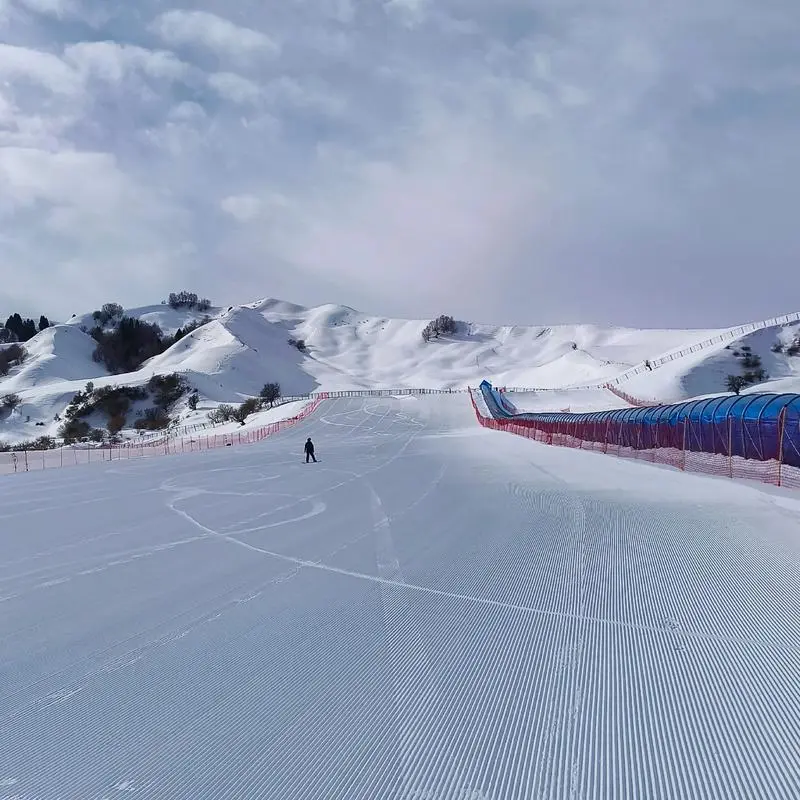
Yumin County rests on the southern edge of the Tacheng basin, where the Balruk Mountain range draws a silver line between Xinjiang and Kazakhstan. It is not a cable-car ski resort town — and that is precisely its charm. Winter here means snow-draped grasslands, birch forests glowing at sunset, a border post turned red-tourism landmark, and some of the warmest Kazakh hospitality on the G219 highway. For travellers who want a quieter, culture-rich snow escape, Yumin is a hidden gem. Pair it with our Xinjiang skiing guide to balance sightseeing with a day on the slopes.
Why Yumin in Winter
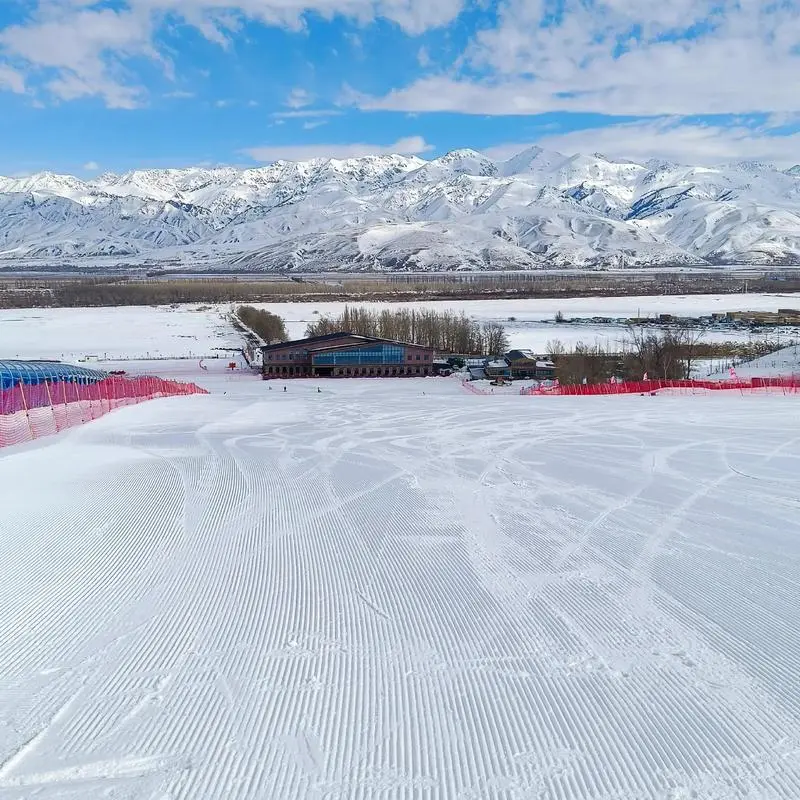
Yumin brands itself “flowerful Yumin, prosperous folk,” but its winter is just as striking as its famous spring almond blossoms. The Balruk range stays snow-capped for half the year, the grasslands turn into vast silver carpets, and the cold, clear air makes for brilliant photography. Crucially, Yumin sits inside the Tacheng winter network, so real alpine skiing is never far away — see the Tacheng ski resorts guide for the nearest slopes, and the Karamay ski resorts guide for another easy day trip. It is the kind of place where a single clear morning can redefine what a Xinjiang winter means to you.
Balruk Mountain: The Hero Range
Balruk Scenic Area is a 4A-level destination covering about 33 square kilometres, with the main peak Kongtapukan rising to 3,252 metres. Locals call it the “hero mountain” because the range was leased away and returned to China in 1894 after a decade of local resistance — a story woven into the region’s identity and still told at the mountain’s foot.
- Snow birch forests: The northern slopes host silver-trunked birch groves that, dusted with snow, look like strings of a giant instrument against the blue sky.
- Wildlife tracks: With 90-plus wild animal species and 1,000-plus plants, the quiet winter woods hide fox, rabbit, and raptor prints worth following with a camera.
- Panoramic drives: The Balruk tourism road runs southwest from the county seat; pull over at viewpoints for sweeping white ridgelines and, on clear days, a glimpse of Kazakhstan’s Alakol Lake to the west.
The Little Poplar Post: Red Tourism on the Border
The Little Poplar Post (Xiaobaiyang) was established in 1962 and renamed in 2002. Its story — a soldier planting poplar saplings sent by his mother, only one surviving, inspiring the song “Little Poplar” — made it a national symbol of border defence. Today the preserved barracks and watchtower, plus a digital military-culture experience hall, draw over 50,000 study-tour visitors a year. It is a moving, family-appropriate stop that contrasts beautifully with the surrounding snow, and a reminder of why this quiet county matters on the map.
Grasslands, Rock Art & Kazakh Life
Yumin holds two remarkable grasslands. The Tuerjialiao grassland (“noble pasture”) spreads across 100,000 mu of rolling hills beside the Tast River valley, green in spring and a silver expanse in winter. The Akeqiaoke grassland sits at 2,169 metres with 2.8 million mu of seasonal colour. The Bardak rock art cluster, 23 km southwest of the county, carries 300-plus petroglyphs dated 4,000 to 10,000 years old — a window into ancient pastoral life and one of Xinjiang’s most accessible prehistoric sites.
Winter is also when Kazakh culture comes indoors: warm homestays, horse-riding demonstrations, and hearty meals of hand-grabbed mutton and milk tea. The world’s largest wild almond forest (24,000 mu) rests under snow, promising a spectacular bloom when spring returns, while the Tast River valley offers gentle ice-walk routes for confident hikers.
Winter Activities & The G219 Route
Yumin is building an all-season system — “spring flowers, summer cool, autumn colours, winter snow.” In the cold months expect snow photography, grassland ice walks, border-road scenic drives, and red-study tours. The county lies directly on the G219 national highway, making it an easy add-on to a Tacheng or Karamay road trip. If you want to ski, the Tacheng and Karamay fields are within comfortable driving range, and our best-time-to-ski planning helps align your slope days with Yumin’s sightseeing window.
Best Time & Travel Tips
December through February is prime, with January–February best for crisp snow and clear mountain light. Pack serious cold-weather gear, carry a border-ID awareness (the area is near the frontier, so keep documents handy), and consider a local driver for icy mountain roads. One to two days covers the mountain, the post, and a grassland or rock-art stop; add a third if you include a skiing day in Tacheng or Karamay. The county’s annual visitor numbers have grown strongly in recent years, a sign that this once-quiet borderland is rapidly joining Xinjiang’s winter map.
Where to Stay, Eat & Border Tips
Yumin town offers the most lodging and dining choice, with Kazakh guesthouses on the outskirts giving the most atmospheric base. Local food centres on hand-grabbed mutton, naan bread, milk tea, and dairy treats like kurt (dried salty cheese balls) that fuel a cold day. Because the county borders Kazakhstan, always carry your ID and, if heading toward frontier posts, check the latest access rules — the Little Poplar Post itself is open to visitors but lies in a controlled zone. A local driver solves both the language gap and icy-road caution, and lets you chase the best available light on Balruk’s western slopes.
Time your visit with one of Yumin’s seasonal events if you can. The county has built a year-round calendar — spring’s wild-almond blossom festival, summer grassland concerts, autumn colour, and winter snow activities — so even in the cold months there is often a local gather, night market, or study-tour programme running. Photographers should aim for the hour after sunrise on the Tuerjialiao grassland, when low light turns the snow gold, and for the blue-hour silhouette of Balruk’s ridgeline against a deepening sky. Pair a morning on the mountain with an afternoon at the Little Poplar Post, and you capture both the quiet beauty and the living history that make Yumin unlike any other stop on the G219.
Frequently Asked Questions
Does Yumin have a ski resort?
Yumin itself is a snow-landscape and culture destination rather than a cable-car ski town. The nearest real skiing is in Tacheng and Karamay, both linked above, usually under a two-hour drive.
What is the Little Poplar Post?
It is a historic border defence post from 1962, immortalised by the song “Little Poplar,” now a red-tourism and study-tour site with preserved barracks and a digital museum.
When is the best time to visit Yumin in winter?
Late December to February offers the deepest snow and clearest light for Balruk Mountain and grassland photography.
Is Yumin on a major travel route?
Yes, it sits on the G219 national highway, making it a natural stop on a Tacheng–Karamay winter road trip through northern Xinjiang.
What makes Balruk Mountain special?
It blends alpine snow, birch forests, rare plants, and 4,000–10,000-year-old rock art, while carrying the “hero mountain” story of its 1894 return to China.
How many days should I plan?
One to two days covers the mountain, the post, and a grassland or rock-art stop; add a third if you include a skiing day in Tacheng or Karamay.