

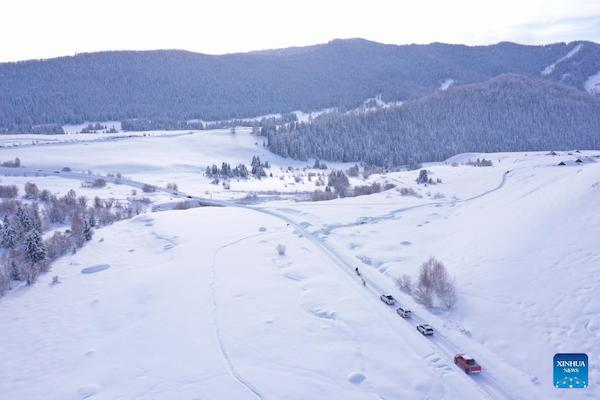
Few ski destinations on earth photograph like Xinjiang. The light is continental and crystalline, the snow is among the driest on the planet, and the backdrops range from frost-plastered birch forests in the Altay to serrated Tianshan ridgelines above Urumqi. Whether you shoot on a full-frame body or a phone, a ski trip here can produce a portfolio that looks unlike anything from the Alps or Japan. This guide covers the best shooting locations at the major resorts, how to work the region’s unique light, and the hard-won technical lessons of operating cameras in temperatures that regularly fall below minus twenty-five Celsius.
What Makes Xinjiang Visually Different
Three ingredients set the region apart. First, aridity: with humidity so low, the air is exceptionally clear, and distant peaks render with a sharpness that humid climates simply cannot match. Second, the snow itself: Altay powder is so dry that a skier’s spray hangs in the air like smoke, catching backlight in a way heavy maritime snow never does. Third, latitude: at roughly 47 degrees north, the Altay’s winter sun stays low all day, meaning the warm, angled light photographers chase for a brief golden hour elsewhere lasts for large parts of the morning and afternoon here.
December and January give you the lowest sun and the frostiest trees, while February and March trade some of that atmosphere for longer days and more comfortable shooting temperatures. If image-making is a priority for your trip, it is worth reading our breakdown of the best time to ski in Xinjiang before you fix your dates, because light, snow quality and crowd levels all shift meaningfully across the season.
Where to Shoot: Location Playbook
Summit ridgelines at first light
The upper gondola stations at the flagship Altay resorts open onto ridgelines with panoramic views across ranks of white peaks toward the borderlands. Arrive on one of the first cabins: the low sun rakes across the terrain, shadows model every wind ridge in the snow, and the slopes below are still untracked corduroy. A medium telephoto in the 70 to 200 mm range compresses the layered ridgelines beautifully.
Birch and spruce forest lines
The Altay’s signature image is frost-covered birch standing in bottomless powder. The best stands sit along the margins of gladed sectors and beside mid-mountain traverses. Overcast days, useless for grand landscapes, are perfect here: flat light turns the forest into a high-key study of white on white. For sheer snow quality in these zones, see our detailed look at powder quality at Xinjiang resorts, which explains why the region’s ultra-dry snowpack photographs with such texture.
Action zones for skier shots
For spray shots, position yourself downhill and to the side of a roller or bank where skiers naturally turn, then shoot backlit or side-lit. Because Xinjiang powder is so dry, even intermediate skiers kick up photogenic clouds. Terrain parks and mogul fields near the main lifts provide repeatable action within a short hike of the lift line, and lift towers make useful reference points when directing a subject over a radio or messaging app.
Village evenings and blue hour
The base villages, with warm window light against deep-blue twilight snow, deliver classic travel frames. In the Altay’s traditional villages nearby, log cabins under thick snow caps and rising woodsmoke give you scenes closer to documentary work than resort photography. Blue hour is short; scout your composition in daylight and return twenty minutes after sunset.
Working the Light
- Golden hours are long: With the sun low all day in midwinter, usable warm light often runs from opening until nearly 11 a.m., and again from 3 p.m. until close.
- Expose to the right: Snow scenes fool meters into underexposure. Add plus one to plus one and two-thirds stops of compensation, and check the histogram rather than the preview.
- Use backlight for spray: Powder clouds glow when lit from behind; meter for the highlights and let shadows fall where they will.
- Embrace overcast: Flat days are for forests, portraits and detail work, not for big landscapes.
- Watch for diamond dust: On the coldest clear mornings, ice crystals sparkle in the air and produce sun pillars and halos, a phenomenon far more common here than in milder climates.
Cold-Weather Camera Craft
Extreme cold is the defining technical challenge of shooting in Xinjiang, and battery behavior tops the list of problems.
- Carry batteries warm: Lithium cells can lose half their capacity below minus twenty. Keep two or three spares in an inside chest pocket and rotate them; a cold-dead battery usually revives once warmed. Top everything up nightly, and note where you can charge during the day using our guide to charging points at Xinjiang resorts.
- Beat condensation: The trip-ending mistake is bringing a frozen camera straight into a heated room, which coats the sensor and internals with moisture. Seal the camera in a zip-lock bag or your closed camera bag before going indoors and let it warm for an hour before opening.
- Skip the breath check: Never breathe on a cold lens or viewfinder; your breath freezes instantly into a stubborn frost layer. Use a lens cloth and a rocket blower.
- Glove system: Thin merino liner gloves under lobster mitts let you operate dials for a minute or two, then re-mitt. Bare fingers on cold metal risk frostnip in seconds at minus twenty-five.
- Phone shooters: Keep the phone in an inside pocket, use a wrist leash over the piste, and expect the battery to plunge in the cold. A small power bank kept warm in an inner pocket is essential.
Logistics: Moving Around with Gear
A slim 15 to 20 liter photo backpack with a back-panel opening works well on lifts and does not interfere with skiing at moderate speeds. Ride gondolas rather than exposed chairs when carrying a full kit on brutal days. Uploading images each evening is straightforward at the main destinations; connection speeds and hotspot options are covered in our review of Wi-Fi at Xinjiang ski resorts. If you plan sunrise or blue-hour sessions away from the lifts, arrange transport the day before, since taxis are scarce in mountain villages at dawn.
Drone pilots should research current regulations carefully: Xinjiang is a border region with restricted zones, and rules are enforced. When in doubt, leave the drone at home and let the terrain do the work.
A Sample Photo Day
- 07:30 – Breakfast, batteries off the charger and into chest pockets.
- 08:45 – First gondola; summit ridgeline panoramas in raking light.
- 10:00 – Ski to the birch glades; forest studies and skier-in-trees frames.
- 12:30 – Lunch indoors; camera stays bagged to avoid condensation, batteries rotate to warm pockets.
- 14:30 – Action session by a sunny bank; backlit spray sequences.
- 16:30 – Last runs, then reposition to the village for blue hour.
- 18:00 – Window-light village frames, then gear into sealed bags before the hotel lobby.
Frequently Asked Questions
What camera gear should I bring to Xinjiang ski resorts?
A weather-sealed body, one wide zoom and one 70-200 mm telephoto cover almost everything. Bring at least three batteries, zip-lock bags for condensation control, and a lens cloth. A phone with a warm power bank is a capable backup.
How cold does it get, and can my camera handle it?
Expect minus fifteen to minus thirty Celsius in midwinter. Most modern cameras function below their rated minimums if batteries are kept warm; the real dangers are battery drain and condensation when moving indoors, both manageable with the routines above.
When is the best light for photography at Xinjiang resorts?
December and January offer the lowest sun, longest golden hours and heaviest frost on the trees. February and March bring longer, warmer days that are easier on equipment and fingers, with slightly less atmospheric light.
Can I fly a drone at Xinjiang ski resorts?
Often no. Xinjiang is a sensitive border region with widespread flight restrictions, and resorts may prohibit drones outright. Check current regulations and ask the resort directly before packing one; penalties for violations are serious.
Are there good photo spots for non-skiers?
Yes. Gondolas carry foot passengers to summit viewpoints at the main resorts, and base villages, frozen rivers and birch forests near the lodging areas offer strong material without ever clicking into skis.