

When you are burning three thousand calories a day carving through Altay powder, the question of where to grab a fast, hot, affordable meal matters more than most trip planners admit. The good news is that every major resort in the region now runs at least one proper food court or cafeteria-style hall, and the standard has climbed noticeably over the past few seasons. This guide walks you through what casual dining actually looks like at each mountain, what a typical meal costs, how to order without Mandarin, and which stalls are worth queuing for. If you are still comparing mountains, start with our overview of Xinjiang Ski Resorts before you plan your lunch strategy.
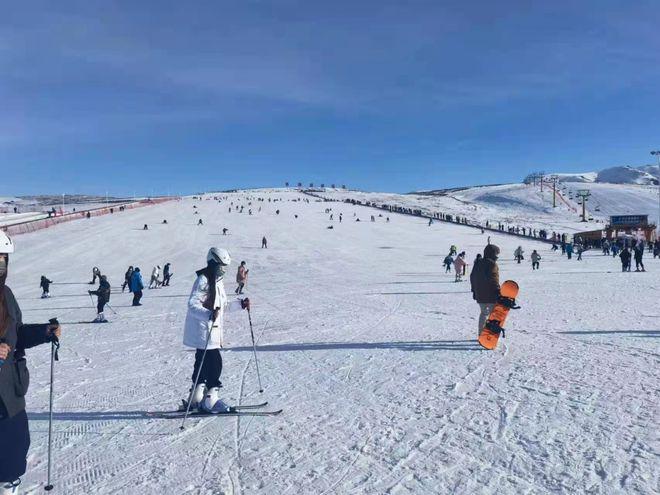
What to Expect From a Xinjiang Resort Food Court
Forget the sad reheated burgers of some older Chinese ski areas. A modern Xinjiang food court is usually a large heated hall near the main lift base with eight to fifteen independent stalls arranged around shared seating. Each stall specialises in one thing: hand-pulled laghman noodles, lamb skewers grilled over coals, big-plate chicken, dumplings, Sichuan rice bowls, bubble tea, or simple Western items like fries and fried chicken. You pay per stall, almost always by QR code, and food arrives in five to ten minutes.
Portions are generous because the clientele is hungry skiers, and prices are regulated by the resorts to stay reasonable. Expect the following typical range:
- Bowl of laghman or beef noodle soup: 25–38 RMB
- Five lamb skewers with naan bread: 30–45 RMB
- Rice set with stir-fried dish and soup: 30–48 RMB
- Hot milk tea or coffee: 15–28 RMB
- Dumpling plate (12 pieces): 22–35 RMB
A filling lunch for two rarely tops 100 RMB, which compares very favourably with alpine Europe or Japan. If you are watching your budget closely, the stalls furthest from the main entrance are often 10–20 percent cheaper for near-identical food.
Resort by Resort: Where the Casual Food Is Best
Jiangjunshan (Altay City)
Jiangjunshan has the most developed casual dining scene in the north. The base area food court seats several hundred people and the standout stalls are the Uyghur polo (rice pilaf with lamb) counter and a bakery pushing out fresh baked naan all day. Because the resort sits inside Altay City, you can also walk out of the gate at lunch and find dozens of local restaurants within ten minutes — a flexibility no other Xinjiang resort offers.
Silk Road Resort (Urumqi)
Silk Road runs two cafeteria halls, one at the base and one mid-mountain. The mid-mountain hall is smaller but has the better view and shorter queues before 12:30. The base hall covers everything from hotpot skewers to Korean bowls. Weekend crowds from Urumqi mean you should eat before noon or after 1:30 pm; the rush between those times can add twenty minutes to your break.
Koktokay (Cocoa Tuohai)
Koktokay’s food court is compact but high quality, with an emphasis on Kazakh dishes — try the horse-meat sausage platter and milk tea combination that locals swear by on cold days. Seating is tighter here, so groups of six or more should split up or aim for off-peak times.
Tianchi and Sun Mountain
These smaller day-trip hills near Urumqi have simpler canteen setups: think one large counter, a set menu of six to eight dishes, and fast turnover. Perfectly fine for a day trip, but manage expectations — this is fuel, not a food destination.
Ordering Without Mandarin: A Practical System
Very few food court staff speak English, but the system is friendly to pointers. Nearly every stall displays a large photo menu board with numbers. The reliable routine is:
- Point at the photo or say the number in Mandarin if you know it.
- Show fingers for quantity.
- Scan the QR code with Alipay or WeChat Pay — cash is accepted but change can be slow.
- Take your buzzer or receipt number and grab a seat; many stalls bring food to your table.
Translation apps with camera mode handle the menu boards well. If you have dietary restrictions, screenshot the phrase in Chinese before your trip — ‘no pork’ (不要猪肉) is the most useful one, though the majority of stalls in Altay are halal by default. For a deeper look at halal certainty across the mountains, see our guide to halal food Xinjiang skiing.
Timing, Seating, and Other Insider Tricks
Chinese domestic skiers eat lunch punctually at noon. If you shift your meal to 11:15 or 13:45 you will walk straight to a counter and have your pick of tables even on the busiest Saturday. Other tricks worth knowing:
- Claim seats first. Locals drop a glove or helmet on a table before ordering. Do the same or you may wander with a hot tray.
- Free hot water is everywhere. Dispensers stand in every hall; bring a thermos and refill for the afternoon.
- Boot-friendly floors. All food courts allow ski boots, but leave skis and boards on the racks outside — staff will wave you back out if you carry them in.
- Charging points. Newer halls at Jiangjunshan and Silk Road have USB ports under many tables; cold weather drains phones fast, so top up at lunch.
Skiers on a tight budget can go one step further and mix food court meals with supermarket runs and street food in town — our full budget food Xinjiang ski trip breakdown shows how to eat well on under 100 RMB a day.
Beyond the Food Court: When to Upgrade
Casual halls cover breakfast-to-lunch needs, but evenings deserve better. Most visitors alternate cheap slope-side lunches with proper sit-down dinners — grilled fish in Altay old town, a Kazakh family restaurant near Koktokay, or a hotel restaurant tasting menu. If a celebration dinner is on your itinerary, read our companion guide to fine dining Xinjiang ski resorts for table-service options at and around each mountain. And once the boots come off, the region’s tea houses and lively evening spots are covered in our Xinjiang apres-ski food guide.
Frequently Asked Questions
How much should I budget for food court meals per day?
Around 60–100 RMB per person covers a hot lunch, a drink, and an afternoon snack at any Xinjiang resort food court. Doubling that allows a sit-down dinner in town as well, keeping daily food spend near 200 RMB — far below comparable ski destinations.
Can I pay with a foreign card at resort food stalls?
Directly, no — stalls run on Alipay and WeChat Pay QR codes. Both apps now accept foreign Visa and Mastercard linkage, so set this up before arrival. Keep 200–300 RMB in small cash notes as a backup; every stall legally must accept cash.
Are vegetarian options available in the food courts?
Yes, though choices are narrower. Reliable picks include vegetable laghman, tomato-egg rice, cumin potatoes, and vegetable dumplings. State clearly ‘no meat’ (不要肉) because broths are often lamb-based. Larger halls at Silk Road and Jiangjunshan have the widest meat-free selection.
Do food courts open for breakfast?
Most halls open between 8:30 and 9:00 with a limited breakfast lineup — baozi steamed buns, congee, boiled eggs, naan, and milk tea. If you want a bigger breakfast, eat at your hotel first; resort breakfast stalls are best treated as a top-up.
Is the food court water and tea free?
Hot drinking water is free everywhere via dispensers. Basic brick tea is sometimes free at Kazakh-run stalls when you order food; specialty milk tea and coffee are paid items at 15–28 RMB.