

Long before international skiers started booking flights to Urumqi, Xinjiang’s winter landscapes were reaching global audiences through a camera lens. Documentary crews chasing the origin story of skiing, feature directors looking for untouched white space, and streaming productions hunting for scenery that does not look like the Alps have all found what they needed in the Altay Mountains, the Tianshan corridor and the frozen lake basins of the far northwest. For travellers, this creates an unusual planning opportunity: many of the most photogenic places you have already seen on screen are skiable, reachable and open to visitors during the same months the crews filmed there.
This guide maps the screen locations to real ski destinations, explains what each place actually looks like in person versus on film, and covers the practical side of visiting them with skis rather than a production budget. If you are still assembling the wider trip, our complete Xinjiang skiing guide covers the transport and season basics this article assumes.
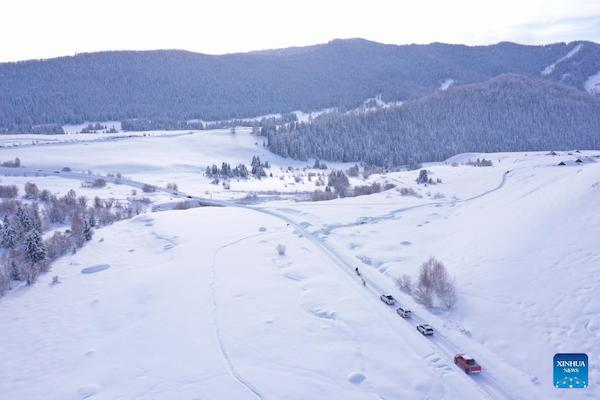
Why Film Crews Keep Returning to Xinjiang
Three qualities explain the concentration of productions in this region. First, the light. Northern Xinjiang sits at a latitude where the winter sun stays low all day, producing long golden hours instead of the short harsh window you get further south. Cinematographers get usable footage from mid-morning to late afternoon without fighting overhead glare.
Second, the snow itself. Cold continental air and low humidity produce dry, bright, deep snow that holds detail on camera. Wet coastal snow reads as grey mush on film; Altay powder reads as texture. Third, and most important for documentary work, the region holds a living cultural story. The claim that skiing originated here — supported by rock art in the Altay foothills showing figures on skis chasing game — gives filmmakers a narrative spine that pure scenery cannot provide.
The Altay Foothills: Skiing’s Origin Story on Screen
The most filmed subject in Xinjiang winter documentary work is the fur ski tradition of the Altay region. Local hunters still build skis from single planks faced with horsehide, the hair angled so the ski glides forward and grips on the climb. Crews from Chinese state broadcasters, European ski-heritage projects and independent documentary teams have all filmed the same core sequence: a hunter waxing nothing, stepping into leather bindings, and climbing a slope no modern touring setup could handle more elegantly.
The villages most often used are in the Khom and Kanas valley areas of Altay Prefecture. What films rarely show is the scale — these are small settlements of wooden houses buried to the window line, reached by roads that close and reopen with the weather. You can visit, and in several villages you can try a pair of fur skis with a local guide, but expect an unhurried, low-infrastructure experience rather than a staged attraction. The background is covered in our piece on Altay fur skiing heritage.
What to expect on the ground
- Homestay-level accommodation, shared bathrooms, wood or coal heating.
- Guides who ski well but may speak limited English — book through an agency or bring a translation app.
- Short daylight windows in December and January; plan filming or shooting for 10:00 to 16:00.
- Deep unpacked snow between villages; snowshoes or touring skis are genuinely useful.
Kanas Lake: The Signature Winter Frame
If you have seen a single image of winter Xinjiang, it was probably Kanas. The frozen lake, the birch and larch forest rising into cloud, and the smoke lines from Tuvan village chimneys form the most reproduced composition in the region. Travel documentaries, tourism films and several drama productions have used the Kanas basin for winter sequences, often intercutting it with the nearby Hemu and Baihaba villages.
Skiing here is not resort skiing in the alpine sense. The draw is the setting: gentle touring terrain, horse-drawn sledge transfers between villages, and the specific quality of snow-loaded conifers that film crews call a natural set. Lift-served terrain in the immediate area is limited, so most visitors combine a Kanas leg with a proper resort further south. Practical detail on access, permits and the winter road situation is in our Kanas Lake winter skiing guide.
Recreating the shots yourself
The classic Kanas frames depend on atmospheric conditions rather than position. Morning valley fog, hoar frost on birch branches and the low-angle backlight that separates smoke from sky all happen within a narrow window. Photographers who plan two or three nights in the basin get a usable morning far more often than day-trippers do. Our Xinjiang ski resort photo guide covers exposure and cold-weather gear handling for exactly these conditions.
The Tianshan Corridor and Resort Backdrops
South of Altay, the Tianshan range near Urumqi has served a different purpose on screen. Where the Altay supplies heritage and remoteness, the Tianshan resorts supply modern skiing imagery: high-speed lifts, groomed pistes, night-lit runs and the contrast of contemporary infrastructure against a serious mountain skyline. Commercial productions, sports promos and lifestyle content shoot here because a crew can drive from a city hotel to a lift base in under an hour.
Silk Road Ski Resort and the Nanshan cluster are the usual choices. Both offer the wide, sunlit pistes that read well on camera and the practical advantage of on-mountain power, food and vehicle access. For visitors, this is also the easiest skiing in the region to slot into a short trip.
Frozen Rivers, Gorges and Second-Unit Locations
Beyond the headline destinations, several smaller locations show up repeatedly as second-unit or establishing footage:
- Frozen waterfall gorges in the Tianshan and Altay foothills, used for scale shots and ice-climbing sequences.
- Sayram Lake, whose wind-scoured ice and pressure ridges provide an alien-looking surface in wide shots.
- Grassland winter camps at the range margins, where herders, livestock and low sun create the pastoral imagery used in cultural documentaries.
- Duku Highway approaches, filmed in shoulder season before winter closure for road and landscape sequences.
Access to these varies sharply by month and by road conditions. Some are trivially reachable from a resort base; others need a driver, a full day and flexible plans.
Planning a Screen-Locations Ski Trip
A realistic itinerary treats film locations as a theme layered onto a normal ski trip, not as a checklist to be completed. A workable ten-day structure looks like this:
- Days 1–3: Urumqi arrival, acclimatisation and lift-served skiing in the Tianshan resorts.
- Days 4–6: Fly or drive north to Altay; ski the modern resort terrain and visit a fur-ski village.
- Days 7–9: Kanas basin, village-to-village touring, photography mornings.
- Day 10: Return transfer and buffer for weather delays.
Build in at least one spare day. Northern Xinjiang weather closes roads and grounds regional flights with little warning, and every crew that has filmed here has lost days to it. If you plan to overnight between villages rather than shuttle back to a hotel, read our companion article on winter camping near Xinjiang ski areas before committing to that plan.
Filming and Drone Rules for Visitors
Casual photography and personal video are normal and unproblematic at resorts and in tourist villages. Anything that looks like a production — tripods with crew, gimbals with talent, or commercial drone work — sits in a different category and generally requires prior permission. Drone use in particular is restricted around border areas, protected nature reserves and some scenic zones, and Kanas falls into more than one of those categories. Ask your accommodation or guide before launching anything, and assume the answer near the northern border is no.
Frequently Asked Questions
Can I actually ski at the places shown in Xinjiang documentaries?
Mostly yes, but not always in the same style. Resort locations in the Tianshan and Altay are fully open to visitors with lifts and rentals. Heritage locations such as fur-ski villages are visitable and you can usually try traditional skis with a local guide, but they are not commercial ski areas and have no lift infrastructure.
Which month gives the conditions seen on film?
Late December through February delivers the deep snow and frost-laden trees seen in most winter footage. January is the coldest and most reliable for snow cover; late February and March trade some atmosphere for longer days and easier travel.
Do I need a special permit to visit Kanas or Altay villages in winter?
Standard tourist entry covers most visits, but some border-adjacent areas require registration or a guide, and rules change. Book through a local operator if your route goes beyond the main scenic areas, and carry your passport at all times for checkpoint registration.
Is it realistic to shoot professional-quality footage on a normal trip?
Yes for stills and personal video. The limiting factors are cold — batteries fail fast below minus 20 Celsius — and daylight, not access. Carry spares against your body, allow gear to warm slowly in a sealed bag to avoid condensation, and prioritise two or three locations over a broad tour.
How much of the fur-ski tradition is staged for cameras?
The skis and the technique are genuinely still in use, particularly for winter hunting and short village transport. Organised demonstrations for visitors are, naturally, arranged — but the skill on display is real and the makers are the same families who have built these skis for generations.