

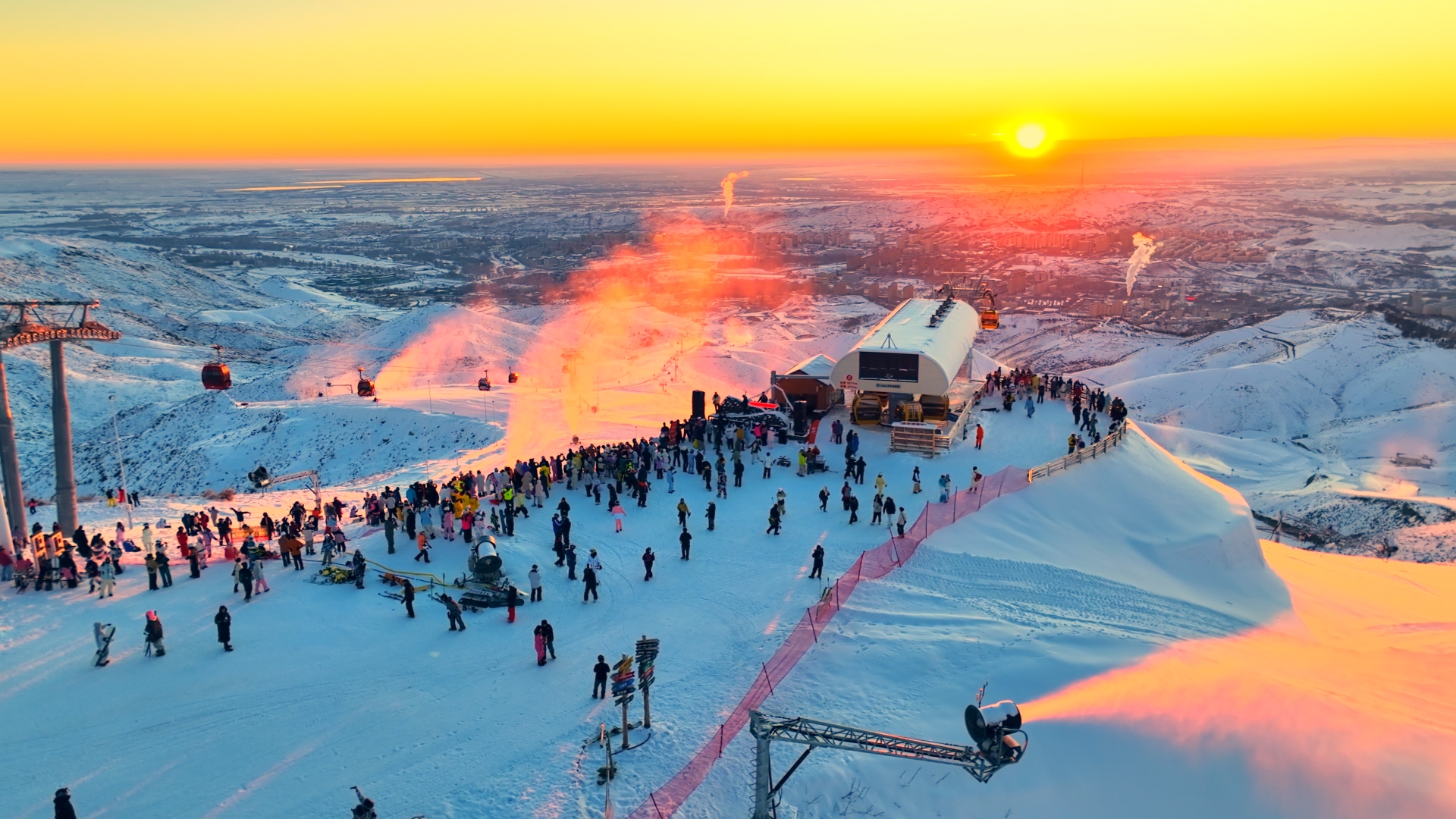
The idea of skiing in China for foreigners used to feel like an expedition. Not anymore. China’s ski industry has grown fast, the major resorts cater to visitors who do not speak Chinese, and the practical hurdles — visas, payments, getting around — are far smaller than most first-timers expect. This guide walks through everything a foreign skier actually needs: the visa, the apps that quietly run daily life here, how to pay, and how to pick a region where the language barrier will not get in the way of a good week on snow. Start with the big picture in our China Skiing Guide, then come back here for the on-the-ground details.
Visas: Get This Right First
Most foreign visitors need a standard Chinese tourist (L) visa from a Chinese embassy or consulate before arrival. Apply with your passport, a basic itinerary, and proof of accommodation; processing usually takes a week or two. There is no ski-specific visa — a tourist visa covers leisure skiing. A handful of border areas near sensitive regions may require an extra permit, but the mainstream resorts around Beijing, Harbin and the main Xinjiang hubs do not. The key timing point is that the China ski season peaks in January and February, which also overlaps with the Spring Festival holiday, so apply early and avoid the rush. Keep a printed copy of your visa and hotel bookings in your bag; you may be asked for them at odd moments, and a paper backup saves a stressful conversation at a checkpoint or hotel desk.
The Apps You Actually Need
China runs on a handful of apps that barely exist outside it, and installing them before you fly saves enormous friction. WeChat is the all-purpose messenger, payment tool and booking hub — set it up with a linked card before you leave. Alipay now works for many foreign cards and handles payments, ride-hailing and even some metro passes. For maps, Google Maps is unreliable on the mainland; use Baidu Maps or Amap (Gaode), ideally with a translation layer. For trains, the 12306 app or a booking agent handles tickets. None of these are strictly required to ski, but together they remove the daily small frustrations that wear a traveller down. The best ski resorts in China guide notes which hills have the smoothest app-based booking.
Paying Without Cash
China is close to a cashless society, especially outside the biggest tourist hotels. Cards are accepted at international-chain hotels and some resort tills, but mobile payment dominates. Alipay’s tourist-friendly setup lets you bind a foreign card and scan to pay at nearly any shop, canteen or taxi. Carry a little cash as a fallback for tiny vendors and remote base lodges, but assume QR is king. Tell your bank you are travelling so your card is not frozen, and consider a multi-currency travel card as a backup. At the resort itself, lift tickets and rentals can usually be paid by card or QR, and the Harbin skiing scene in particular is used to international visitors, so foreign cards are more readily accepted there than in remote villages.
Language: How Much Do You Need?
Less than you fear. At the flagship resorts — the big Beijing hills, Yabuli, and the Tianshan flagships around Urumqi — you will find English signage, English-speaking rental staff, and often dedicated foreign-visitor desks. Off the beaten path, especially in the Altai, English thins out fast. A phone translator handles menus, directions and basic questions; learning a dozen key phrases (hello, thank you, toilet, lift, ticket) goes a long way and is warmly received. The single most useful habit is to screenshot your destination’s name in Chinese characters so a driver or local can read it. For regional picking advice, the Beijing ski resorts guide is the gentlest, most English-ready place to start.
Choosing a Region as a Non-Chinese Speaker
If this is your first China ski trip and you do not speak the language, lean toward the most developed hills. Beijing’s resorts offer the easiest logistics: international airport, English signage, and short transfers. The northeast around Harbin and Yabuli is well used to visitors and has the Ice Festival as a bonus. Xinjiang’s Tianshan cluster (Urumqi-area) is the most foreigner-friendly part of the west; the Altai is spectacular but more of an adventure. Whatever you choose, book lodging and transfers in advance so you are not negotiating in Chinese on arrival. The China Skiing Guide ranks regions by ease as well as snow, which is the fastest way to match a region to your comfort level before you book a single flight.
Getting Around
High-speed rail is the quiet star of Chinese travel: fast, punctual, and comfortable, it connects Beijing to the northeast and reaches deep into the interior. For the last mile to a resort, pre-booked transfers or ride-hailing apps are simplest; at smaller hills a hotel shuttle may be your only option, so confirm it when you book. Domestic flights fill the long gaps — Beijing to Harbin, or to Urumqi and on to Altay — and are cheap by Western standards. Give yourself buffer time between a flight and a ski day; weather and distance in winter are unpredictable, and a delayed connection is easier to absorb with a spare afternoon built into the plan rather than a tight same-day transfer.
Rentals, Lessons and English Instruction
Gear rental is available at every major resort and is inexpensive. Quality at the flagships is good; at smaller hills it is basic but serviceable, so bring your own helmet if fit matters. English ski lessons exist at the bigger hills but are limited, so book ahead through the resort or a tour operator rather than hoping to find one on the day. If you want a guaranteed English-speaking guide, arrange it before you fly — this is the one thing worth organising remotely rather than on the ground, because the best English instructors are booked solid on holiday weeks and you do not want to discover that on a Monday morning at the ticket window when the mountain is at its best.
Health, Safety and Etiquette
Resorts are well run and patrolled; the main risks are weather, altitude at the higher western hills, and simply being unprepared for hard cold. Dress for minus-twenty if you are in the northeast in January, keep batteries warm, and hydrate. On the slopes, Chinese piste etiquette is relaxed but courteous — pass on the right, watch for less experienced skiers, and yield to the downhill skier. A little patience and a smile cover a lot of linguistic gaps, and resort staff are generally delighted to help a foreign guest once they understand what you need. Travel insurance that covers winter sport is wise, as is knowing the location of the nearest clinic before you need it, because remote resorts can be a long drive from a full hospital.
What to Pack That You Would Not Need in Europe
The cold in the northeast and Xinjiang is drier and harder than the maritime cold of the Alps, so pack real extreme-weather kit: mittens rather than gloves, an insulated jacket, and chemical hand warmers. Keep a spare phone battery inside your jacket, because cold kills charge fast. A VPN set up before you travel lets you reach your usual email and maps, though the Chinese apps above will serve you better day to day. None of this is exotic, but visitors consistently underestimate the cold and the app dependence, and those two surprises are the ones worth preparing for in advance so they do not spoil the first day on the mountain.
Frequently Asked Questions
Do I need a special visa to ski in China?
No. A standard tourist (L) visa covers leisure skiing. Only a few remote border areas need an extra permit, not the mainstream resorts.
Can I get by without speaking Chinese?
At the major resorts, yes. English signage and staff are common at flagships; a translation app handles the rest.
Which apps should I install before flying?
WeChat, Alipay (with a foreign card), and a Chinese map app like Amap or Baidu Maps. They cover messaging, payment and navigation.
Is it easy to pay as a foreigner?
Alipay accepts many foreign cards for QR payments; cards work at big hotels and some resorts. Carry a little cash as backup.
Where should a first-timer ski?
Beijing’s hills for ease, or Harbin/Yabuli for snow plus the Ice Festival. The best resorts guide ranks them.
Are English ski lessons available?
Yes at the bigger resorts, but limited. Book ahead through the resort or a tour operator before you arrive.