

When you ski in China, it helps to understand how mountain rescue and emergency response actually work before you ever need it. Inside the ropes, resorts run professional ski patrols and first-aid stations, and most routine injuries are handled quickly. The picture changes sharply the moment you step beyond the marked boundary. Helicopter rescue is rare and is not automatically covered by standard travel insurance, ground evacuation from remote regions can take hours, and the bill for a rescue often lands on the skier. This guide walks through what to expect, what it costs, and the practical steps to arrange before you head off-piste — with a regional focus on Xinjiang, where the terrain is vast and help can be far away.
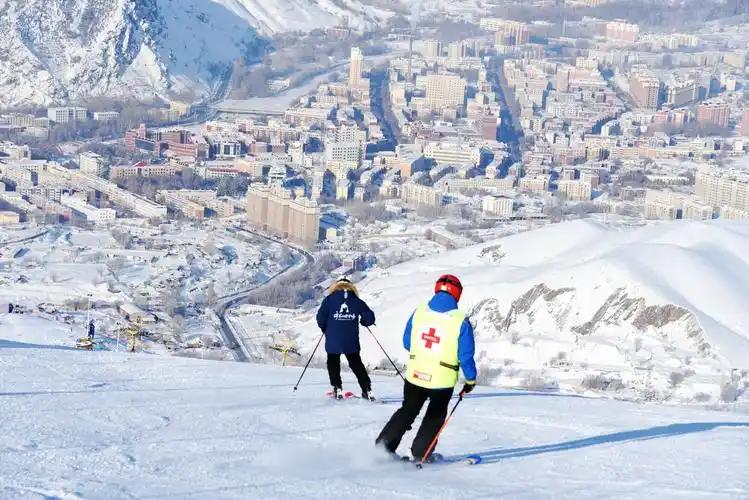
In-Bounds Patrol and First Aid
Every legitimate resort in China operates a ski patrol and at least one first-aid post. Patrollers are trained in toboggan evacuation, fracture immobilisation, and basic life support, and they monitor the marked runs throughout the day. If you are injured inside the boundary, stay put, signal for help, and a patroller will usually reach you within minutes. Resort clinics handle sprains, lacerations, and mild altitude sickness on the spot, and they can arrange ambulance transfer to a city hospital for anything serious.
For foreign visitors, the key habit is to know where the nearest first-aid station is at the start of each day. Our travel safety in China primer lists what to carry and which numbers to dial. Save the resort’s emergency line in your phone before you load the first lift.
Patrol standards vary by resort size. The largest destinations employ dozens of trained patrollers and run daily sweep checks before closing, while smaller hills may have a leaner team. Either way, the expectation is that you ski within the marked area; patrol responsibility is explicitly bounded by the resort boundary, and venturing beyond it is treated as a personal decision with personal consequences.
The Out-of-Bounds Reality
Beyond the ropes, the safety net disappears. Chinese ski areas sit in genuine mountain terrain — in Xinjiang, that means deep valleys, cliff bands, and remote forest with no cell coverage. There is no guarantee of a marked exit, no patrol, and frequently no one who knows you are out there. Avalanche terrain is real, and backcountry users are responsible for their own navigation, snow assessment, and self-rescue.
This is not a reason to avoid off-piste entirely, but it is a reason to prepare. A solid backcountry primer for Xinjiang will tell you which zones are accessible, where the known hazards are, and what gear you must carry. Never ski closed or roped terrain assuming a patrol will come looking — they may not.
Helicopter Rescue: Rare and Not Free
Many visitors assume that, as in parts of the Alps, a helicopter will whisk them off the mountain if something goes wrong. In China that is the exception, not the rule. Helicopter evacuation exists but is concentrated near a handful of major resorts and is tightly controlled. It is almost never included by default in travel or health insurance, and when it is used the cost can run into tens of thousands of yuan, billed to the patient.
If helicopter cover matters to you, buy a specialised adventure or mountain-rescue policy before you travel and read the fine print about China coverage. Do not assume your standard card or policy applies. Ground rescue is far more common, and it comes with its own limitations.
Ground Evacuation from Remote Areas
In regions like Xinjiang, a ground evacuation from a remote bowl can take many hours. Rescue teams may need to drive a tracked vehicle to the trailhead, then sled or carry the injured person out on foot or by snowmobile. Weather, darkness, and road conditions all slow the response. The practical implication is sobering: the faster you can self-evacuate or stabilise, the better your outcome.
This is why off-piste freeride in Xinjiang demands real backcountry competence, not just strong skiing. A partner, a plan, and the right equipment turn a scary situation into a manageable one.
Who Pays, and How to Prepare
Cost responsibility in China generally falls on the individual unless negligence by the resort is proven. To protect yourself before any off-piste day:
- Buy dedicated rescue insurance that explicitly covers China and helicopter evacuation.
- Carry a beacon, probe, and shovel for any avalanche terrain, plus a fully charged phone and a backup power bank.
- Share your route and return time with someone who will raise the alarm if you are late.
- Know the local emergency numbers and the resort clinic location.
- Ski with a partner — solo backcountry travel is the single biggest risk multiplier.
Regional awareness matters too. The Xinjiang ski safety guide details altitude effects, cold-injury prevention, and the distances involved at specific resorts.
Xinjiang-Specific Considerations
Xinjiang’s resorts — from the Altai mountains in the north to the Tianshan ranges further south — combine high altitude, extreme cold, and big, sparsely populated terrain. Rescue logistics are longer than at city resorts, and hospitals with trauma capability can be an hour or more from the mountain. For the regional picture, including patrol standards and how to contact help, see our dedicated Xinjiang ski safety and rescue article.
Cold is its own hazard here. Temperatures can drop far below freezing, and a delayed rescue in that environment becomes a cold-injury emergency on top of the original injury. Dress for immobility, not just for movement, and carry chemical hand warmers if you plan to be remote.
The broader context for planning a trip is in our skiing in China guide, which ties together resort choice, season, and risk. Read it alongside this piece and you will arrive informed rather than surprised.
Frequently Asked Questions
Is ski patrol included in my lift ticket?
Inside the marked boundary, yes — patrol and first aid are part of resort operation and covered by your ticket. Outside the ropes, no. Any rescue there is a separate, billable event and may involve search teams, vehicles, or aircraft.
Will my travel insurance cover a helicopter rescue?
Usually not by default. Standard policies often exclude mountain or “hazardous” activities and rarely include helicopter evacuation in China. You need a specialist adventure policy that names China and helicopter cover explicitly.
How long does a ground evacuation take in Xinjiang?
It varies with location, weather, and darkness, but remote-area evacuations commonly take several hours from alert to hospital. Plan for self-sufficiency and a long wait rather than a fast extraction.
What should I carry for off-piste safety?
At minimum: avalanche transceiver, probe, and shovel for any steep snow; a charged phone and power bank; a whistle; a small first-aid kit; and extra layers. A partner and a shared route plan are non-negotiable.
Are Xinjiang resorts safe for intermediate skiers?
In-bounds, yes, with normal precautions around altitude and cold. The risk rises sharply off-piste, where terrain and rescue distance demand real backcountry skill. Stay in bounds until you have the training and gear.
Who do I call in an emergency?
Dial 120 for medical help and 110 for police; at a resort, call the patrol line posted at the base. Save these before you ski, and tell a friend your plan so someone raises the alarm if you are overdue.