

Yumin is a border county, not a ski town, and winter suits it. Snow lies on the Balruk grasslands, birch woods turn silver at dusk, and the road west reaches the Little Poplar post — a border landmark with a red-tourism story. This page is for culturally curious travellers and repeat Xinjiang visitors who have already done the lift queues. It focuses on steppe scenery, Kazakh hospitality and the practicalities of the G219 corridor; for actual slope days, pair it with a Tacheng or Karamay base.
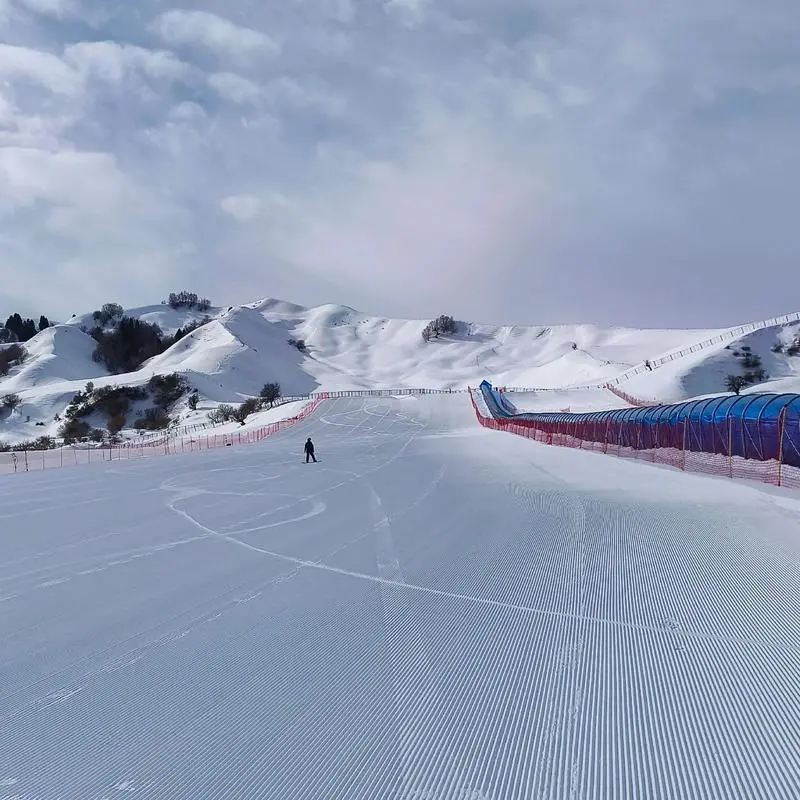
Why Yumin Is a Steppe Border Stop
Yumin brands itself “flowerful Yumin, prosperous folk,” but its winter is just as striking as its famous spring almond blossoms. The Balruk range stays snow-capped for half the year, the grasslands turn into vast silver carpets, and the cold, clear air makes for brilliant photography. Crucially, Yumin sits inside the Tacheng winter network, so real alpine skiing is never far away — see the Tacheng ski resorts guide for the nearest slopes, and the Karamay ski resorts guide for another easy day trip. It is the kind of place where a single clear morning can redefine what a Xinjiang winter means to you.
Balruk Mountain: The Hero Range
Balruk Scenic Area is a 4A-level destination covering about 33 square kilometres, with the main peak Kongtapukan rising to 3,252 metres. Locals call it the “hero mountain” because the range was leased away and returned to China in 1894 after a decade of local resistance — a story woven into the region’s identity and still told at the mountain’s foot.
- Snow birch forests: The northern slopes host silver-trunked birch groves that, dusted with snow, look like strings of a giant instrument against the blue sky.
- Wildlife tracks: With 90-plus wild animal species and 1,000-plus plants, the quiet winter woods hide fox, rabbit, and raptor prints worth following with a camera.
- Panoramic drives: The Balruk tourism road runs southwest from the county seat; pull over at viewpoints for sweeping white ridgelines and, on clear days, a glimpse of Kazakhstan’s Alakol Lake to the west.
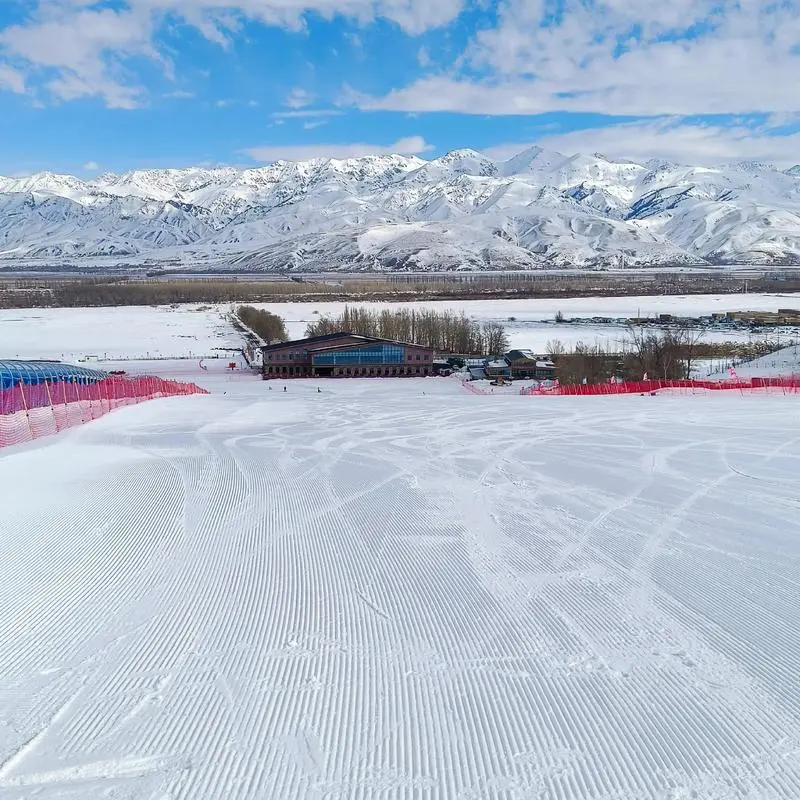
The Little Poplar Post: Red Tourism on the Border
The Little Poplar Post (Xiaobaiyang) was established in 1962 and renamed in 2002. Its story — a soldier planting poplar saplings sent by his mother, only one surviving, inspiring the song “Little Poplar” — made it a national symbol of border defence. Today the preserved barracks and watchtower, plus a digital military-culture experience hall, draw over 50,000 study-tour visitors a year. It is a moving, family-appropriate stop that contrasts beautifully with the surrounding snow, and a reminder of why this quiet county matters on the map.
Grasslands, Rock Art & Kazakh Life
Yumin holds two remarkable grasslands. The Tuerjialiao grassland (“noble pasture”) spreads across 100,000 mu of rolling hills beside the Tast River valley, green in spring and a silver expanse in winter. The Akeqiaoke grassland sits at 2,169 metres with 2.8 million mu of seasonal colour. The Bardak rock art cluster, 23 km southwest of the county, carries 300-plus petroglyphs dated 4,000 to 10,000 years old — a window into ancient pastoral life and one of Xinjiang’s most accessible prehistoric sites.
Winter is also when Kazakh culture comes indoors: warm homestays, horse-riding demonstrations, and hearty meals of hand-grabbed mutton and milk tea. The world’s largest wild almond forest (24,000 mu) rests under snow, promising a spectacular bloom when spring returns, while the Tast River valley offers gentle ice-walk routes for confident hikers.
Winter Activities & The G219 Route
Yumin is building an all-season system — “spring flowers, summer cool, autumn colours, winter snow.” In the cold months expect snow photography, grassland ice walks, border-road scenic drives, and red-study tours. The county lies directly on the G219 national highway, making it an easy add-on to a Tacheng or Karamay road trip. If you want to ski, the Tacheng and Karamay fields are within comfortable driving range, and our best-time-to-ski planning helps align your slope days with Yumin’s sightseeing window.
Best Time & Travel Tips
December through February is prime, with January–February best for crisp snow and clear mountain light. Pack serious cold-weather gear, carry a border-ID awareness (the area is near the frontier, so keep documents handy), and consider a local driver for icy mountain roads. One to two days covers the mountain, the post, and a grassland or rock-art stop; add a third if you include a skiing day in Tacheng or Karamay. The county’s annual visitor numbers have grown strongly in recent years, a sign that this once-quiet borderland is rapidly joining Xinjiang’s winter map.
Where to Stay, Eat & Border Tips
Yumin town offers the most lodging and dining choice, with Kazakh guesthouses on the outskirts giving the most atmospheric base. Local food centres on hand-grabbed mutton, naan bread, milk tea, and dairy treats like kurt (dried salty cheese balls) that fuel a cold day. Because the county borders Kazakhstan, always carry your ID and, if heading toward frontier posts, check the latest access rules — the Little Poplar Post itself is open to visitors but lies in a controlled zone. A local driver solves both the language gap and icy-road caution, and lets you chase the best available light on Balruk’s western slopes.
Time your visit with one of Yumin’s seasonal events if you can. The county has built a year-round calendar — spring’s wild-almond blossom festival, summer grassland concerts, autumn colour, and winter snow activities — so even in the cold months there is often a local gather, night market, or study-tour programme running. Photographers should aim for the hour after sunrise on the Tuerjialiao grassland, when low light turns the snow gold, and for the blue-hour silhouette of Balruk’s ridgeline against a deepening sky. Pair a morning on the mountain with an afternoon at the Little Poplar Post, and you capture both the quiet beauty and the living history that make Yumin unlike any other stop on the G219.
What is the Little Poplar border post like in winter?
The Little Poplar post is a historic border landmark, not a busy ski attraction, and winter visits are quiet. Expect a short outdoor walk, interpretive displays and strong wind off the steppe. Foreign visitors should carry a passport and check access rules locally, since border-site policies change. Tacheng ski bases nearby help with the wider itinerary.
Go in the morning for better light and more reliable transport, and ask your Yumin hotel whether the site is open that week. Photography rules at border landmarks can be stricter than at scenic parks; ask before raising a camera at facilities. Combine it with the drive through the grasslands rather than treating it as a standalone stop.
How do I see Balruk Mountain snow without a car?
Balruk’s winter beauty is the grassland and birch edge, not a lift-served descent, so the useful approach is a local driver or a small group tour. Public transport reaches the county town, but the scenic stretches are spread out and cold. Toli and Tacheng winter base gives an alternative starting point.
For solo travellers, hiring a driver for a half-day is cheaper than trying to coordinate buses in low temperatures, and gives you a warm vehicle between viewpoints. Agree the route, the waiting time and the return point before you leave. If you want snow under your own feet, carry snowshoes and walk the tracked paths rather than striking out across open steppe.
What should I eat and where should I stay in Yumin?
Yumin’s strength is ordinary, generous local food: mutton, milk tea, naan and home-style dishes in family restaurants rather than resort cafeterias. Foreigners usually find the tea and bread easiest starting points, and hosts are used to visitors with limited Chinese. Kazakh culture for visitors explains the customs behind the hospitality.
Stay in the county town for heating and hot water; guesthouses in the grassland are atmospheric but inconsistent in winter. Ask about registration for foreign guests before you book, since smaller places may need extra paperwork. Families should request a room away from the lobby — rural hotels are noisy early. Bring snacks for the road because the G219 stretch between stops has few open cafés in winter.
Is Yumin a good base for skiing or only for sightseeing?
Yumin is a sightseeing base. For skiing, use it as a quiet overnight stop on a wider northern Xinjiang loop and drive to a proper resort when you want lift-served terrain. That division keeps expectations right: you get steppe, border history and hospitality here, and groomed runs elsewhere. Ski-season timing helps you choose the resort days.
A sensible itinerary gives Yumin one or two nights between a Tacheng or Karamay ski stop and the road north. Winter daylight is short, so plan the drive in the morning and the grassland walk at midday. Repeat visitors often say the unplanned hours — tea in a yurt, a sunset over birch stems — are what they remember, so leave space in the schedule for them.
Frequently Asked Questions
Does Yumin have a ski resort?
Yumin itself is a snow-landscape and culture destination rather than a cable-car ski town. The nearest real skiing is in Tacheng and Karamay, both linked above, usually under a two-hour drive.
What is the Little Poplar Post?
It is a historic border defence post from 1962, immortalised by the song “Little Poplar,” now a red-tourism and study-tour site with preserved barracks and a digital museum.
When is the best time to visit Yumin in winter?
Late December to February offers the deepest snow and clearest light for Balruk Mountain and grassland photography.
Is Yumin on a major travel route?
Yes, it sits on the G219 national highway, making it a natural stop on a Tacheng–Karamay winter road trip through northern Xinjiang.
What makes Balruk Mountain special?
It blends alpine snow, birch forests, rare plants, and 4,000–10,000-year-old rock art, while carrying the “hero mountain” story of its 1894 return to China.
How many days should I plan?
One to two days covers the mountain, the post, and a grassland or rock-art stop; add a third if you include a skiing day in Tacheng or Karamay.
Do I need a permit to visit the Little Poplar border post?
Rules at border landmarks change, and some areas require advance permission or a local escort. Ask your hotel or operator a day ahead, carry your passport, and accept that photography restrictions may apply. A guide familiar with the county is the simplest way to avoid a wasted drive.
Is Yumin suitable for a family winter trip?
It works well for families who want scenery and culture rather than a ski school. The days are short and the wind can be sharp, so plan one outdoor block in the middle of the day and warm evenings. Younger children will enjoy the yurt visits more than a long grassland drive.