

Planning your Xinjiang ski food budget is one of the smartest moves you can make before a trip to the far west of China. Skiing here is famously good value compared with Europe or Japan, but food costs add up quickly once you are on the mountain every day. The good news is that Xinjiang’s food culture is built around hearty, affordable, and filling meals. With a little planning you can eat like a local, stay energized for the slopes, and keep your wallet happy. This guide walks through realistic daily food costs, where to save, and how to enjoy the region’s incredible cuisine without overspending.

What a Realistic Daily Food Budget Looks Like
Most visiting skiers spend far less on food in Xinjiang than they expect. A typical day can be kept under a modest amount if you mix local eateries with the occasional resort meal. Breakfast at a local noodle shop often costs just a few dollars, lunch on the mountain is the one splurge to watch, and dinner in town is where Xinjiang shines with generous portions at low prices. If you want the full picture of spending, our breakdown of the total cost of a Xinjiang ski trip is a good companion read.
Breakfast: Cheap and Filling
Start with nang (flatbread), boiled eggs, and milk tea from a street vendor for next to nothing. Many hotels also offer a simple Chinese or Western buffet included in the room rate, which is the best budget hack of all. Grab extra bread for a mid-morning snack on the lift.
Lunch: The Mountain Premium
On-slope restaurants charge a premium, as they do everywhere. A single resort meal can equal two town dinners. The easy fix is a packed lunch: buy supplies the night before and store them at your lodge. Our budget tips for Xinjiang ski trips cover this and other small savings that compound over a week.
Where to Eat for Less in Resort Towns
Each resort hub, from Urumqi’s suburbs to Altay and the Hemu area, has a ring of local restaurants a short walk or cheap taxi from the lifts. These are where you eat well for a fraction of resort prices. Look for laghman (hand-pulled noodles), polo (rice with carrot and lamb), and samsa (baked meat pastries). A filling plate rarely costs more than a coffee back home.
- Noodle houses open early and serve huge bowls of beef or mutton broth noodles.
- BBQ skewer stalls (kawap) are perfect for a cheap, social dinner.
- Uyghur bakeries sell fresh nang and sweet pastries by weight.
- Hotpot joints let a group share a big meal affordably.
For a deeper dive into regional dishes and where to find them, see our Xinjiang ski local food guide. It maps the must-try meals near each major resort.
Self-Catering and Grocery Runs
If you have access to a kitchen, either in an apartment rental or hostel, self-catering slashes costs dramatically. Supermarkets and wet markets stock fruit, nuts, dried apricots, cheese, bread, and instant noodles. Buying a bag of local walnuts or raisins gives you lift-side snacks for days. Staying in a shared room? Our list of budget hostels near the resorts points to places with guest kitchens.
What to Buy at the Market
- Dried fruit and nuts – calorie-dense, cheap, and easy to carry in a jacket pocket.
- Nang bread – keeps for days and pairs with anything.
- Yogurt drinks – a probiotic boost after a long ski day.
- Instant oat or noodle cups – for a quick lodge lunch.
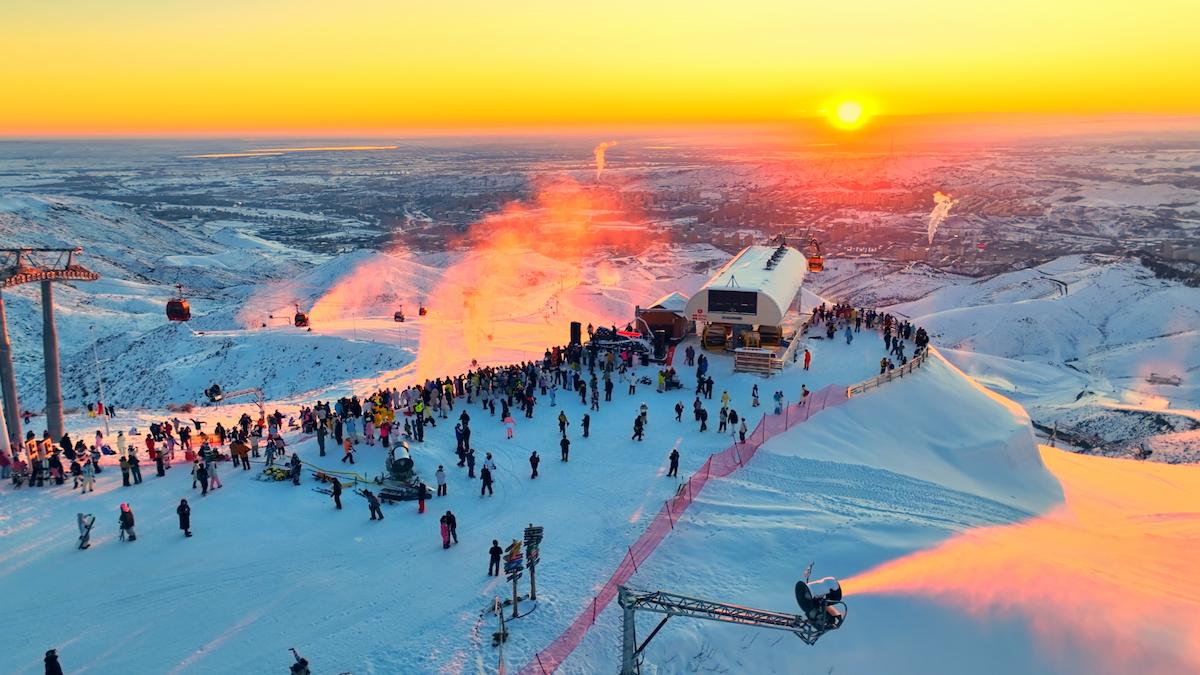
Eating on the Mountain Without Overspending
You do not have to avoid resort food entirely. The trick is to treat it as an occasional reward rather than a daily habit. Share a big plate with a friend, or time your visit to a cheaper set-menu window. Our notes on on-mountain dining at Xinjiang resorts explain which resorts have the best-value cafeterias and which to skip.
Hydration and Staying Fueled at Altitude
Xinjiang resorts sit high, and altitude quietly burns through your energy and water. Cheap as it is, sugary soda is a poor fuel source up here. Carry a refillable bottle; most lodges and some lifts have hot-water stations. A thermos of sweet milk tea is both culturally authentic and a brilliant cold-weather fuel. Eating regularly, even a small snack every couple of hours, prevents the bonk that ruins an afternoon.
Sample Budget Food Day
Here is a realistic low-cost day for one skier: a street breakfast of nang and tea, a packed lodge lunch of bread, cheese, and fruit, a market snack mid-afternoon, and a shared hotpot or noodle dinner in town. Add a coffee only if you must. This easily beats the cost of two resort lunches while tasting far better.
Drinks, Coffee, and Warming Up Cheaply
Staying warm and hydrated need not be costly. Free hot-water stations at lodges let you refill a thermos with tea all day. Local milk tea from a street stall is both cheap and warming, and it is a genuine part of the culture rather than a tourist markup. Western-style coffee shops exist near bigger resorts but charge imported prices, so treat them as an occasional treat rather than a daily habit. For a modest daily budget, the local tea culture is your best friend, and a flask in your pack means you never buy an overpriced bottle on the slope.
Eating With a Group to Save More
Xinjiang meals are built for sharing. A group of four can order several large plates and split the bill for far less per person than solo dining. Hotpot is the classic group saver: one broth, shared meats and vegetables, and endless carbs to mop it up. This social style is also the most fun way to experience the food. Ask your lodge or look into group deals at Xinjiang resorts, which sometimes bundle dinner with lodging at a discount that beats paying separately every night.
Street Food Safety on a Budget
Cheap does not have to mean risky. Stick to busy stalls with high turnover, where food is cooked fresh in front of you and eaten hot. Mutant skewers, freshly baked samsa, and made-to-order noodles are all low-risk and delicious. Avoid pre-cut fruit that has sat out, and wash any raw produce with bottled water. With these simple habits, eating local is safe, cheap, and far more memorable than resort food.
Frequently Asked Questions
Is food in Xinjiang cheap for foreign tourists?
Yes. Local restaurants are very affordable, and portions are generous. Resort restaurants cost more, but town food is among the best-value skiing cuisine anywhere in the world.
Can I find vegetarian food on a ski budget?
Absolutely. Noodle and dumpling shops offer vegetable versions, and flatbread, eggs, dairy, and dried fruit are widely available. Uyghur and Han cuisines both have meat-free staples if you ask.
Is tap water safe to drink?
Locals boil water routinely, and you should too. Stick to bottled or boiled water, and use hot-water stations for tea and refill convenience rather than drinking from the tap.
How much should I budget per day for food?
A budget-minded skier eating local food and packing lunches can keep it modest, while those eating on the mountain daily will spend noticeably more. Mix the two approaches for the best value.
Are there supermarkets near the resorts?
Yes, larger towns near Urumqi and Altay have supermarkets and markets. Smaller base areas have convenience shops and bakeries, so stock up during a town visit rather than relying on the mountain.