

Nobody plans to end a powder day in a clinic, but ski injuries happen even to careful riders. If you are traveling to northwest China for the famous dry snow of the Altay Mountains, knowing exactly where to get treated — and how the local medical system works — can turn a stressful accident into a manageable detour. This guide covers resort first-aid rooms, the best hospitals in Urumqi and Altay, typical costs, pharmacy tips, and how to handle insurance paperwork so you can get reimbursed when you are back home. If you are still planning your trip, start with our complete Xinjiang skiing guide for the full picture of the region.

How Ski Injury Care Works in Xinjiang
Medical care for skiers in Xinjiang follows a three-tier structure. Understanding it helps you decide where to go and how urgently.
- On-mountain ski patrol: Every major resort operates a patrol team that will reach injured skiers by snowmobile or rescue sled. They stabilize fractures, stop bleeding, and transport you off the hill. This service is free at all large resorts.
- Base-area clinics: Resorts such as Jiangjunshan (General’s Mountain) and Silk Road Resort have small medical rooms at the base that handle sprains, cuts, dislocations, and initial X-ray referrals.
- City hospitals: Anything beyond a simple sprain — suspected fractures, head impacts, knee ligament damage — gets referred to a hospital in Altay City, Burqin, or Urumqi.
The emergency number in China is 120 for an ambulance. Resort staff will usually call on your behalf, but save the number in your phone anyway, especially if you plan to explore terrain away from patrolled runs.
Resort Medical Rooms: What They Can and Cannot Do
Base clinics at Xinjiang resorts are best thought of as advanced first-aid stations. They are staffed during lift hours, stock splints, bandages, painkillers, and oxygen, and can immobilize a limb properly before onward transport. What they generally cannot do is imaging: there is no MRI on the mountain, and only a few resorts have basic X-ray machines. If a clinic doctor suspects a fracture or ligament tear, you will be sent to a city hospital, usually by resort shuttle or taxi rather than ambulance if the injury is stable.
Jiangjunshan Ski Resort (Altay City)
Jiangjunshan has the most convenient medical setup in the region for one simple reason: the resort sits directly above Altay City. The base clinic handles first response, and the Altay Regional People’s Hospital is less than fifteen minutes away by car. Skiers who ride here — one of the top Xinjiang ski resorts overall — have the shortest injury-to-hospital time in the province.
Silk Road International Resort (Urumqi)
Silk Road sits about forty minutes from downtown Urumqi. Its base medical room is well equipped by resort standards, and the proximity to Urumqi’s large tertiary hospitals means serious injuries reach advanced imaging and orthopedic surgeons faster than anywhere else in Xinjiang.
Koktokay (Cocoa Tuohai) and Hemu
These more remote areas have on-site first aid, but the nearest full hospitals are one to three hours away depending on road conditions. If you have a history of knee problems or you ski aggressively, factor this into your resort choice.
Best Hospitals for Injured Skiers
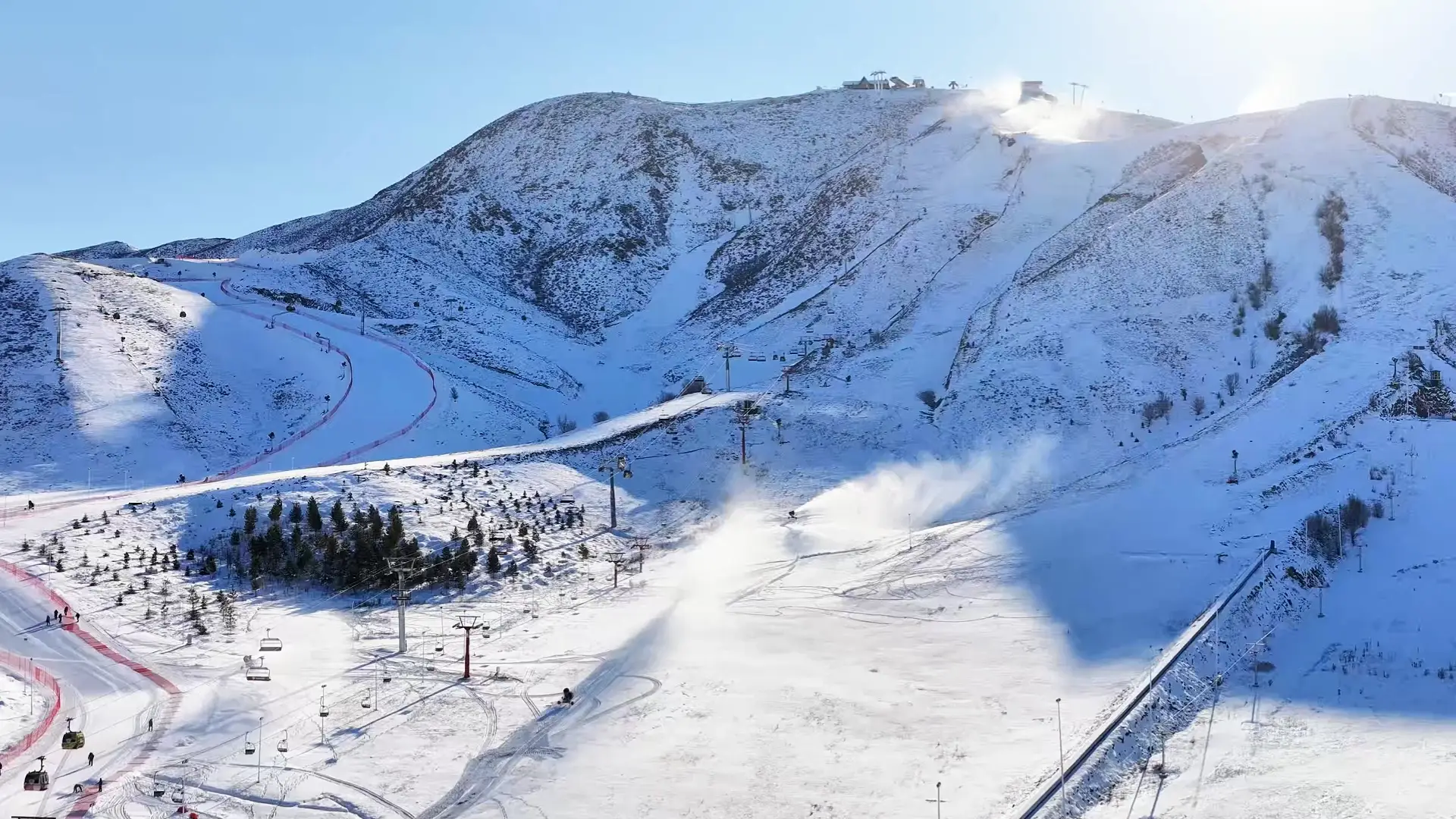
In Urumqi
- People’s Hospital of Xinjiang Uygur Autonomous Region: A major tertiary hospital with a full orthopedics department, MRI, and CT. This is the default recommendation for serious knee, shoulder, and spinal injuries.
- First Affiliated Hospital of Xinjiang Medical University: The region’s leading teaching hospital, strong in trauma surgery and sports injuries. Some doctors speak basic English, and the international patient desk can arrange translation.
In Altay Prefecture
- Altay Regional People’s Hospital: The main facility serving Jiangjunshan and the surrounding ski areas. It has X-ray, CT, and an orthopedics ward that treats ski fractures all winter — the staff see more ski injuries than almost any hospital in China.
- Burqin County Hospital: The closest option for injuries around Kanas and Hemu. Suitable for stabilization and imaging; complex surgery is usually referred to Altay or Urumqi.
For anything requiring surgery that is not urgent, many foreign visitors choose to be stabilized locally and fly home for the operation. Doctors in Xinjiang are used to this request and will provide imaging discs and written reports to take with you.
Costs: What You Will Actually Pay
Chinese public hospitals are inexpensive by Western standards, and you pay upfront at a cashier window before each step. Typical out-of-pocket prices:
- Registration fee: 10–50 RMB (about 1.5–7 USD)
- X-ray: 100–200 RMB
- CT scan: 300–600 RMB
- MRI: 500–900 RMB
- Cast or splint for a simple fracture: 300–800 RMB
- Overnight ward stay: 100–400 RMB per night before treatment costs
Even a fairly involved visit with imaging and a cast usually totals under 2,000 RMB. Payment is by WeChat Pay, Alipay, or cash; foreign credit cards often do not work at hospital cashiers, so keep a funded mobile wallet. These figures are one more reason we tell every reader to sort out coverage before flying — see our ski travel insurance guide for Xinjiang for policies that actually cover off-piste riding.
Insurance Paperwork: Do This Before You Leave the Hospital
Reimbursement claims fail most often because travelers leave China without the right documents. Before you walk out of any clinic or hospital, collect:
- Fapiao (official receipts) for every payment — the red-stamped tax invoices, not just the register slips.
- A diagnosis certificate (zhenduan zhengming) signed and stamped by the treating doctor.
- Imaging files and reports — ask for the CD or a digital copy of X-rays, CT, or MRI.
- An itemized cost list printed at the cashier window.
Hospitals will issue all of these on request, but getting them mailed to you after you have left the country is close to impossible, so insist on same-day copies.
Pharmacies and Self-Care for Minor Injuries
For bruises, mild sprains, and sore muscles, pharmacies (yaodian) in Altay City, Burqin, and Urumqi are everywhere and cheap. Ibuprofen, compression bandages, kinesiology tape, and instant cold packs are all available without prescription. Staff rarely speak English, so show a translation app or point at what you need. Beginners, who statistically take the most falls in their first three days, may also want to read our tips on skiing in Xinjiang for beginners before their first lesson — good technique on day one prevents most clinic visits.
Reducing Your Risk in the First Place
Xinjiang’s cold, dry climate and high-altitude resorts add two risk factors many visitors underestimate: stiff muscles and mild altitude fatigue, both of which slow reaction time. Warm up properly, hydrate more than usual, and take the first two runs easy. Our companion piece on altitude tips for Xinjiang skiing explains how elevation affects your body and how to acclimatize so your legs stay sharp all week.
Frequently Asked Questions
Is ski patrol rescue free in Xinjiang?
Yes. At all major patrolled resorts, on-mountain rescue and transport to the base clinic are free of charge. Ambulance transfers to city hospitals cost roughly 200–600 RMB depending on distance, and helicopter rescue does not exist as a standard service, which is another reason to stay within resort boundaries.
Do doctors in Xinjiang speak English?
At large Urumqi hospitals, some senior doctors speak functional English and translation help can be arranged. In Altay and county hospitals, assume no English and rely on a translation app. Written communication through a phone screen works well for describing symptoms.
Can I use my foreign health insurance directly at Chinese hospitals?
Almost never. Chinese public hospitals require upfront payment, and you claim reimbursement from your insurer afterward using the fapiao, diagnosis certificate, and itemized bills described above. A few private clinics in Urumqi offer direct billing with select international insurers, but do not count on it.
What is the most common ski injury treated in Xinjiang?
Knee ligament sprains and wrist fractures top the list, the same as at resorts worldwide. Snowboarders see more wrist and shoulder injuries; skiers see more knee problems. Wrist guards and properly adjusted bindings prevent a large share of both.
Should I cut my trip short after a minor injury?
For a mild sprain, many skiers rest two or three days and finish their trip on easier terrain. Ask the clinic doctor directly, get the diagnosis in writing, and let pain be your guide. For any head impact, sit out at least the rest of the day and seek assessment even if you feel fine.