

Plenty of ski trips are booked by one enthusiastic skier on behalf of a group where at least one person has no intention of clipping into a binding. A partner who would rather photograph the mountains than descend them. Parents who came for the scenery. A friend who tried it once, hated the cold, and agreed to come anyway. Handled badly, this produces the classic mixed-group failure: the skier resents the compromises, the non-skier spends four days in a hotel lobby, and nobody suggests a repeat.
Handled well, China is one of the easier places in the world to run this trip. Its resorts sit inside a much richer cultural and culinary landscape than the purpose-built alpine villages of Europe or Japan, and the non-ski half of the day is genuinely worth doing rather than merely tolerable. This guide covers the structural decisions — which resorts, what daily rhythm, how to split the budget — across China as a whole. For a detailed activity list in the far west specifically, see our piece on non-skier activities in Xinjiang.
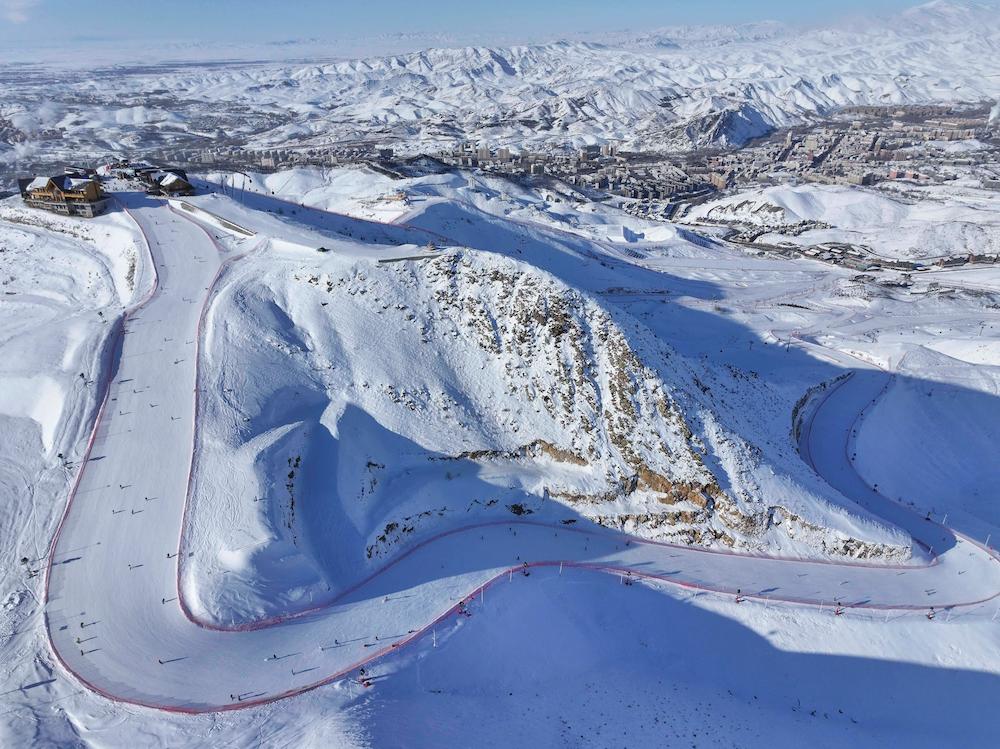
Why China Suits Mixed Groups
Three things work in your favour, and they are not true of every ski destination.
- Resorts are embedded in real places. Chinese ski areas are usually near working towns and cities rather than isolated at the end of a valley road. That means markets, restaurants, museums and street life within reach of the mountain.
- Ice and snow tourism is its own industry. Snow sculpture parks, ice festivals, hot springs and sled attractions are mainstream domestic products, professionally run and priced for families — not afterthoughts bolted onto a ski resort.
- Transport is excellent. High-speed rail and cheap ride-hailing mean a non-skier can day-trip to a nearby city and be back for dinner without renting a car.
The practical consequence is that your non-skier does not need to be entertained on the mountain. They need to be within easy reach of somewhere interesting.
Choosing a Resort That Works for Both Sides
This is the decision that determines everything else, and it is worth overriding your own preference for the best terrain.
Resort-Town Over Standalone Mountain
A standalone mountain with one hotel and one restaurant is a poor bet for a mixed group, however good the skiing. Prioritise areas attached to a town, or within a 30-minute drive of one. The Xinjiang ski resorts near Ürümqi and the Altay towns score well here, as do the Northeast’s larger destinations and the Beijing-adjacent cluster, where a non-skier can be in the capital in under an hour.
A Five-Point Screening Checklist
- Is there a café or restaurant with a view of the slopes, so a non-skier can join you for lunch without buying a lift pass?
- Does the resort sell a pedestrian gondola or sightseeing ticket separate from the ski pass?
- Is there an indoor attraction within 30 minutes — hot spring, spa, museum, market — for a bad-weather day?
- Can a non-skier reach the nearest town without a car?
- Does the accommodation have a genuinely comfortable common area, not just bedrooms?
Score a candidate resort three or better out of five and the trip will work. Score it one or two and someone will be miserable by day three.
Building a Daily Rhythm That Does Not Split the Group
The most common mistake is treating the ski day as fixed and asking the non-skier to fill nine hours around it. Invert that. Design the day so the group reconvenes at predictable points.
- Breakfast together, always. It costs nothing and it sets the day’s plan.
- Ski a compressed day. First lift to 2pm is more skiing than most people manage anyway, and it frees a long afternoon.
- Book one shared lunch mid-trip at an on-mountain restaurant the non-skier can reach on foot or by gondola.
- Protect the evenings. Dinner, night markets and hot springs are shared activities; do not schedule anything that excludes half the group after dark.
- Take one non-ski day. On a five-day trip, giving up one ski day for a full group excursion buys enormous goodwill.
Late-season trips make this rhythm considerably easier — longer daylight, milder afternoons and quieter resorts all favour a group moving at two speeds. Our guide to shoulder-season skiing in China explains when those windows fall in each region.
What Non-Skiers Actually Do All Day
On the Mountain, Without Skis
Most Chinese resorts sell a sightseeing gondola ticket, and the viewing platforms at the top are legitimate destinations. Beyond that: snow tubing and sled parks, snowshoe trails, horse-drawn sleighs in the Northeast and Altay, ice-fishing on frozen lakes, and reindeer or sled-dog experiences at some Xinjiang areas. Photography is the standout activity — winter light in China’s ski regions is exceptional, and the best vantage points are almost always reachable on foot or by sightseeing lift rather than requiring skis.
Off the Mountain
Hot springs are the single best pairing with a ski resort and are common near Chinese ski areas. Add to that: city day trips by rail, food markets, museums, tea houses, and the ice and snow festivals that run through January and February in the Northeast. In Xinjiang, village visits and craft workshops fill days easily.
Budgeting a Mixed Group Fairly
Money causes more friction on mixed trips than activities do, because the costs are so lopsided. A skier spends on passes, rentals and lessons; a non-skier spends on almost nothing comparable. Two rules keep it clean:
- Split shared costs evenly — accommodation, transport, group meals.
- Keep activity costs individual — lift passes and rentals for the skier, spa and excursions for the non-skier.
Do the arithmetic before you book rather than at the end of the trip. The peak-season baseline in our China ski cost breakdown makes it straightforward to separate the two columns. If your group includes children as well as non-skiing adults, the logistics shift again — our guide to skiing in China with family covers childcare, kids’ camps and age-based lift pricing.
Conversations to Have Before You Book
Ask the non-skier directly whether they want to try skiing at all. Some will take a single beginner lesson if offered without pressure; others genuinely do not want to, and repeatedly suggesting it becomes its own irritation. Either answer is fine, but you need to know before you book, because a “maybe” changes which resort you choose.
Then agree the trip’s shape out loud: how many ski days, which day is the shared excursion, who is paying for what. Ten minutes of this at the planning stage prevents the low-grade resentment that ruins otherwise good trips. For everything else — regions, seasons, visas and getting around — our main China skiing guide is the place to start.
Frequently Asked Questions
Can a non-skier ride the lifts to meet us for lunch?
At most Chinese resorts, yes. Sightseeing or pedestrian gondola tickets are usually sold separately from ski passes at a fraction of the price. Confirm at the ticket window on arrival, since not every lift on the mountain is included in the pedestrian product.
Which region is best for a mixed skiing and sightseeing group?
Xinjiang offers the strongest cultural and scenic programme alongside the skiing, while the Beijing-adjacent resorts offer the easiest big-city day trips. The Northeast is the best choice if the ice and snow festivals fall within your dates.
How many ski days should I plan on a mixed trip?
On a five-day trip, three or four ski days with one full group excursion works well. Compressing each ski day to finish by mid-afternoon matters more than the total count — it keeps afternoons and evenings shared.
Is it worth persuading a reluctant companion to take a lesson?
Offer once, accept the answer. Beginner lessons in China are inexpensive and instructors are used to nervous adults, so a single trial lesson is low-risk. But pressure is counterproductive, and a content non-skier improves the trip more than a resentful beginner does.
How should we split costs between skiers and non-skiers?
Split shared costs — hotel, transfers, group meals — evenly, and keep activity spending individual. Agree this before booking, not at the end, so nobody feels they subsidised someone else’s lift pass or spa day.