
Ask a visiting skier who owns the mountain they are standing on and you usually get a blank look. Fair enough — ownership sounds like an investor’s question, not a skier’s. In China it is neither. The entity that operates a resort decides which app you must book through, whether anyone at the ticket desk speaks English, what happens to your money when wind shuts the lifts, and whether the pass in your pocket is worth anything at the resort down the valley. Those are precisely the parts of a trip that go wrong. This guide sorts Chinese ski areas into four operator models, shows you how to work out which one you are dealing with before you pay, and explains what each type reliably gets right and reliably gets wrong.
Why the Operator Matters More Than the Trail Map
Skiers arriving from the Alps or North America carry an unspoken assumption: that resorts in a country broadly behave alike. Refund conventions, ski patrol norms, lesson structures and pass rules feel like industry standards rather than individual company choices. In mature markets that assumption is roughly safe, because decades of competition and trade bodies have sanded down the differences.
China’s ski industry did not have those decades. It scaled from a few hundred thousand skier-visits to tens of millions inside one generation, and the money came from completely different pockets — provincial governments, real-estate balance sheets, foreign hotel groups, and a handful of obsessive private founders. Each pocket imported its own service DNA and never had a reason to converge. There is no nationwide rule on weather-closure refunds, no default pass interoperability, and no requirement that a ski school employ an English speaker.
The practical result is that two resorts forty minutes apart, sitting under the same snow clouds, can hold opposite policies on the same question. The operator, not the region and not the regulator, is the de facto standards body for your day.
The Four Operator Models You Will Actually Meet
State-Backed and Municipal Operators
These resorts sit under local state investment vehicles, culture-and-tourism development companies, or a district sports bureau. Their scorecard is regional visitor numbers, winter employment and putting the county on a tourism map — not operating margin.
What follows from that is consistent. Lift tickets are the cheapest you will find, sometimes conspicuously so, because prices are set as public policy rather than by yield management. Capital hardware can be genuinely good, since state funding buys lifts and snowmaking in single large tranches. Soft service lags well behind the hardware: canteen-style food at controlled prices, ticket windows instead of apps, and refund policies applied to the letter because a front-line employee has no authority to deviate and real exposure if they do. Weather closures skew cautious. English is rare and not treated as a gap.
Property Developers Who Happen to Own a Mountain
Here the ski area is an amenity attached to a real-estate project. Snow sells apartments, hotel rooms and conference bookings. Skiing is the marketing budget, not the product.
You can spot the consequences from the car park. The base area is architecturally impressive, the hotel is new, there is heated underground parking and a decent coffee. Then you look up and the vertical is modest relative to everything below it. Packages that bundle a room with lift access are aggressively priced because room revenue is the actual goal, while a standalone day ticket is often poor value by comparison. Midweek staffing is thin, and service quality tracks the hotel brand rather than anything ski-specific. Before booking one of these, check lift count and vertical drop against the promotional render — the gap is the whole story. Some of the best-appointed luxury resorts in China sit squarely in this category.
International Hospitality Management
In this model a Chinese owner holds the asset while a foreign or joint-venture hospitality group runs the operation under a management contract. All-inclusive club formats and international hotel brands dominate the category.
This is the one model where English is a contractual obligation rather than a happy accident. The front desk speaks it, the ski school teaches in it, kids’ programmes follow recognisable international curricula, and cancellation terms are written in the legible, clause-by-clause style you already know how to read. Food skews international. The trade-off is twofold: the price sits at the top of the market, and the terrain is whatever the asset owner originally built. You are buying service reliability, not vertical.
Owner-Operated Ski Specialists
A small number of Chinese resorts were founded and are still run by people who ski. Single mountain, ski-first culture, and a management team that treats grooming quality as a reputational matter.
These places have the best snow product in the country relative to their size: serious grooming schedules, terrain parks that get rebuilt rather than left to decay, patrol that actually patrols, and season products priced for people who come back fifteen times rather than once. What they lack is everything around the skiing. Non-ski infrastructure is thin, bookings often run through the resort’s own mini-programme instead of the major platforms, and policies are less written than negotiated — which cuts both ways. Staff English is patchy in general but often fluent in the specific vocabulary of skiing.
How to Identify the Operator Before You Book
You do not need corporate filings. Four tells do the job in about ten minutes.
- The payment entity name. Whatever appears on your payment confirmation or receipt is the clearest signal. A name containing “cultural tourism development” or “state-owned assets” points to a municipal operator; a name containing “properties” or “real estate” points to a developer; an international hotel group name means a management contract; a plain “XX Ski Resort Co., Ltd” usually means an owner-operator.
- The sales channel. Sold only through the big domestic travel platforms? Likely state-backed or developer. Sold mainly through the resort’s own mini-programme? Owner-operator. Bookable in English through an international engine? Managed.
- Brand mismatch. When the hotel brand and the resort brand are different companies, you are looking at an asset owner plus an operator — worth knowing, because complaints about the room and complaints about the lifts go to different places.
- The wind question. Ask, in advance and in writing: “If the lifts close for wind, what happens to my ticket?” A municipal operator quotes policy verbatim. A developer offers a hotel credit. A managed resort sends you a written weather clause. An owner-operator offers you another day. The shape of the answer identifies the model more reliably than anything on the website.
Channel behaviour is a strong enough signal on its own that it is worth understanding how the major booking platforms most resorts sell through differ before you start comparing prices.
What Changes in Practice
- Refunds and closures: the single largest divergence, and the one most likely to cost you real money on a short trip.
- Pass interoperability: shared products cluster inside ownership families rather than across regions, which is why multi-resort pass products cover odd geographic combinations.
- Instruction: managed resorts guarantee an English lesson; owner-operators give you a better skier who may not share your language; state-backed resorts often have neither at short notice.
- Food pricing: controlled and cheap at municipal areas, resort-priced at developer bases, all-inclusive at managed properties.
- Transfers: developers and managed resorts run reliable scheduled shuttles because guests are their revenue; municipal areas expect you to arrive under your own steam.
- Rental fleet age: owner-operators refresh most often, developers refresh on a marketing cycle, municipal fleets run long.
What This Looks Like in Xinjiang
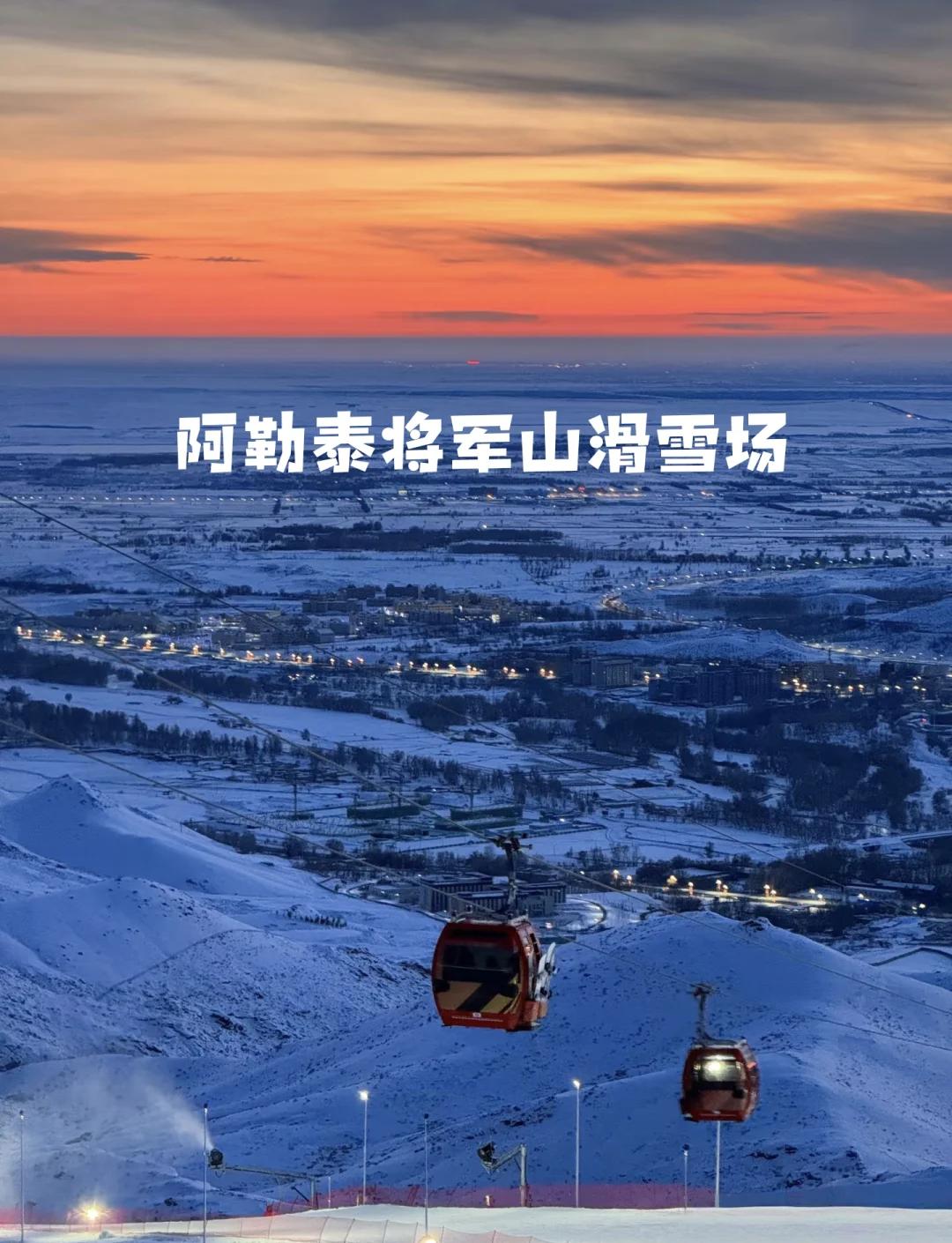
Xinjiang skews heavily toward the first two models. Most established areas around Urumqi and the Altay range are state-linked, with a growing layer of developer-built resorts attached to hotel and village projects. International management contracts are still essentially absent from the region.
That mix explains most of what visitors find surprising here. Lift tickets are cheap by any international standard, the snow and the lift hardware are better than the price suggests, and the service layer around it is thin — including English. The correct adaptation is not to hunt for the one resort with an English desk, because it may not exist; it is to budget for a local guide or driver and treat that as the service layer. If you are still choosing between areas, start with an overview of Xinjiang’s ski resorts and compare operator type alongside terrain.
Matching Operator Type to the Trip You Want
- You ski hard, speak no Chinese, travel with a guide, and want value. Municipal and owner-operated areas. Accept the paperwork rigidity.
- You are bringing a mixed group with non-skiers. Developer resorts. The base area is the product and it is a good one.
- You have young children, or one week and no appetite for friction. Managed resorts. You are paying for predictability and you will get it.
- You want the best snow experience per yuan and can self-manage. Owner-operated specialists, booked directly.
None of these categories is better than the others in the abstract. They are simply optimised for different customers, and the mismatch — a hard-charging skier at a developer resort, or a first-timer with two kids at a municipal area — is what generates the bad reviews. For a broader orientation before you narrow down, the general guide to skiing in China covers regions and seasons alongside these operator differences.
Frequently Asked Questions
Can I find out who operates a resort from an English-language source?
Rarely in full, but you do not need to. The payment entity on your booking confirmation and the sales channel together identify the model with enough accuracy to set your expectations. Corporate structure beyond that is not information a skier can act on.
Do state-backed resorts have worse snow?
No — often the opposite. Public capital buys snowmaking and lifts efficiently, and several of the best-covered areas in the north are state-linked. The deficit is in service, flexibility and English, not in the mountain itself.
Is a management contract the same as foreign ownership?
No. The Chinese owner still holds the asset and makes capital decisions such as new lifts or terrain expansion. The international group runs day-to-day operations and sets service standards. That is why a managed resort can have excellent service on modest terrain.
Will my season pass from one resort work at another?
Only if the two sit in the same ownership or commercial family. Shared products in China follow corporate relationships, not geography, so two neighbouring resorts under different owners will usually have no reciprocity at all.
Which model handles a weather closure best?
Owner-operated resorts, in practice, because they can grant a replacement day on the spot. Managed resorts are second: the policy is clear, though it may only refund part of the value. Municipal operators are the most rigid, so buy day tickets rather than multi-day products if the forecast is unsettled.