

Ask two foreign skiers what a week on Chinese snow cost them and the answers can differ by a factor of five. One flew in on a low-cost carrier, took an overnight sleeper train to the mountains, slept in a guesthouse dormitory and rented scratched rear-entry boots for the price of a coffee. The other landed in Urumqi, was met by a driver holding a name card, checked into a slope-side suite with a soaking tub, and had a bilingual instructor booked for four consecutive mornings. Both skied the same runs, in the same snow, on the same days.
That gap is unusually wide in China because the industry grew in two directions at once. Domestic weekend skiing built a genuinely cheap layer of hostels, canteens and rental sheds around every hill, while the investment wave that followed the 2022 Winter Olympics dropped five-star hotels and ski-in ski-out villages next door to them. Both layers survive, often sharing the same lift network. Understanding which one you are buying — and precisely where they overlap — is the most useful hour of planning you can spend. This guide compares the same six-day trip at two price points, line by line, then tells you which lines actually deserve an upgrade.
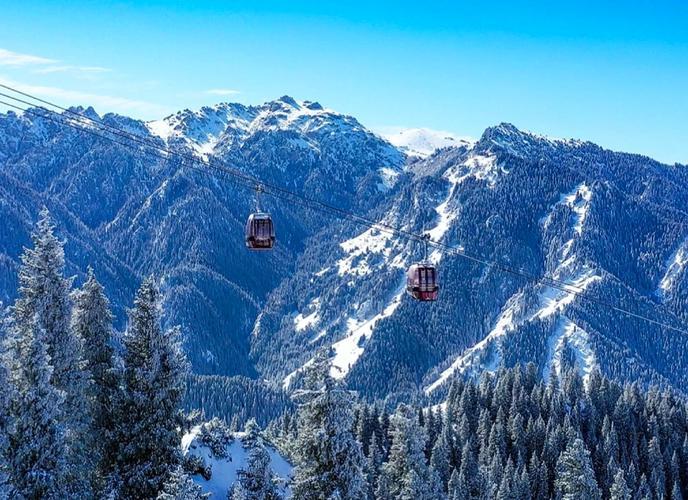
The Trip We Are Comparing
To keep the comparison honest, both versions share the same shape: two adults, six days and five nights at a northern Chinese resort with real vertical, four full ski days, one travel day at each end. Figures are per person in Chinese yuan for the 2025–26 season and exclude international airfare, which varies too much by origin to mean anything. If you want a neutral season-wide baseline before reading further, the detailed China ski cost breakdown for 2026 lays out typical numbers without taking a side.
Version A: the lean trip
- Domestic flight or hard-sleeper train from the arrival gateway to the resort city
- Shared shuttle or public bus to the base area
- Guesthouse or budget hotel 10–20 minutes from the lifts
- Standard day tickets bought at the window or through a domestic app
- Basic package rental, one group lesson, canteen food
Version B: the comfortable trip
- Domestic flight in a full-service cabin, private car transfer from the airport
- Four- or five-star ski-in ski-out hotel with breakfast included
- Multi-day pass with priority lift access where offered
- Demo-grade skis, boot fitting, four half-days of private English instruction
- Restaurant meals, spa access, one guided off-piste or snowcat session
Getting There: Where the First Gap Opens
Domestic travel inside China is one of the few categories where the cheap option is genuinely good rather than merely tolerable. High-speed rail to the northeastern resorts is comfortable, punctual, easy to book and costs a fraction of flying. A hard sleeper to a Jilin or Heilongjiang resort town runs roughly ¥200–450, while the equivalent flight plus airport transfers can hit ¥1,200 once you add the drive at each end.
Xinjiang breaks that pattern. Distances are continental, the rail network is slower, and most visitors fly into Urumqi regardless of budget. There the difference is not train versus plane but shared shuttle versus private car: about ¥120 per seat on a resort shuttle against ¥900–1,400 for a car to the Altay resorts. With three or four people the private car stops looking extravagant and starts looking sensible, especially if you land after dark.
Budget: roughly ¥400–900 round trip in ground transport. Comfort: ¥2,000–3,500. Real difference in experience: two to four hours of your life per transfer, and whether you arrive able to ski that afternoon.
Where You Sleep: The Single Biggest Lever
Accommodation is where the two trips separate for good. A clean guesthouse room near a northern Chinese resort costs ¥180–350 a night in mid-season. The four-star hotel at the base of the same lift charges ¥800–1,600, and the flagship slope-side properties at the marquee resorts push past ¥2,500 during Spring Festival. Over five nights that is a swing of ¥3,000–10,000 per person — larger than every other category combined.
What the money buys is not mainly thread count. It buys proximity, heat and drying. Ski-in ski-out access saves twenty to forty minutes at each end of the day, boot rooms with heated dryers mean you start each morning in dry liners, and reliable central heating matters more than usual when the overnight low is minus thirty. Budget guesthouses in Altay are often warm and welcoming, but a poorly heated room in the coldest corner of the country is a genuine trip-wrecker, not a colourful anecdote. If you plan to economise anywhere else, do it here last. For the top of the market specifically, see our survey of China’s luxury ski resorts.
Lift Tickets: Less Difference Than You Expect
Here the two trips converge. Chinese resorts do not sell a meaningfully different lift product to rich and poor skiers — there is rarely a premium ticket tier beyond the occasional priority-lane card. Day tickets run roughly ¥280–560 depending on resort and date, and multi-day or season products offer the same discount to everyone who buys them. Booking through the domestic booking platforms typically shaves 10–25 percent off the window price regardless of what your hotel costs.
The practical upshot: lift tickets are a bad place to look for savings and a pointless place to spend extra. Budget skiers should still book online in advance; luxury travellers gain almost nothing by paying more. Expect around ¥1,100–2,200 for four days either way.
Rentals and Gear
Base-area rental in China is cheap and, at the bigger resorts, better than its reputation. A standard package — skis, boots, poles, helmet — is ¥120–250 per day; demo-grade carvers or a modern all-mountain ski from a specialist shop run ¥300–500. Our China ski equipment rental guide explains sizing conventions, deposits and what to inspect before you accept a pair.
The upgrade worth paying for is boots, not skis. Chinese rental fleets skew toward soft, wide-lasted boots sized for beginners; anyone who skis regularly will be fighting them by the second afternoon. Bringing your own boots and renting skis locally is the highest-value hybrid in the whole comparison. It costs nothing beyond a checked bag and eliminates the most common source of misery.
Instruction: Where Money Buys Actual Skill
Group lessons at Chinese resorts cost ¥200–400 for two hours and are almost always conducted in Mandarin. Private English-speaking instruction is ¥600–1,200 for a half day and books out during holidays; the situation by resort is mapped in our piece on English-speaking ski instructors in China.
This is the category where the luxury trip earns its money most clearly. If you are a beginner or a nervous intermediate, four half-days of instruction you can actually understand will change your holiday more than any hotel upgrade. If you are a confident skier who mainly wants terrain, instruction is optional and the budget version loses nothing.
Food, and the Rest
On-mountain canteens serve hot noodles, dumplings and rice dishes for ¥30–60 — genuinely good value and often the best food on the hill. Resort restaurants and hotel dining run ¥150–400 per meal. In Xinjiang the calculation tilts further toward the budget option, because the lamb skewers, hand-pulled noodles and nang bread sold in the village are the regional cuisine people travel for, not a compromise. Budget: ¥150–250 per day. Comfort: ¥400–700 per day.
The Totals
- Lean trip: roughly ¥4,500–7,000 per person for six days, excluding international flights
- Comfortable trip: roughly ¥16,000–28,000 per person over the same period
- Hybrid trip: roughly ¥9,000–12,000, and in our view the best value of the three
Where Extra Money Is Genuinely Worth It
- Heat and drying. A properly warm room with a boot dryer, at any star rating.
- Proximity to the lift. Especially in Xinjiang, where base villages are spread out and transfers are cold.
- Instruction you can understand. The only line item that improves your skiing rather than your comfort.
- Private transfers on arrival day. Landing at midnight in minus twenty-five with a shuttle that left an hour ago is a bad way to start.
Where Luxury Spending Is Mostly Wasted
- Premium lift products. The mountain is the same mountain.
- Hotel restaurants. The canteen and the village usually win on both taste and price.
- Top-end rental skis for intermediates. Bring your boots instead; it costs less and matters more.
- Airport lounges and upgraded domestic cabins. Flights are short and the time saved is negligible.
A Quick Self-Test
Answer honestly. Do you ski more than ten days a season? Do you own boots? Are you comfortable navigating signage and menus in Chinese, or using translation apps under pressure? Is anyone in your group under twelve or over sixty-five? Are you travelling during Spring Festival?
Three or more yes answers to the first three questions and the lean trip will suit you fine. Yes to either of the last two and you should buy comfort where it removes friction — warm rooms, short transfers, booked instruction — while keeping the budget approach for lift tickets and food. Whichever direction you lean, start with the overall China skiing guide for the resort landscape, and if this will be your first ski trip outside your home country, work through the sequencing in our step-by-step plan for a first ski trip to China before you book anything.
Frequently Asked Questions
Is skiing in China cheaper than Japan or Europe?
On the ground, clearly yes at the budget end and roughly comparable at the luxury end. Lift tickets, rentals, food and domestic transport all cost less than their Japanese or Alpine equivalents. Five-star hotels at flagship Chinese resorts, however, are priced against international expectations and can exceed what the same money buys in Hokkaido. The savings are in the middle and lower tiers.
Can I mix budget and luxury elements?
That is exactly what we recommend. The highest-value combination is a mid-range warm hotel close to the lifts, online-discounted multi-day tickets, your own boots with rented skis, canteen lunches, and two or three half-days of private English instruction. It lands around ¥9,000–12,000 for six days and captures most of the benefit of the expensive trip.
How much do prices rise during Spring Festival?
Accommodation typically doubles and can triple at the most popular resorts, while lift tickets rise perhaps 15–25 percent and rentals barely move. Instructors sell out entirely. If your dates are flexible, shifting a week either side of the holiday saves more money than every other tactic in this article combined.
Do budget guesthouses in Xinjiang stay warm enough?
Most do, because they are built for the climate, but standards vary and older buildings in Altay villages can struggle when temperatures drop below minus thirty. Read recent reviews specifically for comments on heating, ask whether hot water is available in the evenings, and treat an unheated bathroom as a reason to book elsewhere.
Are credit cards accepted at budget properties?
Often not. Small guesthouses, village restaurants and rental sheds generally expect mobile payment or cash. Set up a Chinese mobile payment app linked to your foreign card before you arrive, and carry a few hundred yuan in notes as backup. Higher-end hotels take international cards without difficulty.