

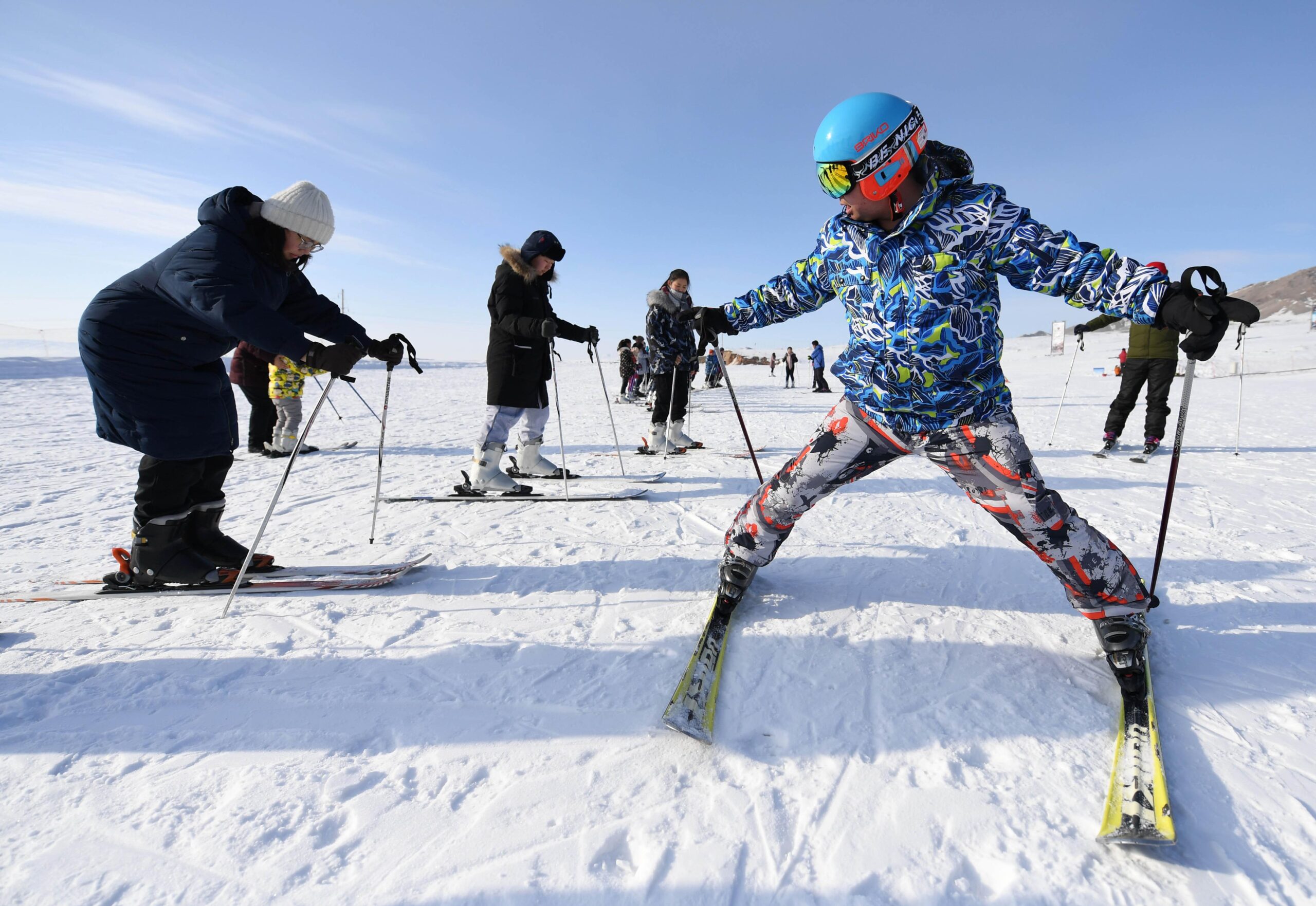
Travelling with teenagers changes the shape of a ski trip. Younger children need short days, warm breaks and constant supervision; adults want efficient logistics and good snow. Teenagers sit awkwardly in between. They progress fast, get bored faster, and quietly judge every decision you make. Xinjiang happens to suit them unusually well: the season is long, the snow is dry and forgiving, lift queues are short by international standards, and resorts have built modern beginner areas alongside genuinely steep terrain. A fourteen-year-old can go from snowplough turns to linked parallel turns in five days here, and a seventeen-year-old snowboarder can spend that same week hunting side hits and untracked powder without ever running out of new ground.
Why Xinjiang Works Well for Teenage Skiers
Three practical factors matter more than marketing brochures when you travel with teens.
- Cold, dry snow. Northern Xinjiang sits far from the ocean, so snowfall is light and powdery rather than heavy and wet. Falls hurt less, edges hold predictably, and beginners are not fighting slush by mid-afternoon.
- A long, stable season. Most resorts run from late November into early April, with the most reliable conditions from late December through February. That gives you real flexibility around school holidays instead of gambling on a two-week window.
- Space. Wide pistes and modest crowds mean teenagers can make mistakes without endangering anyone. This is the single biggest confidence factor for nervous 13- and 14-year-olds, and the reason many families who start in skiing in Xinjiang keep coming back.
The trade-off is travel time. Getting to Altay or the Kanas region takes a domestic flight plus a transfer, and mountain weather occasionally rearranges schedules. Build one buffer day into any itinerary that includes onward flights.
Matching Resorts and Terrain to Teenage Ability
Ability, not age, should drive resort choice. A useful test: can they stop reliably on a blue run without a snowplough? If not, treat them as a beginner regardless of how confident they sound.
Complete beginners
Look for a separated learning area with a magic carpet or short surface lift, plus at least two long, gentle green runs to progress onto. Teenagers dislike being parked in a nursery slope surrounded by six-year-olds, so a resort with a wide green run served by a proper chairlift is worth paying for. The comparison in the best beginner ski resorts in Xinjiang is a sensible starting point for a first family trip.
Intermediates
This is where most teenagers land by day three of their second trip. They need volume: several blue runs, one or two reds to aspire to, and enough lift capacity that they can lap terrain without waiting. Silk Road Ski Resort outside Urumqi is convenient and varied; the Altay resorts offer longer descents and better snow but require more travel.
Confident skiers and snowboarders
Older teens who ride park or want off-piste terrain should be pointed towards the bigger northern resorts, where vertical drop and lift-served powder are more substantial. Set boundaries early: which lifts they may use alone, when to check in, and an absolute rule that nobody rides tree lines or unmarked terrain without an adult.
Lessons: What Actually Works for Ages 13 to 18
Teenagers learn quickly but respond badly to being talked down to. Three formats work in practice:
- Private lessons for the first two mornings. Expensive but efficient. Two half-days with one instructor typically takes a complete beginner from first turns to independent green-run skiing, after which they can ski with the family.
- Group lessons with a teen or adult group. Cheaper and more social, provided the group is not dominated by small children. Ask explicitly about age grouping when booking.
- A single technique clinic mid-week. Best value for intermediates. One targeted session on carving or switch riding often unlocks more progress than three days of unstructured laps.
Weigh the cost and pace difference between formats using the group versus private lesson comparison before you commit a whole week’s budget. If English-language instruction matters, confirm it in writing rather than assuming; larger resorts near Urumqi have more English-speaking staff than smaller mountain operations.
Gear and Rentals for Fast-Growing Teenagers
Buying equipment for a body that grows three centimetres a year rarely makes financial sense. Rent skis, boots and boards; buy the items that affect comfort and hygiene.
- Rent: skis or snowboard, bindings, boots, poles. Resort shops in Xinjiang carry standard adult sizes and a reasonable range of junior gear.
- Buy: base layers, ski socks, gloves or mittens, goggles, a neck gaiter. Cheap goggles fog and ruin days; this is the one place to spend money.
- Decide case by case: helmets. Rentals are widely available and fine, but teenagers who ski more than one week a year are better off with their own.
Boot fitting is the step families most often rush. Allow forty minutes at the rental counter and insist your teenager speaks up about pressure points, because a badly fitted boot will end a day early. The practical notes in the Xinjiang ski equipment rental guide cover sizing, deposits and what to check before leaving the shop. On protection standards and fit, helmet safety guidance is worth reading before your teen argues that helmets are unnecessary.
Budgeting a Family Ski Week
Costs in Xinjiang remain moderate compared with Japan or Europe, but they add up across four people. A realistic per-teenager daily budget looks roughly like this:
- Lift pass: mid-range for a full day, with multi-day and family passes reducing the rate noticeably.
- Rental package: skis, boots and poles, with helmets often bundled or cheap to add.
- Lessons: the largest variable, and the item worth front-loading into the first two days.
- Food on the mountain: cafeteria meals are inexpensive; teenagers eat considerably more than you budget for.
Two savings that consistently work: buy multi-day passes rather than daily tickets, and travel in the early or late season shoulder periods when accommodation drops sharply. Booking rental gear in advance during Chinese New Year is also essential rather than optional.
Off-Slope Time That Teens Actually Enjoy
Expect four to five hours of skiing per day, not eight. Afternoons need a plan or they collapse into hotel-room screen time.
- Night skiing, where available, is popular with teenagers and breaks the routine.
- Hot springs and pool time near the larger resorts double as recovery.
- Snowmobile tours, tubing and horse-drawn sleigh rides in nearby villages give non-skiing days some structure.
- Kazakh and Tuvan village visits in the Altay region are genuinely interesting for older teens and provide a cultural counterweight to a week of lifts and lunch queues.
Families with younger siblings in tow will find the age-mixing advice in the guide to skiing in Xinjiang with kids useful, since teenagers and small children rarely want the same day.
Safety and Independence: Setting Ground Rules
The main risk with teenagers is not steep terrain but unsupervised overconfidence. Agree on rules before the first lift:
- Ski in pairs, never alone, and stay on marked, open pistes.
- Fixed check-in times and a named meeting point, on the assumption that phone batteries die in the cold.
- Cold-injury awareness: mid-winter temperatures in northern Xinjiang regularly fall well below minus twenty degrees Celsius, so exposed skin and thin gloves are a real hazard.
- Everyone knows the resort’s patrol contact and the location of the clinic.
A Workable Five-Day Structure
- Day 1: arrive, collect rentals, one short afternoon session on green terrain.
- Day 2: morning lesson, afternoon consolidating the same runs.
- Day 3: second lesson or first full independent day; add a blue run.
- Day 4: lighter day. Half-day skiing plus hot springs or a village excursion.
- Day 5: full ski day on the terrain they now own, finishing early enough to return gear without stress.
Frequently Asked Questions
What age is too old to start skiing?
None. Teenagers are arguably the fastest learners of any age group, combining adult strength and coordination with a child’s willingness to fall over. Most 13- to 17-year-olds ski independently on easy terrain after two or three well-taught days.
Are lessons in English available for teenagers?
At larger resorts, yes, though availability is limited and should be confirmed when booking rather than on arrival. Smaller mountain operations may only offer Mandarin instruction, in which case a translation app and a patient instructor usually suffice for basic technique.
How cold does it get, and can teenagers cope?
Mid-winter mornings in the Altay region can drop below minus twenty-five degrees Celsius. This is manageable with proper layering, mittens rather than gloves, a balaclava and regular indoor breaks, but it is not the place for fashion outerwear or cotton hoodies.
Is one week enough for a teenager to learn?
Comfortably. With two mornings of instruction and steady practice, a beginner should finish the week skiing blue runs with control. Snowboarders typically have a harder first two days and then progress rapidly.
Do we need to book rentals and lessons in advance?
During Chinese New Year and peak January weekends, yes. Outside those periods you can usually arrange both on arrival, though booking ahead still gets you better boots and preferred lesson times.
Which is better for teens, skiing or snowboarding?
If they only have one week, skiing produces faster visible progress and less frustration. If they skateboard or surf, or have two weeks, snowboarding is a reasonable choice. Do not let a beginner switch disciplines mid-trip.